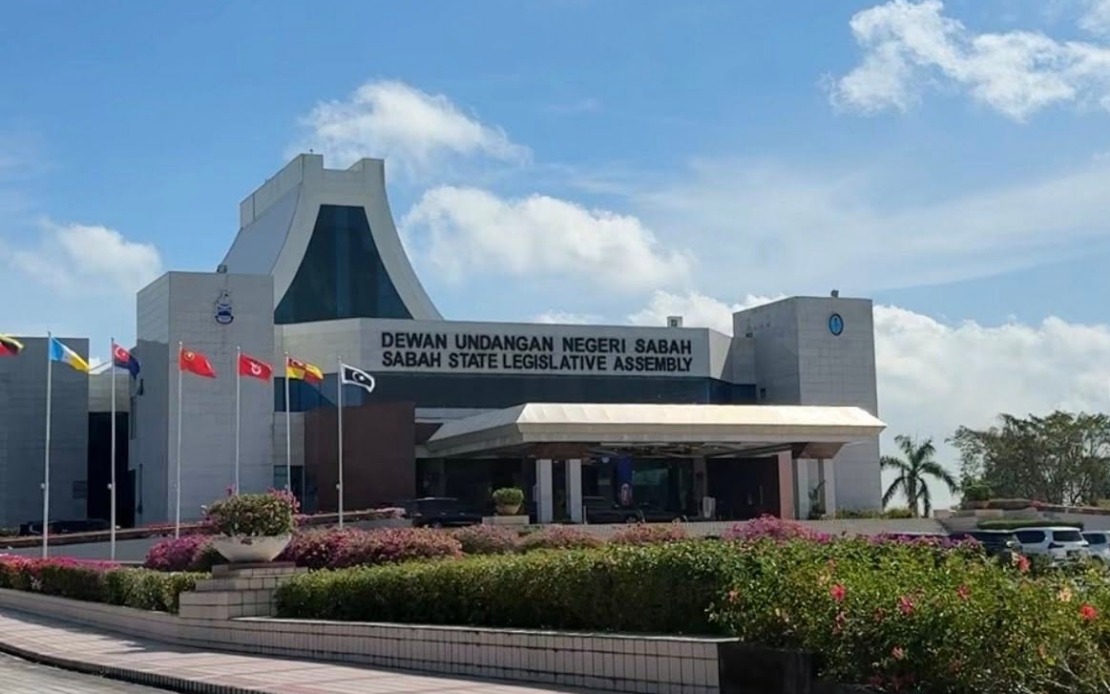
The Sabah Legislative Assembly has successfully enacted two significant pieces of legislation that will reshape how the state handles Islamic inheritance matters and customary justice. The Muslim Succession Bill 2026 and the Native Courts Bill 2026 were both passed on July 22 following parliamentary debate, marking a watershed moment for legal reform in the East Malaysian state. Datuk Dr Mohd Arifin Arif, the Sabah Local Government and Housing Minister who also oversees Islamic Affairs, tabled both measures, signalling the government's commitment to modernising governance frameworks that affect millions of residents.
The Muslim Succession Bill 2026 represents uncharted territory within Malaysia's legal landscape. According to Mohd Arifin, this legislation constitutes the first statute in the country specifically designed to regulate how Muslim estates are administered under the jurisdiction of Syariah Courts. This distinction carries substantial weight, as Islamic inheritance has traditionally been governed through fragmented guidelines and customary practice across Malaysia's 13 states. By establishing a comprehensive, codified framework, Sabah positions itself as a pioneer in formalising what has long been an ad-hoc system, potentially influencing legislative developments elsewhere in the federation.
The bill addresses four fundamental objectives that underscore the administration of Muslim deceased estates. First, it aims to create a more systematised legal structure that clearly delineates inheritance rights and procedures based on Islamic principles. Second, it seeks to protect the legitimate claims of all heirs and interested parties, reducing disputes that commonly arise when estate assets are distributed without transparent documentation. Third, the legislation ensures that estate administration adheres rigorously to syariah principles, preventing secular considerations from contaminating Islamic law principles in this sensitive domain. Fourth, and perhaps most crucially, it strengthens enforcement mechanisms to combat the misuse, concealment, unauthorised disposal, or improper administration of estate assets—problems that have plagued Muslim communities across Malaysia for decades.
The practical implications of this bill extend beyond legal technicalities. Malaysia's Muslim population, estimated at nearly 70 per cent nationally, faces considerable challenges when settling estates of deceased relatives. Without clear statutory guidance, families often experience prolonged disputes, asset freezing, and emotional trauma. The new framework promises to streamline what is currently an opaque process, offering grieving families a transparent roadmap for asset distribution. For Malaysian businesses and families with significant holdings, this legislation provides certainty in succession planning, potentially encouraging more comprehensive estate documentation and planning among the Muslim community.
Parallel to these reforms, the Native Courts Bill 2026 modernises Sabah's customary justice system, which has operated under legislation dating to 1992. For more than three decades, the existing enactment has remained largely unchanged despite significant evolution in judicial practices, community expectations, and administrative capacity across Southeast Asia. The new bill acknowledges this reality, replacing outdated structures with a comprehensive and responsive framework that respects indigenous traditions whilst incorporating contemporary judicial standards. This reflects broader regional recognition that customary justice systems, when properly reformed, can effectively serve native communities whilst maintaining cultural authenticity.
A cornerstone of the Native Courts Bill involves restructuring the judicial hierarchy. The new framework establishes three tiers—the Native District Court, Native High Court, and Native Court of Appeal—creating a clearer appellate process than currently exists. This hierarchical modernisation addresses a critical gap in Sabah's customary justice system, where previous structures lacked transparent pathways for review and appeal. Native communities, comprising a significant portion of Sabah's population, will benefit from enhanced judicial oversight and the ability to challenge decisions through established procedures, strengthening the legitimacy and fairness of customary dispute resolution.
The bill introduces another transformative element through the establishment of a Native Judicial Appointments Advisory Committee. This body will assess and recommend judicial appointments based on objective criteria including transparency, merit, relevant qualifications, experience with customary law, and personal integrity. Previously, native court judges were often selected based on administrative position rather than judicial capability, potentially compromising the quality of justice delivery. By decoupling judicial appointments from bureaucratic hierarchy and emphasising substantive expertise in customary law, the legislation promises to elevate the competence and credibility of native courts throughout Sabah.
For Malaysia's broader legal landscape, these bills carry implications extending beyond Sabah's borders. The Muslim Succession Bill demonstrates how individual states can tackle longstanding national challenges through targeted legislation, potentially spurring similar reforms in Peninsular Malaysia and other East Malaysian states. The Native Courts Bill similarly offers a template for modernising customary justice systems across Southeast Asia, where many nations grapple with integrating traditional dispute resolution into contemporary judicial frameworks. Sabah's approach—balancing reform with cultural preservation—may resonate with neighbouring jurisdictions facing similar tensions between tradition and modernity.
The passage of both bills also reflects Malaysia's commitment to the United Nations Sustainable Development Goal of ensuring access to justice for all. Effective inheritance administration and functioning customary courts are fundamental components of rule of law and social stability. By strengthening these institutions, Sabah contributes to regional judicial development and demonstrates how developing democracies can upgrade legal systems whilst respecting cultural particularity. The extensive parliamentary debate preceding passage—five assemblymen for the Muslim Succession Bill and twelve for the Native Courts Bill—suggests serious legislative engagement rather than rubber-stamp approval, potentially enhancing the bills' credibility and public acceptance.
Implementation will be crucial to determining whether these legislative reforms translate into tangible improvements for Sabah's Muslim and native populations. The state government must invest in judicial training, establish clear administrative procedures, and provide public education about the new frameworks. Without adequate resources and commitment to enforcement, even well-drafted legislation risks becoming decorative rather than transformative. The coming months will reveal whether Sabah's government can effectively operationalise these reforms, setting precedent for other Malaysian states contemplating similar judicial modernisation initiatives.

