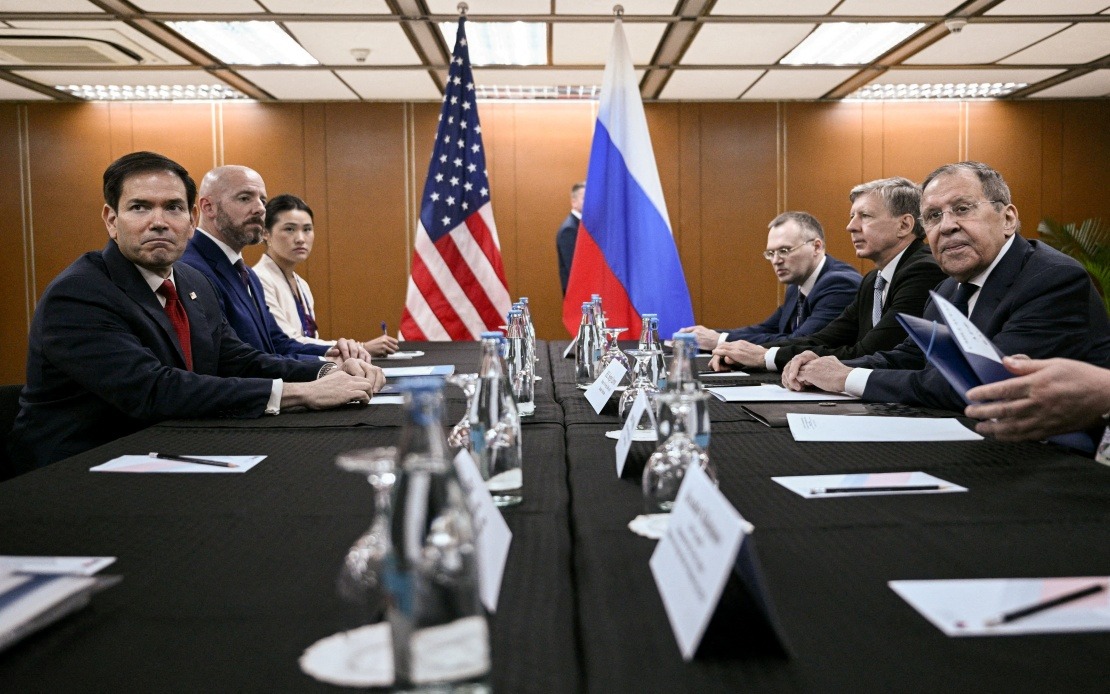
Moscow and Washington have signalled a willingness to preserve official diplomatic pathways despite the broader geopolitical tensions that have characterised relations between the two powers in recent years. Russian Foreign Minister Sergey Lavrov and US Secretary of State Marco Rubio reached an understanding during their encounter in Manila on July 23 to maintain contact channels between their respective foreign ministries, with particular emphasis on engagement through the structures of international organisations where both nations participate.
The agreement represents a pragmatic acknowledgment that even amid significant strategic disagreements, the maintenance of official communication mechanisms serves mutual interests. By anchoring their commitment to dialogue within the framework of international organisations rather than through bilateral channels alone, both sides have created a structured environment for future exchanges that may prove less prone to misunderstanding or escalation. This approach reflects diplomatic practice where formal multilateral settings provide greater institutional scaffolding and established protocols.
Beyond the reaffirmation of basic diplomatic contact, the two foreign ministers addressed the practical challenges facing their respective embassies and consulates. The statement from the Russian Foreign Ministry specifically noted discussions concerning the normalisation of working conditions for diplomatic missions, suggesting that operational difficulties—whether related to staffing, facility access, or administrative procedures—had created friction in recent times. Resolving these logistical obstacles is essential for the actual functioning of diplomatic representation, making their inclusion in the agenda a concrete commitment to functional relations.
Particularly significant was the mutual welcome extended toward the resumption of full-scale cooperation between Roscosmos and NASA, the space agencies of Russia and the United States respectively. Space collaboration has historically served as one of the few domains where Cold War-era rivals maintained productive working relationships, and the International Space Station represents the most tangible symbol of shared purpose between the two nations. The restoration of comprehensive contacts between these agencies signals that both governments recognise the value of maintaining partnerships in scientific and technological domains even when political relations remain strained.
The emphasis on resuming interparliamentary exchanges and strengthening cultural ties adds another dimension to the rapprochement effort. These people-to-people and institutional connections help sustain mutual understanding and create constituencies within both societies that value sustained engagement. Academic exchanges, cultural programmes, and legislative delegations function as stabilising forces in international relations by building personal relationships and fostering knowledge of each other's perspectives beyond official propaganda narratives.
For Southeast Asian observers, this development carries implications for regional stability and the broader architecture of international relations in the Indo-Pacific. The US maintains significant military and economic commitments throughout the region, while Russia, though less directly present, continues efforts to expand its diplomatic and strategic footprint. A resumption of functional diplomatic relations between Washington and Moscow, even in limited form, reduces the risk of accidental escalation that could draw regional powers into broader great-power conflicts.
The decision to anchor new contacts within international organisation frameworks rather than pursuing separate bilateral mechanisms reflects both sides' recognition of the constraints on direct engagement. This approach allows both nations to participate in global governance structures—whether through the United Nations system or other multilateral bodies—without requiring the political capital necessary for full normalisation of relations. It provides a safety valve for communication without appearing to yield ground on contested issues.
For Malaysia and other ASEAN members navigating the complex terrain of major-power competition, the restoration of Russian-American diplomatic channels offers some reassurance that conflict management mechanisms remain in place. The region has benefited from stability enabled by certain tacit rules of the game in great-power competition, and any wholesale breakdown in communication between Washington and Moscow could undermine those implicit understandings.
The Manila meeting itself deserves attention as a venue. The Philippines hosts complex relationships with both Russia and the United States, making it a symbolically appropriate location for such talks. ASEAN's centrality in recent regional diplomacy has made Southeast Asian capitals more prominent venues for high-level bilateral and multilateral negotiations, reflecting the region's growing significance in global geopolitics.
Looking forward, the real test of these agreements will lie in their implementation. Statements of intent to maintain contact and resume cooperation carry value primarily insofar as they translate into actual exchanges, functional diplomatic channels, and concrete collaborative projects. The space agency cooperation, in particular, offers a measurable indicator—concrete achievements in joint scientific missions or technical coordination would demonstrate genuine commitment beyond rhetorical affirmation.
The acknowledgment that diplomatic missions require normalised working conditions suggests that operational impediments had been deliberately maintained or allowed to persist. Addressing these barriers would indicate that both capitals have decided the costs of sustained confrontation outweigh the benefits. Such pragmatic assessments, however modest, form the foundation upon which larger diplomatic architectures can eventually be rebuilt.
Ultimately, the Lavrov-Rubio understanding represents damage control rather than reconciliation, yet even this more limited objective carries significance. In an era of intensified great-power competition, the preservation of basic diplomatic functionality and the maintenance of channels for communication—however restricted—serve essential functions in preventing miscalculation and providing mechanisms for managing inevitable future disputes.

