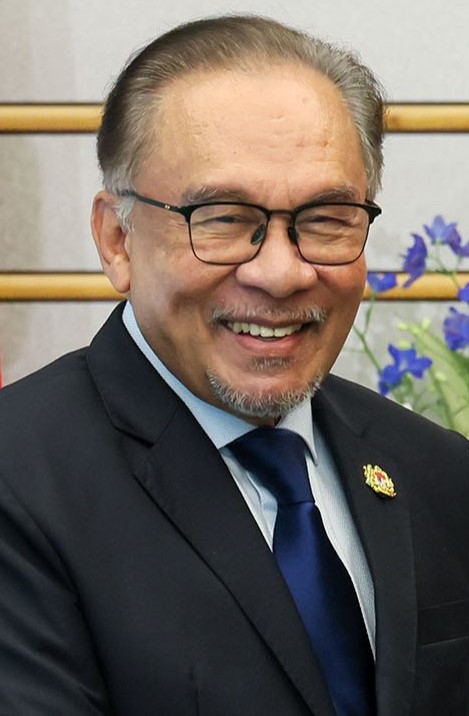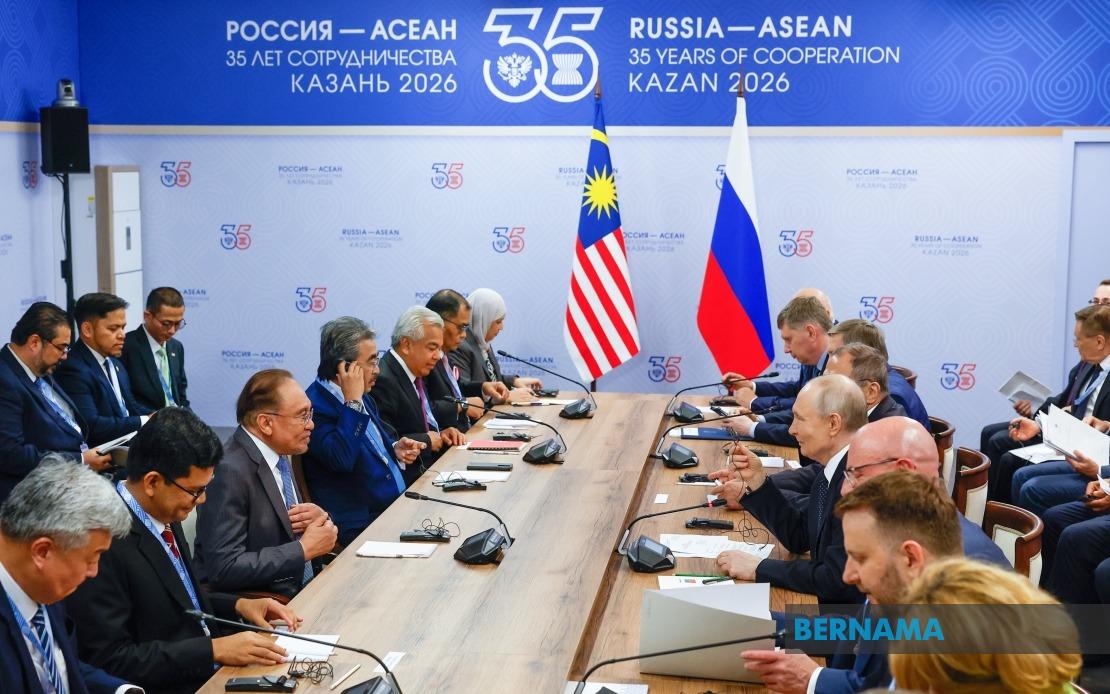
Russian President Vladimir Putin has underscored the strong momentum between Moscow and Kuala Lumpur, declaring both nations well-positioned to expand their strategic engagement. During bilateral talks with Malaysian Prime Minister Datuk Seri Anwar Ibrahim at the ASEAN-Russia Commemorative Summit in Kazan on June 18, Putin highlighted the substantial groundwork already laid for cooperation, with next year's 60th anniversary of formal diplomatic relations serving as a symbolic milestone for further advancement. The Russian leader characterised the relationship as one built on "substantive positive experience" and marked by serious coordination on multiple fronts, suggesting that the coming decade offers significant opportunities for both countries to enhance their partnership across economic, cultural, and security domains.
The bilateral relationship between Russia and Malaysia has matured considerably through institutionalised mechanisms designed to translate political goodwill into concrete results. Putin noted that Moscow and Kuala Lumpur maintain consistent high-level engagement through their respective government ministries, specialised agencies, and parliamentary channels, ensuring continuity and depth in their interactions. Anchoring these efforts is an intergovernmental commission dedicated to economic, scientific, technical, and cultural cooperation, which serves as the primary vehicle for executing joint initiatives and resolving practical implementation challenges. This structured framework reflects the sophistication of the Russia-Malaysia relationship and distinguishes it from less formalised bilateral arrangements, providing both governments with established channels to address emerging opportunities and concerns swiftly.
Trade represents a particularly promising avenue for deepening mutual engagement. Moscow highlighted the impressive growth trajectory of bilateral commerce, reporting that trade between the two countries surged by 12.9 per cent in 2025 alone. This positive momentum suggests that commercial interests are aligning and that businesses in both nations are finding expanding opportunities within the partnership. For Malaysia, this growth underscores the significance of diversifying its trading relationships beyond traditional Western partners, a strategic priority that resonates strongly within ASEAN's broader efforts to maintain equidistance among major powers. Russian enthusiasm for elevating commerce indicates Moscow's recognition that Malaysia serves as a gateway to Southeast Asian markets and a key economic hub within the region.
Beyond trade, Putin emphasised Russia's deep investment in people-to-people and knowledge-sharing dimensions of the partnership. The Russian president specifically mentioned education, science and technology, tourism, and humanitarian ties as priority areas deserving greater attention and resources. These sectors are particularly significant for Malaysia, where Russian expertise in higher education and research collaboration could complement domestic initiatives in advanced technology and scientific innovation. Enhanced educational exchange programmes and scientific partnerships could facilitate the transfer of knowledge and technological capabilities, benefiting Malaysian institutions and researchers while simultaneously creating lasting bonds between the two societies. The emphasis on humanitarian cooperation also signals Russia's interest in building broader societal connections beyond governmental and commercial channels.
Malaysia's chairmanship of ASEAN received notable affirmation from Putin, who credited the Southeast Asian nation with advancing the Russia-ASEAN strategic partnership framework. The Russian president particularly highlighted Malaysia's instrumental role in hosting the inaugural summit-level meeting between Russia and ASEAN in 2005, an achievement that underscored Malaysian diplomatic acumen and its capacity to bridge major powers. Putin's endorsement of Malaysia's continued support for developing the Russia-ASEAN relationship carries subtle but important implications: it positions Malaysia as a valued intermediary within the regional architecture and validates its diplomatic strategy of maintaining constructive engagement with Russia despite geopolitical pressures from Western quarters. This recognition may enhance Malaysia's standing within ASEAN as a country capable of navigating complex great-power dynamics while advancing regional interests.
The timing of Putin's remarks carries particular significance given ongoing geopolitical tensions and the importance of stability in the Indo-Pacific region. Malaysia's ability to simultaneously maintain strong Western partnerships while developing relations with Russia reflects the pragmatic approach adopted by many ASEAN nations. For Malaysian policymakers, Putin's emphasis on mutual respect and consideration of each country's interests provides diplomatic cover for continued engagement with Moscow, allowing the government to position its Russia policy as principled rather than ideologically motivated. This nuanced positioning becomes increasingly valuable as regional states navigate competing pressures to align with either Western or Chinese-led coalitions.
Putin's personal references to previous engagements with Malaysian leadership and his courteous transmission of best wishes to His Majesty Sultan Ibrahim, King of Malaysia, underscored the respect accorded to Malaysia within Russian diplomatic circles. Such gestures, while seemingly ceremonial, carry substantive weight in traditional diplomacy and signal high-level commitment to the bilateral relationship. The Russian president's willingness to engage directly with the Malaysian monarch through Anwar demonstrated that Moscow views Malaysia as a nation of considerable importance and standing within the international system. For domestic Malaysian audiences, Putin's recognition of the country's leadership hierarchy and its constitutional monarchy carries symbolic significance and reinforces the legitimacy of the government's engagement with Russia.
Looking forward, the 60th anniversary of Russia-Malaysia diplomatic relations presents both nations with an opportunity to undertake stocktaking of achievements while charting ambitious new directions. Historical anniversaries often catalyse governments to announce new initiatives, expanded funding for cooperative programmes, and elevated institutional frameworks. Malaysia could leverage this moment to push for Russian support on regional issues of concern, including maritime security, counter-terrorism, and economic development in Southeast Asia. Conversely, Russia may seek to deepen Malaysia's role as a voice for balanced engagement with Moscow within ASEAN forums, potentially enhancing Russian influence within the region's decision-making structures.
For Malaysia specifically, deepening ties with Russia offers several strategic advantages worth considering. Economic diversification through expanded trade and investment flows reduces dependency on any single trading partner and strengthens Malaysia's negotiating position with other major powers. Access to Russian expertise in energy, defence technology, and space research could enhance Malaysian capabilities in these critical sectors. Furthermore, maintaining a robust relationship with Russia ensures that Malaysia retains strategic flexibility and avoids becoming locked into exclusive partnerships that could constrain its foreign policy options. In an era of great-power competition, this flexibility represents a valuable asset for a middle-power nation seeking to advance its development agenda while maintaining regional stability and sovereignty.
The broader context of Russia-ASEAN relations cannot be overlooked in assessing the significance of Moscow's engagement with Malaysia. Russia has invested considerable diplomatic effort in cultivating relationships with Southeast Asian nations, recognising that the region's economic dynamism and geopolitical importance make it an essential partner in any comprehensive foreign policy strategy. Malaysia's historical experience with balanced diplomacy and its respected position within ASEAN make it an ideal partner for Russia to anchor its Southeast Asian engagement. As the region continues to navigate tensions between major powers competing for influence, Malaysia's willingness to maintain constructive dialogue with Russia while upholding ASEAN unity and principles serves as a model for regional stability and pragmatism.
Moving forward, observers should monitor specific announcements and initiatives that emerge following the 60th anniversary commemoration. Expanded cooperation frameworks, new investment pledges, or elevated institutional arrangements would signal genuine momentum in the relationship. Similarly, Malaysia's capacity to shepherd Russia-ASEAN cooperation while managing other bilateral relationships will demonstrate the sophistication of its diplomatic approach. The comments from both leaders in Kazan suggest that both Moscow and Kuala Lumpur are committed to nurturing a partnership that transcends transactional interests and embraces longer-term strategic dimensions. For Malaysia and the broader Southeast Asian region, this commitment to expanding Russia ties represents a calculated investment in maintaining strategic autonomy and ensuring that no single external power monopolises regional influence.