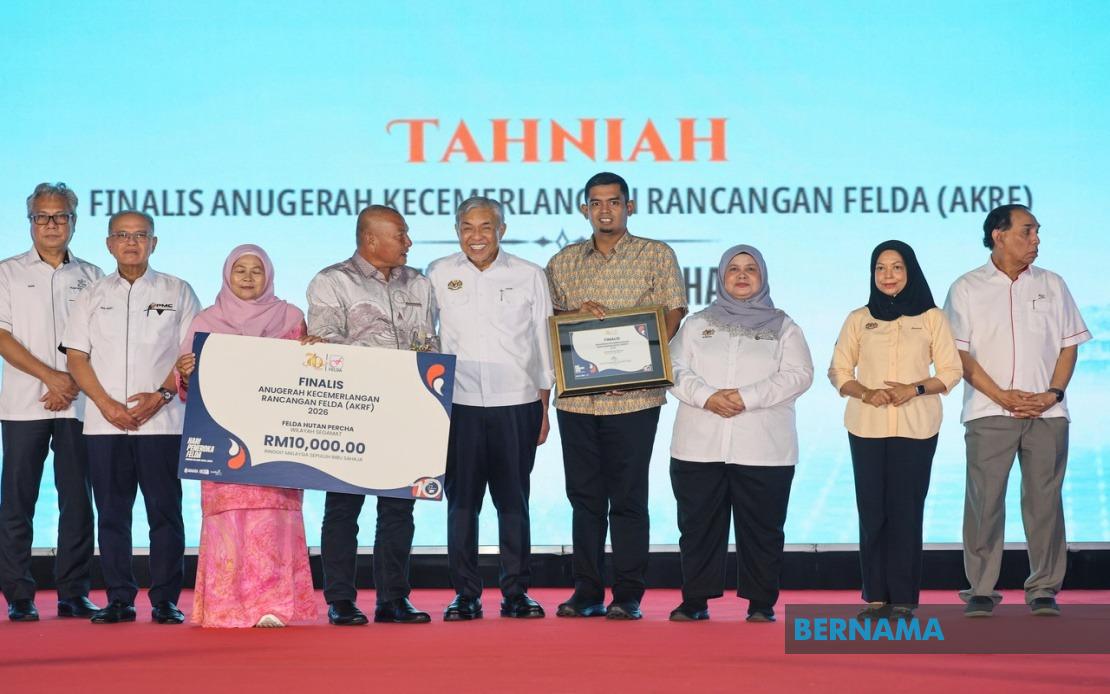
Deputy Prime Minister Datuk Seri Dr Ahmad Zahid Hamidi has stressed that the development of rural economies must no longer remain confined within Malaysia's domestic framework, but instead should be positioned as part of a wider strategic vision encompassing regional growth and global economic participation. Speaking at the World Rural Development Day 2026 celebration held at Bandar Tun Razak Stadium in Maran, Ahmad Zahid, who also holds the portfolio of Rural and Regional Development Minister, articulated a vision where Malaysian rural enterprises break free from conventional limitations and emerge as competitive players on the international stage.
The Deputy Prime Minister emphasised that rural entrepreneurs operating across Malaysia possess considerable untapped potential to establish themselves in larger markets, particularly within the ASEAN bloc and the burgeoning global halal sector. He argued that psychological and structural barriers preventing rural businesses from pursuing cross-border expansion must be systematically dismantled through targeted policy support and capacity building. The remarks suggest an acknowledgment within government circles that rural development, traditionally treated as a domestic welfare and infrastructure concern, now requires reframing as an economic competitiveness issue with direct implications for Malaysia's broader trade and investment strategies.
Ahmad Zahid outlined an ambitious strategic framework through the National Rural Economy Agenda, which he positioned as the comprehensive blueprint guiding Malaysia's approach to rural development in coming years. This agenda represents a significant departure from earlier models that prioritised infrastructure deployment and social safety nets, instead prioritising the creation of economically resilient rural communities capable of generating sustainable incomes and employment opportunities. The shift reflects evolving understanding within Malaysian policymaking that rural prosperity depends increasingly on entrepreneurial dynamism and market integration rather than subsidy-dependent approaches.
The ministry has introduced several institutional mechanisms to support this reorientation, including RisSMart and IkonDesa, both designed to enhance the market reach and commercial visibility of rural producers. Over the preceding three-year period, these initiatives have facilitated the emergence of more than 7,000 new rural entrepreneurs, collectively creating approximately 15,000 employment positions. The aggregate sales generated by these businesses have surpassed RM1.77 billion, suggesting substantial economic activity despite most ventures operating from rural bases with limited initial capital and market access. These figures underscore the latent commercial potential within rural Malaysia when appropriate institutional support is deployed.
Beyond enterprise development, Ahmad Zahid highlighted substantial progress in human capital accumulation within rural and indigenous communities. The admission of nearly 500 Orang Asli students to universities represents a historic peak, reflecting expanded educational access and improved pathways for disadvantaged populations to acquire qualifications necessary for participation in higher-value economic activities. This educational investment carries long-term significance for rural development trajectories, as tertiary-educated cohorts typically demonstrate higher entrepreneurial capacity and can facilitate knowledge transfer within their communities.
Physical infrastructure remains a foundational component of the government's rural development strategy. Throughout the 12th Malaysia Plan period, approximately 5,000 kilometres of rural roads underwent upgrading, addressing historical deficiencies in transportation connectivity that have constrained commercial activity and service delivery. Simultaneously, electricity reached over 7,000 previously unconnected rural households, while clean water supply was extended to more than 10,000 residences. These infrastructural achievements address fundamental prerequisites for rural economic transformation, as reliable utilities and transportation connectivity directly enable business operations and quality-of-life improvements.
The housing dimension of rural development received substantial attention, with nearly 10,000 homes constructed or refurbished under government programmes, directly benefiting approximately 40,000 rural residents. Beyond the immediate shelter provision, improved housing infrastructure carries multiplier effects through enhanced health outcomes, reduced disease transmission in communities with superior sanitation facilities, and improved conditions for home-based economic activities. The scale of housing interventions reflects recognition that rural prosperity requires addressing multiple dimensions of living standards simultaneously.
The designation of July 6 as World Rural Development Day follows action by the United Nations General Assembly in September 2024, honouring the establishment date of the Centre on Integrated Rural Development for Asia and the Pacific. Malaysia's formal observance of this international occasion from 2026 onwards positions the country within a global community of nations acknowledging rural development's centrality to sustainable economic progress. The inaugural global celebration occurred on July 6, 2025, establishing a new international framework for peer exchange and policy dialogue on rural challenges and solutions.
For Malaysian and Southeast Asian observers, Ahmad Zahid's positioning of rural development as requiring international market engagement reflects broader economic realities. ASEAN's expanding middle class and regional trade integration mean that products from Malaysian rural communities can access substantially larger consumer bases than domestic markets alone offer. The emphasis on the global halal economy particularly resonates given Malaysia's established position as a halal certification hub and the substantial purchasing power among Muslim-majority populations in neighbouring countries and beyond. This framing transforms rural entrepreneurship from a poverty-alleviation exercise into a genuine commercial opportunity with competitive advantages grounded in Malaysia's cultural and religious positioning.
The strategic reorientation also carries implications for regional development inequality within Malaysia. Rural areas, historically characterised by lower incomes and limited employment opportunities, possess demographic and natural advantages that, when properly leveraged through policy support and market access mechanisms, can generate prosperity comparable to urban centres. Ahmad Zahid's emphasis on bold entrepreneurial expansion suggests the government recognises that maintaining large rural-urban income disparities poses long-term social cohesion risks and represents inefficient utilisation of national human and productive resources.
Implementing this expanded vision requires sustained coordination across multiple government agencies, private sector participation in supply chain development, and investment in digital infrastructure enabling rural enterprises to access international buyers. The success of RisSMart and IkonDesa will depend on whether these platforms can meaningfully connect rural producers with high-value markets and whether participating entrepreneurs receive ongoing capacity development in quality management, regulatory compliance, and international business practices. The ambitious numerical targets—7,000 new entrepreneurs and RM1.77 billion in sales—provide measurable benchmarks against which future policy performance can be assessed.

