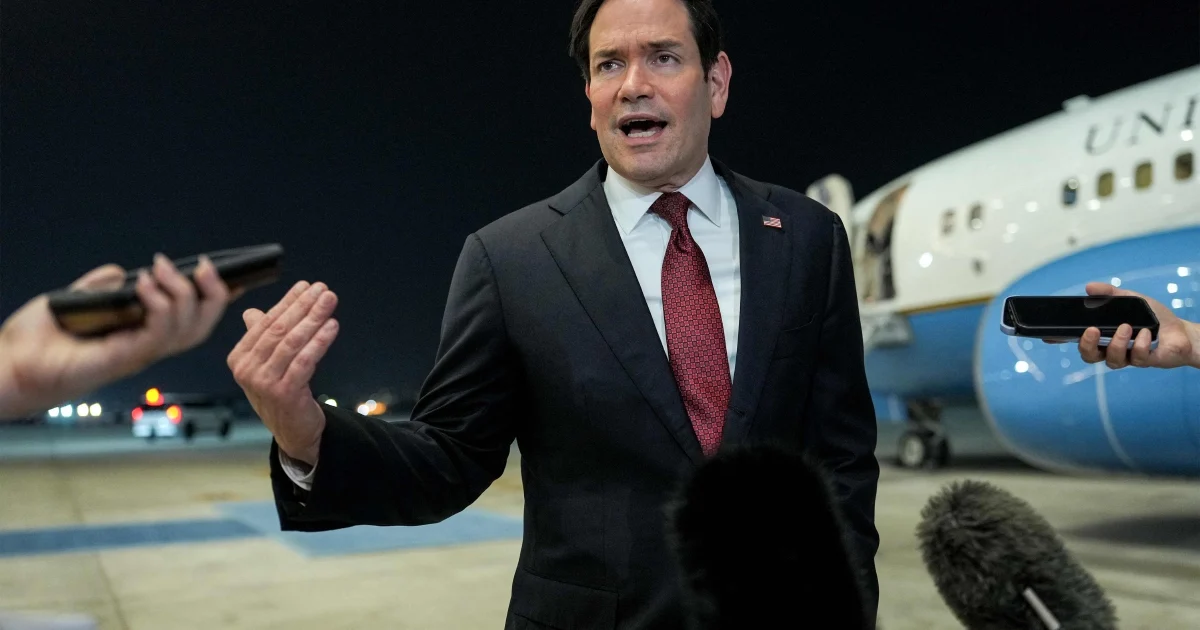
The United States has firmly rejected any arrangement allowing Iran to impose charges or tariffs on vessels transiting the Strait of Hormuz, marking a sharp divergence in early-stage negotiations aimed at resolving the wider Middle East conflict. US Secretary of State Marco Rubio's declaration on Tuesday underscores the fundamental disagreements that continue to plague diplomatic efforts, with American officials signalling that such proposals fall outside the acceptable parameters for any accord.
The Strait of Hormuz occupies a position of unparalleled strategic importance in global energy markets, with approximately one-third of the world's seaborne oil passing through its narrow waters annually. Any mechanism granting Iran regulatory authority or toll-collection powers over this crucial chokepoint would represent a dramatic shift in the geopolitical balance of the region, effectively handing Tehran significant leverage over international commerce. For Southeast Asian economies, particularly those dependent on Middle Eastern crude oil, such an arrangement would carry serious implications for supply chains and energy security.
Iran's apparent push to monetise control over the Strait reflects broader efforts to extract concessions that would enhance its regional standing and compensate for international sanctions that have strangled its economy. The proposal appears calculated to generate revenue streams that could bolster government finances and fund activities across the Middle East. However, the American rejection suggests that Washington views such demands as non-starters that would fundamentally alter the strategic landscape in ways incompatible with US interests and those of its regional allies.
The Hormuz disagreement represents merely the surface of deeper fissures emerging in talks that had been promoted as pathways toward stabilising the Middle East and ending protracted conflicts. Nuclear inspection protocols have emerged as another major sticking point, with both sides maintaining irreconcilable positions on the scope and frequency of monitoring arrangements. Iran appears reluctant to grant international inspectors unfettered access to all relevant facilities and documentation, while Washington insists on verification mechanisms stringent enough to ensure meaningful compliance.
Missile development constitutes a third critical area of contention. The Islamic Republic has invested heavily in expanding its ballistic and cruise missile capabilities, viewing them as essential deterrents against potential Israeli or American military action. Conversely, the United States and its partners regard Iran's missile programme as a direct threat to regional stability and have demanded verifiable limitations on both development and deployment. These competing security imperatives appear fundamentally incompatible within the current diplomatic framework.
For Malaysian policymakers monitoring these developments, the implications extend beyond abstract geopolitical concerns. Malaysia's economy remains vulnerable to energy price shocks, making Middle Eastern stability a direct Malaysian interest. Any breakdown in negotiations could precipitate renewed military confrontation, threatening the safe passage of oil and liquefied natural gas through regional waterways upon which Southeast Asia depends. Additionally, an escalating conflict could generate refugee flows and destabilise maritime commerce across the Indian Ocean, affecting Malaysian shipping and trade routes.
Rubio's hardline stance reflects the Trump administration's approach to Iran, characterised by maximum pressure strategies rather than constructive engagement. This positioning suggests that the United States views these negotiations primarily through a lens of constraining Iranian power rather than reaching genuine compromises. The early emergence of such fundamental disagreements raises serious questions about whether meaningful diplomatic progress is achievable under current American leadership.
The negotiation environment has proven particularly fraught because both sides entered talks with maximalist agendas. Iran appears to view discussions as opportunities to legitimise its existing capabilities while extracting material benefits, while the United States seeks to roll back Iranian influence across the region. These incompatible starting positions leave little middle ground for practical compromise.
Regional actors, including Saudi Arabia and the United Arab Emirates, have watched these negotiations with mixed emotions. While they welcomed the prospect of reducing Iranian influence, they also harbour concerns that American engagement could eventually lead to normalisation that leaves their own security vulnerabilities unaddressed. The failure of talks could paradoxically strengthen Iran's hand by justifying expansion of its military capabilities as self-defence against American hostility.
For businesses operating across Southeast Asia, these diplomatic failures introduce fresh uncertainty into long-term planning. Energy companies require stable regulatory environments and predictable shipping costs to make investment decisions. Should the Middle East descend into renewed conflict, operational disruptions and insurance cost escalations would ripple through global supply chains, affecting manufacturing competitiveness across the region.
The multiple dispute domains—tolls, nuclear inspections, and missiles—suggest that negotiators have failed to identify overarching frameworks capable of bridging fundamental strategic differences. Rather than constructing agreements incrementally through technical discussions, both sides appear locked in positional bargaining where concessions on one front become conditionally linked to gains elsewhere. This rigid approach often generates deadlock rather than progress.
Unless both Washington and Tehran demonstrate flexibility on core issues, the current negotiation phase appears destined to founder on these early disputes. Malaysian observers should prepare for the possibility that current diplomatic processes may collapse, necessitating contingency planning around energy security, maritime safety, and regional stability that assumes reduced American-Iranian cooperation in coming months.

