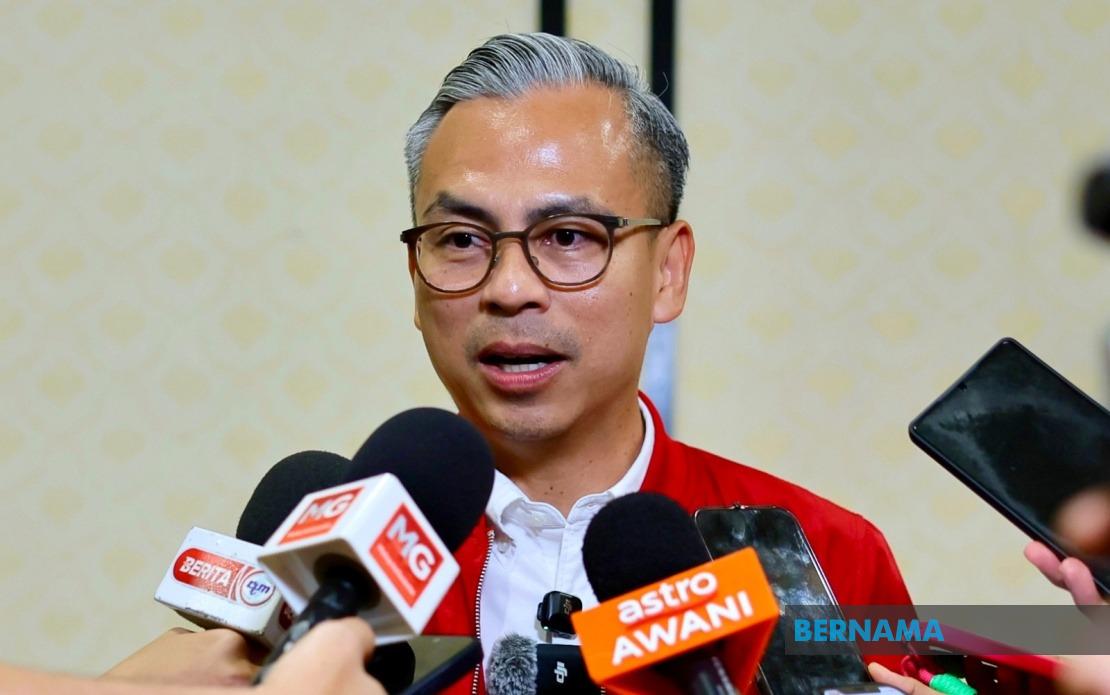
Communications Minister Datuk Fahmi Fadzil has announced that Radio Televisyen Malaysia stands prepared to facilitate a live broadcast dialogue between Johor Menteri Besar Datuk Onn Hafiz Ghazi and Pakatan Harapan's Puteri Wangsa candidate Dr Maszlee Malik, offering the state broadcaster's platform as a forum for substantive discussion ahead of the state election scheduled for July 11.
Speaking in Muar, Fahmi emphasised that the proposed exchange would not constitute a conventional political debate or partisan confrontation, but rather an opportunity for both figures to articulate their respective visions for Johor's development trajectory and future priorities. He stressed that the dialogue could occur at any mutually convenient time and location, with Johor Bahru among the potential venues, should both parties agree to participate in this public conversation.
The move represents an attempt to elevate the tenor of electoral discourse in Malaysia's southern state beyond campaign rhetoric and towards substantive policy discussion. Fahmi's offer comes amid pressure from certain quarters within the opposition coalition to name its Menteri Besar candidate before committing to any formal debate or public engagement with the incumbent administration, a condition that has complicated efforts to arrange such platforms in recent state elections across the region.
Fahmi articulated a broader philosophy about leadership qualities necessary for effective governance, arguing that the capacity to engage with opposing viewpoints and withstand criticism in a professional manner constitutes an essential attribute for any leader aspiring to guide a state's development over the coming five-year term. This framing suggests that willingness to participate in such dialogues should itself be evaluated as indicative of a candidate's suitability for high office.
The Communications Minister acknowledged Maszlee's proactive approach to engagement, commending the Pakatan Harapan candidate for conducting an interactive dialogue with 41 young voters to explore Johor's future aspirations and development objectives. This existing precedent of grassroots engagement apparently informed Fahmi's confidence that substantive conversation between the two leading candidates would prove beneficial to the electorate's understanding of their respective platforms.
With polling day now fixed for July 11 and early voting scheduled for July 7, Fahmi has appealed to young voters to prioritise their civic participation despite potential logistical inconveniences related to the mid-month timing. His exhortation emphasises that voter turnout among younger demographics remains crucial to determining Johor's developmental direction for the subsequent quinquennium, suggesting that youth engagement could prove decisive in shaping the outcome.
The Puteri Wangsa constituency presents a complex multi-candidate contest that extends beyond the traditional two-party framework characterising Malaysian electoral politics. Maszlee faces competition not only from Barisan Nasional's Teow Chia Ling but also from Nicholas Paul Vincent representing Parti Bersama Malaysia, Rashifa Aljunied of the Malaysian United Democratic Alliance, and independent contestant Wang Wee Seong. This fragmentation of the opposition vote could significantly influence the seat's final outcome, potentially reshaping calculations about the overall election result.
In contrast, the Machap constituency where Onn Hafiz seeks re-election as Barisan Nasional's incumbent presents a more straightforward electoral contest, with the Menteri Besar facing a direct challenge from Pakatan Harapan's Nor Hafiz Roslan. The absence of third-party candidates in this seat concentrates voter choice more starkly and may amplify the significance of any public engagement between the two frontrunners.
The strategic calculus underlying Fahmi's proposal reflects Pakatan Harapan's confidence in Maszlee's ability to articulate compelling arguments for development priorities that might resonate with Johor voters. By framing the dialogue as a vehicle for discussing substantive policy rather than mere partisan point-scoring, the communications minister attempts to establish conditions favourable to his coalition's messaging while simultaneously challenging the incumbent administration to demonstrate its commitment to open democratic discourse.
For Malaysian political observers, the offer illuminates ongoing tensions between traditional electoral formats and contemporary expectations for more substantive public engagement by candidates. The Communications Ministry's willingness to mobilise state broadcasting infrastructure for such purposes suggests official recognition that voter appetite for detailed policy discussion extends beyond rallies and campaign materials, particularly among younger demographics increasingly sceptical of conventional political theatre.
The acceptance or rejection of this platform by either candidate will carry symbolic weight extending beyond the immediate Johor election context. In an era of intensifying scrutiny regarding democratic health and political polarisation in Malaysia, a robust public dialogue broadcast nationally could either demonstrate the maturity of electoral competition or, conversely, its absence might reinforce perceptions of avoidance and partisan posturing among political leadership.
For regional observers tracking Malaysian electoral dynamics, the Johor state election assumes particular significance as the country's most populous state and a longtime Barisan Nasional stronghold. The outcome will provide crucial indicators about shifting voter preferences and the effectiveness of Pakatan Harapan's revival strategy following its federal electoral setbacks in recent years.

