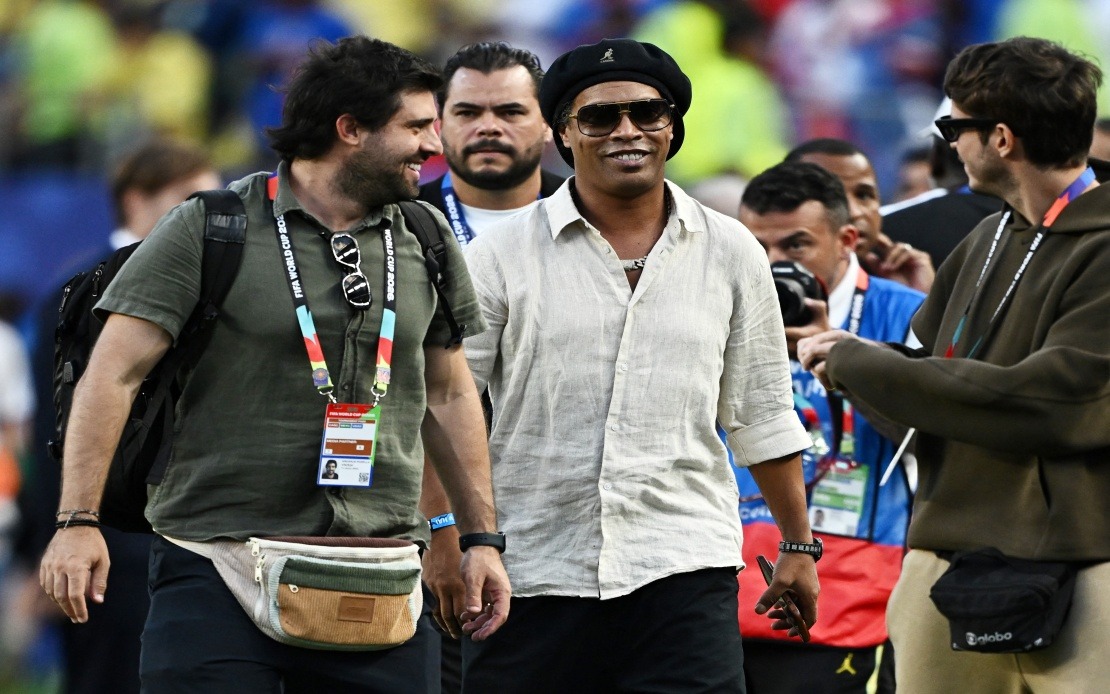
At 46 years old, Ronaldinho appears poised to embark on an extraordinary sporting comeback by joining Italian third-division club Ravenna, according to reporting by the German Press Agency (dpa). The former Brazil international, widely regarded as one of football's most talented and entertaining players, has signalled his intention to sign a contract with the Emilia-Romagna based club, though questions remain about whether the veteran will actually take the field in competitive matches. Further details are expected to emerge following an announcement event scheduled for Miami on Tuesday.
The prospect of Ronaldinho playing competitive football again has generated considerable intrigue, given that the legendary playmaker has not appeared in a professional match since 2015 when he turned out for Rio de Janeiro's Fluminense. His stated remarks reveal his enthusiasm for the venture, with Ronaldinho expressing eagerness to return to his craft. "I can't wait to dance with the ball again and write a new story with Ignazio and the whole Cipriani family," he declared, referencing Ignazio Cipriani, the club owner whose business empire spans hospitality and hotel operations.
Ravenna's leadership has adopted an open but cautious stance regarding the Brazilian's potential participation. Ariedo Braida, the club's vice-president, acknowledged the uncertainty surrounding whether Ronaldinho would move beyond ambassadorial or promotional duties into actual playing time. Speaking to ANSA, Braida suggested that while the possibility cannot be dismissed entirely, the club remains focused on leveraging Ronaldinho's immense reputation and experience. "He is a champion, he knows no age," Braida observed, hinting that Ronaldinho's football intelligence and technical mastery might transcend the normal physical limitations associated with advancing years.
Ronaldinho's illustrious career achievements underscore the magnitude of any potential return. The Brazilian was crowned World Footballer of the Year on two occasions, a distinction earned only by the sport's elite practitioners across generation. His trophy cabinet includes a 2002 FIFA World Cup triumph with Brazil, the ultimate prize in international football and a moment that defined his generation. At club level, he captured the UEFA Champions League with Barcelona in 2006, establishing himself as a pivotal figure during the Catalan club's resurgence as a continental powerhouse.
Beyond Europe, Ronaldinho demonstrated his ability to galvanize teams across continents. His move to Brazil's Atletico Mineiro in 2012 was transformative for the club, culminating in the 2013 Copa Libertadores victory, South America's premier club competition. This achievement demonstrated that his technical prowess and competitive edge remained formidable well into his thirties, attributes that might theoretically extend into his fifth decade depending on physical conditioning and match preparation.
The eight-year gap since his final professional appearance raises significant questions about the feasibility of a genuine return to playing football. After departing Fluminense in 2015, Ronaldinho spent time competing in India's Premier Futsal League, a five-a-side format that demands different physical and technical demands than eleven-a-side football. He officially concluded his career in 2017, a decision that appeared final and definitive at the time.
For Malaysian and Southeast Asian football enthusiasts, Ronaldinho's potential comeback carries special resonance. The Brazilian's playing style—characterised by creativity, improvisation, and joy rather than mere athletic dominance—influenced an entire generation of players throughout Asia. His ability to produce moments of individual brilliance, particularly his mastery of set-piece delivery and dribbling in tight spaces, inspired young footballers across the region to develop their technical skills beyond conventional training methodologies.
Ravenna's decision to pursue Ronaldinho also reflects broader trends in European football's lower divisions, where clubs increasingly seek marquee figures to enhance commercial appeal and media attention. Italian football's third tier has expanded its global reach and commercial sophistication in recent years, making high-profile signings increasingly feasible despite financial constraints. A player of Ronaldinho's stature could generate significant matchday attendance increases and international media coverage that transcends typical expectations for that level of competition.
The announcement scheduled for Miami suggests strategic marketing coordination, possibly indicating that the deal encompasses broader commercial and entertainment dimensions beyond traditional football performance metrics. The choice of venue implies that the Cipriani family intends to leverage American media exposure alongside European interest, positioning the signing as a global sporting narrative rather than merely an Italian club acquisition.
Ultimately, whether Ronaldinho actually plays competitive matches or serves primarily in an ambassadorial capacity remains genuinely uncertain. Italian third-tier football demands considerable physical intensity and tactical discipline, elements that challenging to maintain after nearly a decade of professional inactivity regardless of individual talent. The club's cautious public statements suggest internal awareness of these practical constraints. Nevertheless, the sheer possibility of witnessing one of football's greatest entertainers return to competitive action, even sporadically, has already captured imaginations across the sport globally.
The coming days will provide clarity on the precise nature of Ronaldinho's involvement with Ravenna. Whether genuine competitive football materialises or the engagement remains primarily promotional, the narrative itself underscores football's unique capacity to captivate audiences through the exploits of its greatest performers, regardless of age or time elapsed since their previous prominence.

