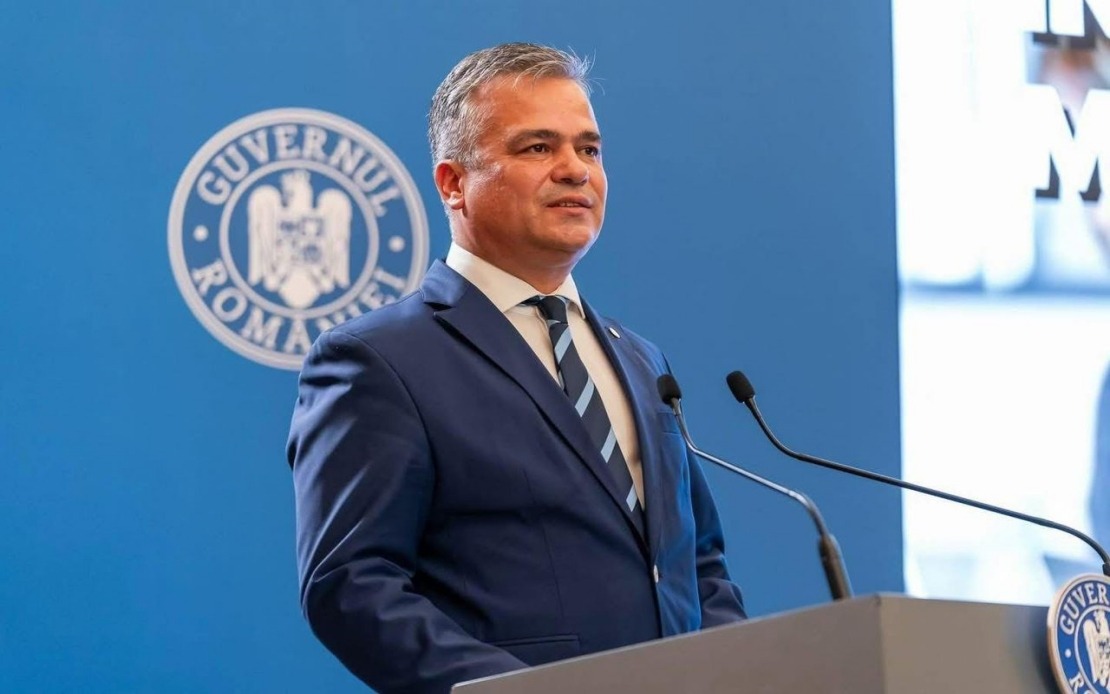
Adrian Vestea, Romania's prime minister-designate and a senior figure within the National Liberal Party, has moved to consolidate political authority by submitting his government programme and complete ministerial roster to the Romanian Parliament on Monday. The formal submission represents a critical juncture in resolving months of political uncertainty that have hampered the functioning of state institutions across the Balkan nation. Speaking through social media, Vestea framed the presentation as essential groundwork to establish firm governance structures and restore public confidence in institutional performance after a prolonged period of governmental instability.
The backing of the Social Democratic Party constitutes a significant political development, marking an unexpected coalition arrangement that defies previous public positioning from major party leadership. The SDP formally endorsed Vestea's candidacy during a closed-door party meeting on Sunday, signalling a pragmatic willingness to engage with the centrist National Liberal Party despite ideological differences. This convergence illustrates how the urgency of restoring functional governance can override traditional left-right political divisions, a dynamic increasingly visible across Central European democracies navigating institutional reform and European integration demands.
The proposed administration has identified five core strategic priorities that will guide policy formulation and resource allocation throughout the term. First among these stands the achievement of sustained political stability, addressing the institutional paralysis that has characterised recent months. The government intends to accelerate the absorption of European Union funding streams, a critical objective for any Bucharest administration seeking to modernise infrastructure and boost living standards while competing for limited EU resources alongside peer nations. Maintenance of macroeconomic equilibrium ranks as the third priority, reflecting awareness of inflationary pressures and fiscal constraints affecting the broader region.
Infrastructure development constitutes the fourth pillar, targeting transportation networks, digital connectivity, and utilities modernisation that successive Romanian governments have struggled to advance effectively. The fifth priority encompasses strategic initiatives within national security frameworks, likely encompassing NATO alignment, cybersecurity resilience, and border management—concerns of heightened salience given geopolitical turbulence affecting Eastern Europe. This multi-dimensional agenda attempts to address both immediate governance challenges and longer-term structural transformations necessary for Romanian economic and security competitiveness.
The composition of the proposed cabinet represents a delicate balancing act reflecting Romania's fractionalised political landscape. While the National Liberal Party officially maintains a public stance rejecting formal coalitions with left-wing organisations, the ministerial lineup includes figures loyal to Vestea from the NLP alongside members drawn from the Social Democratic Party. This arrangement circumvents strict coalition language while enabling de facto governing cooperation, a structural compromise that allows both parties to claim political independence while functioning as an effective parliamentary majority. Such arrangements have become increasingly common across European parliaments where fragmented electoral outcomes preclude single-party dominance.
For Malaysian and Southeast Asian observers, the Romanian experience offers instructive parallels regarding coalition-building in multi-party democracies and the tension between ideological positioning and pragmatic governance. Like several Southeast Asian nations, Romania navigates the challenge of balancing deeply embedded party identities with the functional necessity of securing parliamentary majorities sufficient to enact legislation and manage state apparatus. The willingness of Romanian parties to cooperate despite public rhetoric suggests that institutional survival often supersedes partisan branding when governments face legitimacy crises.
The critical outstanding question concerns parliamentary approval of the proposed cabinet composition. Romanian media outlets have reported continuing uncertainty about whether sufficient votes will materialise to confirm the ministerial list, suggesting that behind-the-scenes negotiations remain ongoing. Individual deputies may harbour reservations about specific ministerial appointments or broader policy orientations, potentially complicating ratification despite organisational-level party endorsements. Such discrepancies between leadership commitments and rank-and-file parliamentary behaviour frequently emerge during cabinet confirmation votes across European democracies.
The timing of this cabinet formation occurs amid broader European economic and security concerns that heighten expectations for decisive governance from Bucharest. Romania's position within the European Union and NATO makes its institutional stability consequential beyond domestic boundaries, affecting regional policy coordination on matters ranging from energy security to migration management. A prolonged period without confirmed executive authority creates governance gaps that neighbouring states and EU institutions find problematic when addressing cross-border challenges requiring coordinated responses.
Vestea's political trajectory as first vice-chair of the National Liberal Party positions him as a modernising figure within centrist Romanian politics, yet his necessity to forge unexpected alliances underscores the fragmentation characterising contemporary Romanian party politics. The NLP itself reflects internal divisions between reformist and traditional wings, with Vestea representing actors committed to European integration frameworks and technocratic governance approaches. His ability to assemble a functional cabinet while navigating both intra-party divisions and inter-party negotiations will substantially determine whether his administration can execute the ambitious agenda outlined in the government programme submitted to parliament.

