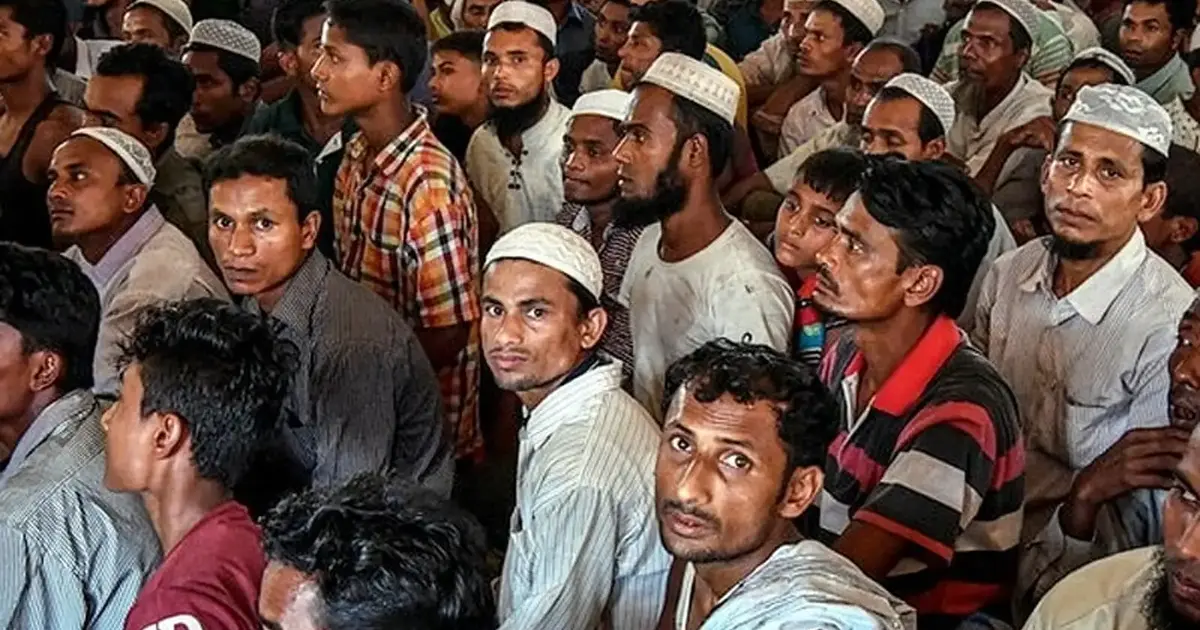
The Rohingya Ulama Council, a key representative body for the stateless community in Malaysia, has moved to extinguish growing speculation about citizenship aspirations by categorically denying what it describes as unfounded allegations. In a statement reflecting mounting concern about reputational harm, chairman Rahimullah Hussain characterised the claims as inventions designed to generate animosity towards the vulnerable refugee population already navigating complex social dynamics across Southeast Asia.
The assertion arrives amid longstanding tensions surrounding Rohingya presence in Malaysia, where over 180,000 members of the ethnic group have sought refuge following successive waves of displacement from Myanmar. Unlike neighbours Thailand and Bangladesh, which host far larger camps, Malaysia has no formal refugee recognition framework, leaving residents in legal limbo without official documentation or pathway to permanent status. This ambiguity has historically fuelled misconceptions about Rohingya intentions and sparked periodic public backlash in a nation grappling with rapid demographic shifts and citizenship concerns.
Rahimullah's intervention represents a strategic effort to separate contemporary advocacy work—centred on securing humanitarian protections, livelihood access, and education for displaced children—from inflammatory narratives about long-term settlement plans. The distinction carries particular weight given Malaysia's constitutional restrictions on citizenship eligibility and the political sensitivity surrounding migration policy in a multicultural democracy where immigration remains contested terrain. By positioning the council as defending community dignity rather than pressing territorial claims, leadership attempts to reframe the conversation around welfare needs rather than permanence.
The denial underscores how allegations of citizenship-seeking can rapidly escalate tensions in host societies harbouring scepticism about refugee populations. In Malaysia's context, where citizenship is guarded and immigration debates frequently intersect with ethnic and religious identity politics, such accusations gain outsized traction regardless of evidence. Previous instances of uncorroborated claims about refugee behaviour have mobilised opposition and sometimes prompted policy responses, creating a feedback loop where misinformation shapes public discourse and, occasionally, government action.
Rohingya presence in Malaysia remains fundamentally precarious. Unlike signatories to the UN Refugee Convention—Malaysia has not ratified the treaty—the country offers no legal status category for asylum-seekers beyond administrative tolerance. Residents depend on UNHCR documentation and navigate restrictions on employment, property ownership, and access to public services. This vulnerability makes the community susceptible to scapegoating, particularly when economic anxieties or broader nationalist sentiments surge. The council's rebuttal attempts to shift narrative focus toward shared humanitarian concerns transcending citizenship debates.
The timing of these denials also reflects patterns in how misinformation about marginalised communities circulates across Southeast Asia. Digital platforms amplify rumours with minimal verification, and competing political actors sometimes weaponise refugee narratives to mobilise support or distract from other governance failures. Malaysia's experience mirrors tensions in Bangladesh and Thailand, where host-community anxieties about permanent settlement periodically erupt despite humanitarian imperatives governing refugee protection. Understanding these regional parallels helps contextualise why leadership must repeatedly disavow fabricated claims.
For many Rohingya individuals and families, Malaysia represents a temporary haven rather than a permanent destination. The majority maintain orientation toward Myanmar, hoping eventual political transformation might enable safe return. Some have secured third-country resettlement through international programmes, though pathways remain limited and selective. Others contemplate onward migration to Australia, Canada, or European nations where refugee sponsorship operates more formally. This reality complicates easy narratives about settlement intentions, yet complexity rarely survives political messaging cycles.
The council's position also reflects internal community efforts at formal representation and legitimacy-building. By articulating clear positions through established spokespersons, Rohingya leadership seeks to participate in Malaysian civil society discourse as stakeholders in policy conversations affecting their constituents. This institutional development—itself relatively recent—signals maturation of refugee organising while attempting to establish ground-level authority that countermands rumour and speculation originating outside community structures.
Governmental silence on such allegations carries its own significance. Malaysia's various administrations have avoided categorical statements defending Rohingya against citizenship accusations, instead treating the matter as peripheral to official policy frameworks. This absence implicitly allows speculation to persist, potentially advantaging actors invested in portraying refugees as threats. More forthright official clarification regarding legal citizenship frameworks and explicit policy parameters might reduce space for conspiracy narratives, yet such statements require political capital authorities often prefer conserving.
The broader implication extends beyond immediate Rohingya concerns. How Malaysia—as a diverse nation with its own complex citizenship history—manages refugee narratives and protects vulnerable populations from malicious mischaracterisation signals commitments to human dignity and rule-of-law governance. The council's denial, though necessary, constitutes a defensive posture that reactive rather than proactive. Sustainable resolution requires not merely refuting false claims but fostering institutional safeguards against their generation and amplification, coupled with transparent policymaking that acknowledges both humanitarian obligations and legitimate state interests in managing migration flows.

