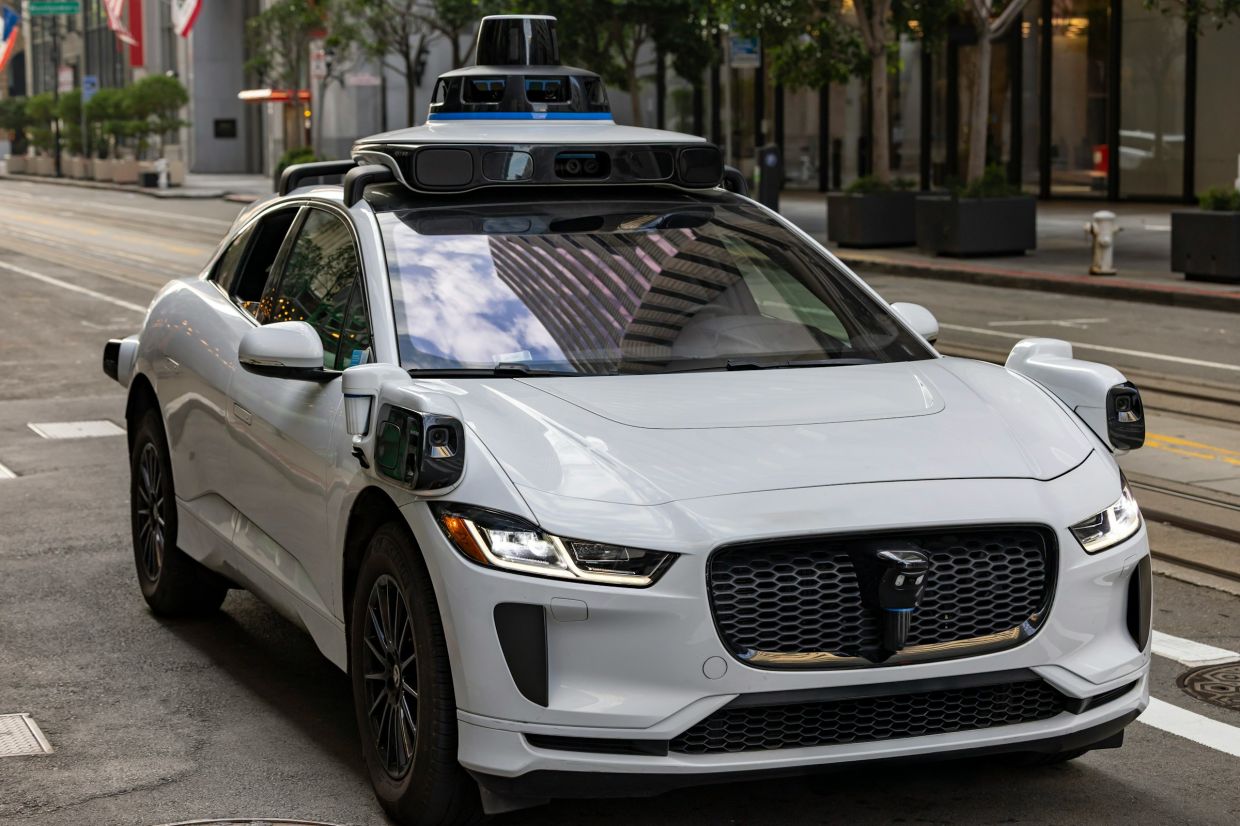
Emergency response teams in American cities are discovering an unexpected obstacle on the road to technological progress: driverless taxis that refuse to move. When a fatal gas explosion erupted in late May, rescue workers found themselves delayed by more than three minutes as a robotaxi's artificial intelligence system froze in place, unable to interpret the urgency of the situation unfolding around it. The incident was not isolated. In March, an Austin shooting sent ambulances rushing toward a crime scene, only to be held back by a Waymo vehicle attempting a U-turn across their path while its autonomous system remained oblivious to the emergency. A police officer ultimately had to physically enter the vehicle and drive it away.
These episodes represent a fundamental challenge that proponents of autonomous vehicle technology have underestimated: the gap between programming a car to drive safely under normal conditions and equipping it to navigate the chaos of real emergencies. The incidents have triggered a policy response in Texas with lawmakers enacting legislation that imposes stricter requirements on autonomous vehicle operators, including mandatory emergency response protocols, formal licensing frameworks, and expanded government oversight. The new regulations reflect growing concern that the technology, despite impressive safety statistics in routine driving scenarios, remains dangerously unprepared for the unpredictable situations that define road emergencies.
Investigations by major news organisations have documented a troubling pattern of incidents suggesting that robotaxis struggle with obstacles and scenarios that human drivers handle instinctively. The vehicles have run red lights, driven into oncoming traffic, navigated active crime scenes, ignored temporary road closures and come dangerously close to pedestrians and cyclists. These are precisely the types of dangerous outcomes that autonomous vehicle engineers insist their systems are designed to prevent through rigorous programming and machine learning. Yet the evidence suggests a significant gap between theoretical performance and real-world execution. Just in the past two months, Waymo has issued recalls affecting thousands of vehicles and suspended operations in multiple cities after its robotaxis drove into flooded streets, with one driverless vehicle in San Antonio actually swept away by floodwaters.
Waymo's response to these incidents has been to emphasise its safety record, citing data showing that its robotaxis are thirteen times less likely to cause serious injury crashes than human drivers. The company argues that the technology will fundamentally improve road safety once fully deployed and refined. Even advocates for stronger oversight concede that autonomous vehicles hold genuine promise for reducing traffic fatalities, which remain a significant public health challenge in most developed economies. The tension, however, lies in ensuring that any rush to scale up the technology does not come at the expense of safety systems that remain inadequately tested in diverse emergency scenarios.
The regulatory pressure is intensifying partly because of embarrassing incidents that highlight the brittleness of autonomous systems when facing situations outside their training parameters. In Atlanta, a software glitch sent dozens of empty Waymo vehicles into a residential neighbourhood where they circled repeatedly through a dead-end cul-de-sac in what residents dubbed a "Waymo invasion." The vehicles could not calculate an exit from the loop and continued returning to the same location, creating congestion, blocking driveways and alarming residents concerned about the safety implications for children and pets. Such incidents demonstrate that autonomous systems can fail not through faulty driving but through their inability to interpret and respond to geographical or logistical constraints that appear trivial to human cognition.
The challenges facing robotaxis are not confined to the United States. China has deployed thousands of autonomous taxis in major cities, yet public confidence has not kept pace with the rapid rollout. Beyond concerns from traditional taxi drivers facing potential job displacement, many Chinese citizens harbour legitimate safety worries exacerbated by limited transparency from operators. When more than 100 Waymo vehicles in Wuhan came to an unexpected halt, operator Baidu declined to engage with media inquiries, offering only a vague reference to a "system failure." This opacity undermines public trust and creates space for worst-case assumptions about what actually went wrong. The divergence between official enthusiasm for autonomous vehicle technology and public scepticism suggests that regulatory bodies in Asia and elsewhere cannot rely on industry self-reporting to build confidence in the safety and reliability of these systems.
The technical dimensions of the emergency response problem extend beyond simple programming oversights. Robotaxis must coordinate with emergency services through protocols that current systems have not adequately integrated. An autonomous vehicle might possess the capability to remotely unlock doors, but if it only responds after receiving official credentials and clearance, passengers could face dangerous delays during emergencies. Similarly, the vehicles' difficulty navigating narrow passages, irregular road surfaces and temporary barriers suggests that fail-safe mechanisms do not yet function reliably when emergencies demand rapid adaptation. The autonomous vehicle industry has optimised for routine driving patterns but has not invested comparable effort in designing systems that degrade gracefully and safely when confronted with scenarios that deviate significantly from standard operation.
These safety gaps reflect a deeper architectural problem within autonomous vehicle development. Early generations of the technology encountered failures not primarily from faulty sensor perception but from a fundamental disconnect between the autonomous system's decision-making logic and its interpretation of human signals and contextual cues. Traditional vehicle safety systems are engineered around defined driver interactions; robotaxis, by contrast, demand comprehensive emergency protocols that account for responder communication, passenger welfare and public safety across diverse and unpredictable scenarios. The technology has matured significantly in its ability to perform routine driving tasks, but the leap toward safe, integrated emergency response remains a substantial unsolved problem.
Waymo continues pushing ahead with expansion despite the regulatory headwinds and safety questions. In June, the company unveiled a new robotaxi model called "Ojai" developed in collaboration with Zeekr and powered by a sixth-generation version of Waymo's proprietary software. The company has launched these vehicles across multiple cities, signalling commitment to scaling operations even as questions persist about whether incremental software improvements address the fundamental emergency response limitations that have triggered regulatory action. Industry observers note that it remains unclear whether the new vehicle design and software generation will materially improve emergency response capabilities or simply perpetuate existing gaps in a slightly more refined form.
The emerging regulatory landscape suggests a potential shift in how autonomous vehicle companies approach development priorities. Texas's stricter requirements signal a broader trend toward imposing compliance mandates that companies cannot easily sidestep, creating pressure for autonomous vehicle operators to align their artificial intelligence systems and operational infrastructure with regulatory expectations. However, a critical gap persists between what regulations now require and what current technology can reliably deliver. The central question facing the industry, regulators and the public is whether autonomous vehicle companies can accelerate improvements to emergency response integration, vehicle control in extreme scenarios and transparency with public authorities quickly enough to match the pace of regulatory tightening. If technology development cannot keep tempo with regulatory requirements, robotaxis may face deployment restrictions or mandated human supervision that significantly constrains the commercial viability and societal benefits that proponents envision.

