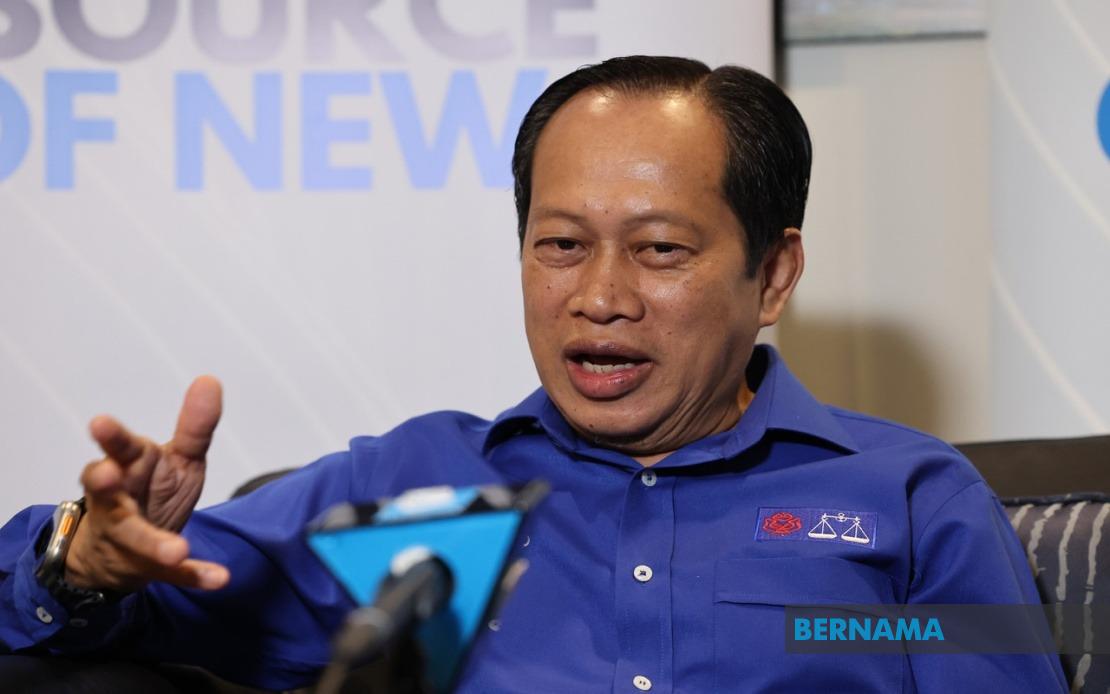
The challenge of maintaining Malaysia's road network cannot be resolved by any single agency acting in isolation, according to Deputy Works Minister Datuk Seri Dr Ahmad Maslan, who has urged elected representatives and government bodies to work together towards swift resolution of deteriorating road conditions. Speaking in Johor Bahru on July 2, Ahmad highlighted the multifaceted nature of road upkeep, stressing that assemblyman, Members of Parliament, and local agencies each carry responsibility for identifying and addressing problems within their jurisdictions.
The minister's remarks came against the backdrop of recent public attention drawn to road conditions along Jalan Tebrau, where Pakatan Harapan candidate for the Puteri Wangsa state seat Dr Maszlee Malik conducted a survey of the stretch connecting Kampung Melayu Majidi to Ulu Tiram. On June 29, the former Education Minister drove a Perodua Myvi along the route after constituents raised complaints on social media platforms about potholed surfaces and traffic flow problems during peak hours. His subsequent account detailed how the vehicle experienced jolting movements at multiple points due to uneven pavement, underscoring the practical impact of maintenance neglect on motorists.
Ahmad responded to the situation by announcing fresh instructions to the Public Works Department to accelerate repair work on compromised roads throughout the state. The directive reflects growing recognition that delayed maintenance creates cascading problems affecting commuters and potentially undermining confidence in government service delivery. By positioning road upkeep as a shared responsibility rather than a technical matter confined to engineers and bureaucrats, the minister sought to invoke accountability across the political spectrum and institutional hierarchy.
Johor's administrative structure includes ten district Public Works Department offices, which Ahmad has personally visited to assess operational capacity and receive development briefings. During these inspections, he underscored the importance of rapid response protocols whenever road damage is reported or detected. The scale of Johor's road network and the distributed nature of oversight responsibilities mean that coordination failures at any level—whether from elected representatives slow to report issues or local agencies sluggish in responding—create bottlenecks that harm public interests.
The administrative mechanism for road maintenance financing operates through established channels designed to ensure systematic allocation of resources. Federal roads, highways, and bridges receive maintenance funding that is funnelled via the State Economic Planning Unit and the state executive council. This arrangement permits systematic assessment and prioritisation of applications before funds are released, theoretically ensuring that the most urgent repairs receive attention first. However, the layered approval process can sometimes introduce delays, particularly when applications languish at intermediate stages or when competing development priorities absorb available budgets.
For Malaysian road users, the practical implications of Ahmad's call for cooperation extend beyond bureaucratic coordination. Poor road conditions increase accident risk, elevate vehicle maintenance costs for drivers, and reduce journey efficiency for commercial transport. When pothole-ridden stretches like Jalan Tebrau become notorious through social media exposure, they generate broader questions about infrastructure investment priorities and whether maintenance budgets are adequate relative to the actual condition of the existing road stock. The incident also demonstrated how opposition figures can effectively highlight governance gaps by documenting infrastructure problems firsthand, creating political pressure that sometimes accelerates action.
The emphasis on assemblymen and MPs taking ownership of road conditions within their constituencies reflects a decentralisation of accountability that, in theory, should make the system more responsive. Local elected representatives have stronger incentives to address complaints from constituents since poor road conditions directly affect their political standing. Similarly, encouraging MPs to engage with local authorities on road maintenance activates additional oversight mechanisms. When these representatives function effectively as intermediaries between public grievances and bureaucratic action, the system operates more smoothly.
However, the actual effectiveness of Ahmad's appeal depends on political will and resource availability. In some constituencies, elected representatives from opposition parties may find their requests for road repairs deprioritised or delayed through bureaucratic channels, while government-aligned representatives enjoy swifter processing. Such partisanship in infrastructure maintenance undermines the efficiency gains Ahmad seeks and erodes public trust. Conversely, when elected officials—regardless of party affiliation—press the Public Works Department with equal vigour and all requests receive fair consideration based purely on road condition severity, the system becomes more equitable and credible.
The Jalan Tebrau situation also illustrates how infrastructure problems often accumulate gradually until they reach levels that trigger public complaints and media attention. Regular monitoring and preventive maintenance could have addressed surface deterioration before it reached the point where constituent complaints mounted on social media. This suggests that beyond better coordination between parties, Malaysia's road maintenance system might benefit from more proactive inspection regimes and smaller, timely repairs rather than reactive approaches that address problems only after they become politically visible.
For Malaysian readers across the country, Ahmad's message carries broader implications about infrastructure governance beyond Johor. States and federal territories with similar administrative structures face equivalent coordination challenges. The principle that road maintenance requires unified effort across multiple stakeholders applies nationwide, yet implementation quality varies considerably. Some states have achieved impressive results through genuine cooperation, while others remain plagued by finger-pointing between federal, state, and local authorities. Ahmad's public call for cooperation serves partly as a commitment to his ministry's priorities and partly as a subtle acknowledgement that current systems are producing suboptimal outcomes.
The medium-term test of Ahmad's stated commitment will be observable through repair timelines on problem roads like Jalan Tebrau and whether public complaints about road conditions subsequently diminish. If the coordinated approach he advocates produces measurable improvements within months, it validates the cooperative model. If problems persist or recur, it suggests that either resources remain inadequate, coordination remains ineffective in practice despite rhetorical commitment, or that underlying structural issues require more fundamental reform. Malaysian motorists and taxpayers will ultimately judge the effectiveness of such initiatives through their daily experience navigating the nation's roads.

