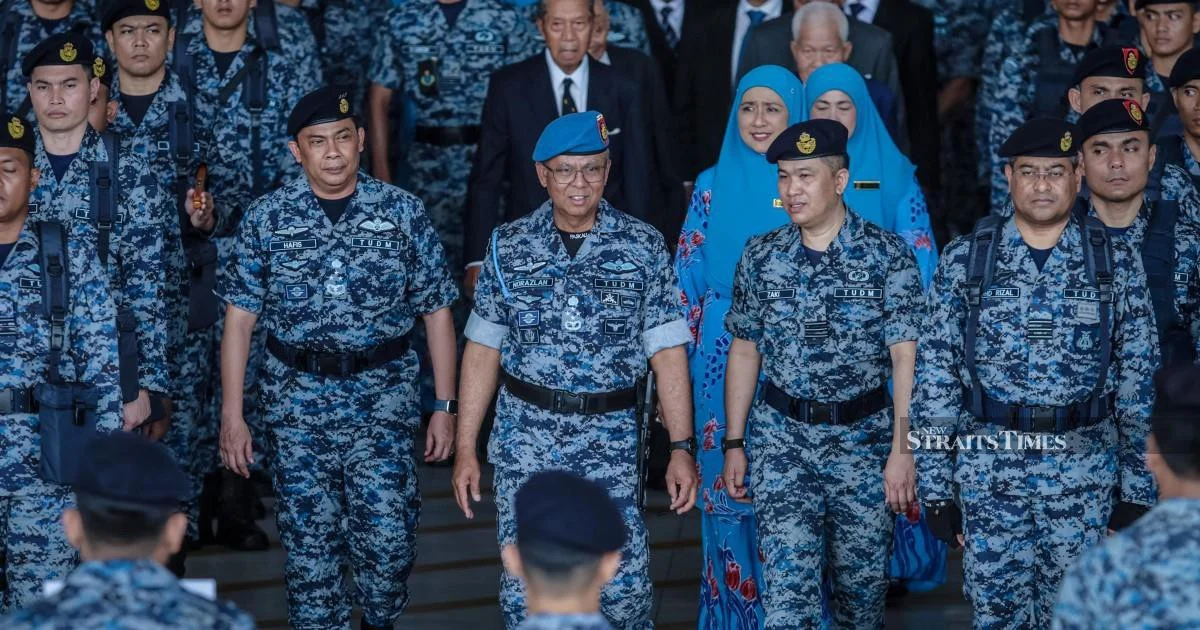
Malaysia's ability to defend its extensive maritime interests hinges increasingly on robust air force capabilities, according to the Royal Malaysian Air Force's top commander. General Tan Sri Muhamad Norazlan Aris delivered this assessment during an address in Subang, framing aerial defence as fundamental to protecting the nation's coastal shipping lanes and economic lifelines at a time when regional tensions continue escalating. His remarks reflect mounting concerns within defence circles about the vulnerability of one of the world's busiest maritime corridors to multiple security threats.
The statement arrives as Malaysia grapples with a complex strategic environment characterised by competing territorial claims, rising naval presence from multiple powers, and transnational security challenges including piracy and smuggling networks. The country's geographic position astride key sea lanes connecting the Indian and Pacific Oceans makes maritime security a cornerstone of national interest, with trillions of dollars in annual trade flowing through Malaysian waters. Any disruption to these routes would cascade through regional supply chains and directly threaten Malaysia's strategic influence and economic prosperity.
The RMAF chief's emphasis on air power reflects a broader shift in maritime defence doctrine globally. Modern naval operations increasingly depend on aerial reconnaissance, surveillance, and rapid-response capabilities rather than purely surface-based assets. For a nation with Malaysia's naval resources, developing stronger air force capabilities represents a cost-effective approach to extending protective coverage across vast maritime spaces. Aerial platforms can monitor larger areas with greater speed and flexibility than conventional ships, providing early warning systems and rapid response options to emerging threats.
Regional geopolitical complications have intensified pressure on Malaysian defence planners to reassess existing capabilities. The South China Sea, through which substantial portions of Malaysian trade passes, has witnessed increased military activity from major powers. Concurrent territorial disputes, freedom of navigation concerns, and periodic incidents involving naval vessels have created an unpredictable security landscape. These developments have convinced military strategists that Malaysia cannot rely solely on traditional surface-based maritime defence, but must invest meaningfully in air superiority and surveillance infrastructure.
Malaysia's current air force composition reveals both strengths and significant gaps in addressing modern maritime threats. The RMAF operates sophisticated fighter jets and surveillance aircraft, yet defence analysts consistently identify capacity limitations in sustained operations across the extensive maritime zones Malaysia claims jurisdiction over. Extended air patrols across shipping lanes demand numerous aircraft operating simultaneously, substantial ground support infrastructure, and continuous pilot training regimens—all resource-intensive commitments that strain existing budgets. The strategic implication is clear: without expanded capabilities, Malaysia cannot effectively monitor or respond to threats across its full maritime domain.
The practical challenges extend beyond aircraft numbers to encompassing technological sophistication and operational flexibility. Modern maritime threats often emerge rapidly and demand swift airborne response, capabilities the RMAF continues developing. Unmanned aerial systems, advanced radar networks, and integrated command-and-control systems represent the technological frontier, though procurement and maintenance costs limit Malaysian deployment of these assets. The RMAF chief's statements likely signal internal advocacy for increased defence budget allocations, particularly toward air force modernisation programmes.
Southeast Asian context amplifies the urgency of the RMAF's position. Regional neighbours including Singapore, Thailand, and Indonesia have invested substantially in modern air force capabilities and unmanned surveillance systems. Malaysia's desire to maintain strategic parity and independent maritime security capacity requires comparable investment trajectories. Falling behind regional peers in air power would undermine Malaysia's ability to advocate effectively in multilateral security discussions and protect national interests in contested maritime zones.
The economic dimensions of maritime route security extend beyond preventing dramatic disruptions to encompassing insurance costs and shipping efficiency. Insurance premiums rise in waters perceived as inadequately patrolled or prone to piracy and interdiction. Shipping lines increasingly route vessels through perceived safer corridors, even at longer distances. These dynamics directly impact Malaysian ports and shipping industries, creating commercial pressure for visible, credible maritime security demonstrated through enhanced air force presence and capability. The RMAF chief's statement reflects this commercial reality alongside traditional security concerns.
Defence procurement remains deeply political in Malaysia, where budget competition across military services proves intense. The RMAF's emphasis on air power's critical role represents an institutional argument for greater resource allocation to aviation programmes over naval or land-based alternatives. This institutional positioning reflects genuine strategic requirements, yet also reveals how security discussions inevitably involve bureaucratic competition for limited defence funds. Understanding both dimensions—the authentic strategic need and institutional incentives—provides fuller context for interpreting military leadership statements.
International partnerships offer one pathway for Malaysia to enhance air power without unsustainable domestic expenditure. Strategic military relationships with allied nations can provide advanced surveillance sharing, joint training opportunities, and technology transfer arrangements. The RMAF chief's statements implicitly suggest Malaysia must pursue such partnerships while simultaneously building indigenous capabilities. This combined approach—developing some capabilities independently while leveraging international relationships—represents the practical strategy available to mid-sized regional powers facing comprehensive maritime security challenges.
Looking forward, the RMAF's emphasis on air power capabilities will likely translate into procurement priorities emphasising surveillance aircraft, fighter jets with extended range, and supporting infrastructure developments. These investments require sustained political commitment and substantial budget allocation sustained across multiple fiscal years, presenting challenges in Malaysia's competitive budgetary environment. The RMAF chief's statements represent the opening rounds in what will likely become an extended advocacy campaign for air force modernisation, one that will prove crucial to Malaysia's ability to effectively protect its maritime interests amid a rapidly changing regional security landscape.

