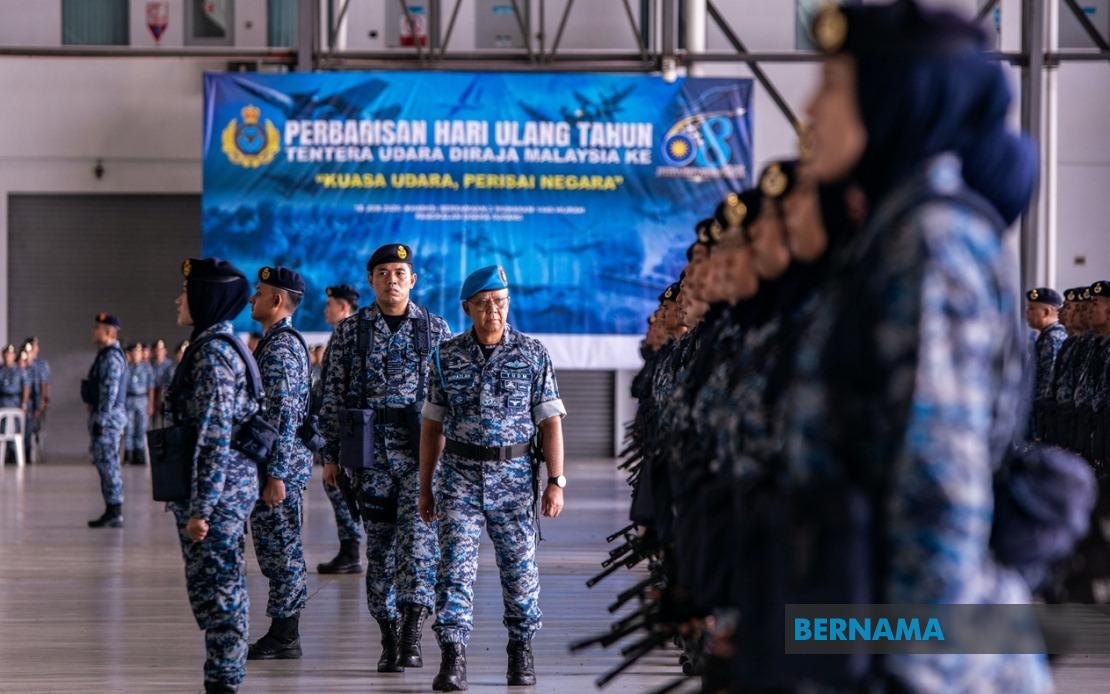
The Royal Malaysian Air Force is implementing a comprehensive air defence and surveillance upgrade programme, installing sophisticated radar systems at multiple strategic locations nationwide to enhance operational effectiveness and national security posture. The initiative, unveiled during the RMAF's 68th Anniversary Parade in Subang, reflects growing recognition of the importance of maintaining robust airspace monitoring in an increasingly complex geostrategic environment.
General Tan Sri Muhamad Norazlan Aris, the Air Force Chief, outlined the deployment strategy, which encompasses three air defence radar installations and one dedicated surveillance system. Bintulu in Sarawak, Bukit Puteri in Terengganu, and Bukit Lunchu in Johor will each receive air defence radars capable of detecting and tracking aerial threats across their respective sectors. Complementing this ground-based network, an air surveillance radar is being established on Pulau Layang-Layang in the South China Sea, extending Malaysia's detection capabilities into the strategically important waters of the region.
These infrastructure investments represent the opening phase of the RMAF Capability Development Plan 2055, an ambitious long-term modernisation roadmap designed to keep the air force technologically competitive and operationally prepared for emerging security threats. The plan acknowledges that regional stability cannot be assumed and that Malaysia must continuously evolve its defence architecture to address both current and anticipated challenges. By establishing early warning systems at geographically dispersed locations, the RMAF aims to eliminate blind spots in national airspace monitoring and create layered detection capabilities that enhance situational awareness across the country.
The timing of this modernisation initiative coincides with heightened international tensions affecting global maritime commerce. Muhamad Norazlan highlighted the lessons emerging from the ongoing West Asian conflict, particularly disruptions to shipping through the Strait of Hormuz and their cascading effects on global energy prices, supply chains, and economic stability. These international developments carry direct implications for Malaysia, whose economic prosperity depends fundamentally on the unimpeded flow of maritime trade through critical chokepoints.
Malaysia's vulnerability to maritime disruptions stems from its geographic position and trade-dependent economy. The Strait of Malacca, one of the world's busiest shipping lanes, channels a significant portion of global energy supplies and commercial cargo destined for or originating from Southeast Asia. The South China Sea, equally critical to regional commerce, has become subject to increased geopolitical scrutiny and competing territorial claims. These waters are not merely commercial conduits but lifelines supporting manufacturing, energy security, and export-oriented industries that form the backbone of Malaysia's GDP.
The radar deployment strategy directly addresses these vulnerabilities by providing enhanced surveillance of airspace above and around these vital sea lanes. Better early warning capabilities allow Malaysian authorities to respond more rapidly to potential threats, whether from hostile aircraft, unauthorised incursions, or other airborne hazards that could disrupt maritime traffic. The integration of systems covering Sarawak's coastal waters, the peninsular east coast, and the southernmost region creates geographic coverage that aligns with the nation's principal maritime chokepoints and trade routes.
Pulau Layang-Layang's radar installation holds particular strategic significance as the island lies within Malaysia's claimed maritime zones in the South China Sea. Establishing surveillance infrastructure there signals Malaysia's commitment to active monitoring of its offshore interests and demonstrates a practical assertion of sovereignty through technological presence. The installation enhances Malaysia's ability to detect and characterise air activity in these contested waters, providing decision-makers with better intelligence for managing maritime security and responding to incidents.
The RMAF Chief's emphasis on addressing "surveillance gaps" acknowledges existing limitations in current coverage, gaps that could potentially be exploited by actors seeking to operate undetected in Malaysian airspace or adjacent maritime zones. Modern air defence systems rely on networked radar coverage to provide seamless surveillance; isolated gaps create vulnerabilities that sophisticated operators might target or exploit. The new installations are designed to knit these disparate regions into a cohesive surveillance network, multiplying the force's effectiveness beyond the sum of individual radar stations.
The broader strategic context reflects Malaysia's evolving security doctrine, which recognises that national defence extends beyond land borders into maritime and airspace domains. Globalisation and the concentration of economic activity in maritime-dependent sectors have made these domains critical national interests requiring robust protection. The radar modernisation programme represents recognition that technological investment in surveillance and early warning represents a more cost-effective security strategy than attempting to maintain large standing forces ready to respond to threats that might occur anywhere across Malaysia's vast maritime jurisdiction.
Implementing the first phase of the Capability Development Plan 2055 signals medium-term strategic thinking about Malaysia's defence trajectory. Rather than reactive acquisitions in response to immediate crises, the long-term plan enables systematic modernisation aligned with anticipated future requirements. This approach allows the RMAF to integrate new capabilities coherently, train personnel adequately, and develop operational procedures that maximise the effectiveness of acquired systems.
The ceremony also recognised individual contributions to air force readiness, with Muhamad Norazlan presenting service medals and commendation certificates to 17 personnel, acknowledging the human dimension of military capability. The parade itself, involving over 280 personnel and showcasing specialised units including special forces and gender-integrated operational elements, demonstrated the RMAF's operational diversity and commitment to professional military standards.
For Malaysia and the broader Southeast Asian region, this modernisation initiative reflects sober assessment of shifting security dynamics and the risks posed by distant conflicts with proximate economic consequences. As maritime trade remains essential to regional prosperity and as geopolitical competition intensifies in adjacent waters, enhanced surveillance and early warning capabilities provide tangible means of protecting national interests without escalatory military posturing. The radar deployment represents pragmatic investment in the technological foundations of contemporary security.

