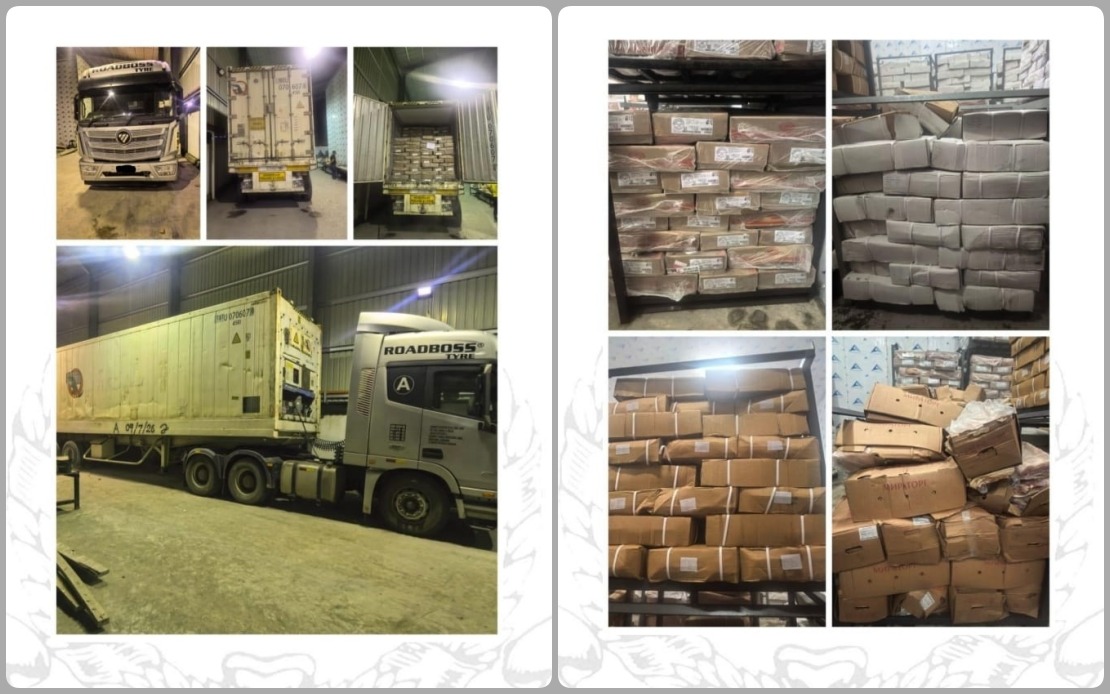
Police have arrested a 26-year-old local suspect and confiscated RM6.19 million worth of frozen pork products suspected of entering the country without appropriate import authorization following a late-night operation at a warehouse facility in Miri, Sarawak. The enforcement action, designated Operation Taring Chiller and conducted on the evening of July 9, represents the latest move in a sustained campaign against the illicit movement of food commodities across Malaysia's borders and through domestic distribution networks.
According to Datuk Seri Mohd Yusri Hassan Basri, head of the Internal Security and Public Order Department (JKDNKA), the operation reflects law enforcement's commitment to disrupting the trafficking of frozen food items of uncertain halal certification and preventing the proliferation of banned or improperly documented provisions within Malaysia's food supply chain. The warehouse inspection revealed extensive quantities of pork products in various forms, indicating a sophisticated operation with significant commercial dimensions.
The seized inventory encompasses 30,000 kilogrammes of processed frozen pork intestines, 18,000 kilogrammes of pork loin distributed across 15 pallets, 750 kilogrammes of additional pork portions contained in a single pallet, multiple pallets of bone-in pork belly sections with skin attached, and frozen pork shoulder cuts. This diversity of product types and the substantial volumes suggest the operation functioned as either a regional distribution hub or was preparing inventory for wider market circulation.
The raid itself involved coordinated efforts between the Wildlife Crime Bureau and Special Investigation Intelligence unit within JKDNKA, supported operationally by Miri district police headquarters and the Sarawak Division of the state's Veterinary Services Department. This multi-agency approach underscores how Malaysian authorities have restructured enforcement mechanisms to tackle interconnected smuggling networks that often exploit regulatory gaps at borders and between state jurisdictions.
Investigators are pursuing charges under the Veterinary Public Health Ordinance 1999, specifically Sections 9(1) and 9(3), which govern the importation, handling, and distribution of animal products and related health and safety compliance. Beyond criminal investigation, authorities have simultaneously issued a compound notice amounting to RM25,000, providing an alternative enforcement pathway that can expedite resolution and resource allocation toward ongoing operations.
The Miri seizure reflects part of a broader enforcement surge across Malaysia. Between January 1 and July 10, the Wildlife Crime Bureau and Special Investigation Intelligence division executed 201 coordinated raids nationwide, resulting in 375 individual arrests. These operations have targeted a spectrum of illicit trafficking activities including duty-free contraband goods, leakage of price-controlled and government-subsidized commodities, undocumented frozen food shipments, endangered wildlife smuggling, and illegal electronic waste.
The cumulative seizure value from these six-month operations totals approximately RM264.86 million, demonstrating the substantial financial dimensions of organized smuggling networks operating throughout Malaysia and the region. The volume of confiscations and arrest figures suggest these operations extend beyond opportunistic smuggling into systematic criminal enterprise involving multiple personnel, logistical coordination, and established distribution pathways.
The emergence of extensive frozen pork trafficking operations carries particular significance within Malaysia's regulatory framework, where halal certification requirements and import documentation serve both consumer protection and public health functions. The quantity of undocumented products discovered raises questions about how such volumes entered the country and remained undetected within storage facilities, potentially indicating gaps in border inspection protocols, port oversight, or intelligence sharing between enforcement agencies.
For Malaysian consumers and businesses, the proliferation of undocumented frozen food products presents dual concerns. From a food safety perspective, products lacking proper certification chains cannot be verified for storage conditions, processing standards, or contamination risks. From a regulatory standpoint, undocumented imports undermine legitimate traders who comply with increasingly stringent certification requirements, creating unfair competitive advantages for smuggling operations that avoid legitimate costs and compliance procedures.
The enforcement intensity reflected in these statistics indicates Malaysian authorities view organized food smuggling not merely as commercial infringement but as a component of broader organized crime requiring sustained intelligence operations and integrated enforcement strategies. The JKDNKA's emphasis on intelligence gathering and monitoring suggests law enforcement has shifted from reactive responses to seized shipments toward proactive identification of smuggling networks and their operational patterns.
For Southeast Asian nations sharing Malaysia's regulatory concerns around food safety and halal compliance, these operations underscore the challenges posed by porous borders and transnational criminal logistics. Miri's location in Sarawak, proximate to Indonesia and Brunei, positions it as a potential transit point for regionally-sourced contraband seeking access to Peninsular Malaysian markets where documented products command premium pricing and halal certification commands consumer confidence.
The Royal Malaysia Police's commitment to intensified operations signals that authorities anticipate continued smuggling attempts and are deploying resources accordingly. Whether seizures ultimately reduce the volume of illegal products reaching Malaysian consumers or merely displace smuggling routes and methods remains an evolving enforcement question, particularly given the RM6.19 million value seized represents potentially only a fraction of overall trafficking volumes.

