The federal government has committed RM44.5 million to tackle persistent flooding challenges in Petaling Jaya and Damansara through a coordinated infrastructure programme spanning 30 separate projects. Prime Minister Datuk Seri Anwar Ibrahim announced the ambitious allocation during an event in the Selangor district, signalling the administration's determination to address flooding in areas that have historically experienced severe water-related disruptions during the monsoon seasons and intense rainfall events.
The Implementation Coordination Unit within the Prime Minister's Department will oversee the entire portfolio of flood mitigation work, establishing a centralised management structure designed to improve accountability and expedite project delivery. This institutional arrangement reflects the federal government's recent emphasis on using ICU mechanisms to coordinate complex, multi-agency initiatives across different jurisdictions and administrative boundaries. The decision to route oversight through this office indicates recognition that effective flood management requires sustained cross-departmental coordination between federal authorities, state governments, and local councils.
Government spokesperson Datuk Seri Fahmi Fadzil clarified that the flood mitigation allocation represents only one component of a broader resource injection into the region. The Petaling Jaya parliamentary constituency has additionally received RM3 million designated for Projek Mesra Rakyat community engagement programmes and support for non-governmental organisations operating within the district. The Subang Jaya parliamentary constituency, which shares some geographic and administrative characteristics with the target zones, secured RM1.5 million under similar parameters, illustrating how resource distribution extends beyond strictly technical infrastructure spending.
The selection of these 30 projects reflects prior technical assessments identifying Petaling Jaya and Damansara as critical flood hotspots requiring urgent intervention. These areas have experienced repeated inundation during monsoon periods, causing significant economic disruption, property damage, and inconvenience to hundreds of thousands of residents and workers. By designating these zones as priority areas for mitigation investment, federal planners acknowledge that reactive post-flood recovery measures have proven insufficient, necessitating proactive infrastructure upgrades and systemic improvements to drainage and water management capacity.
Coordination between federal and Selangor state governments proved essential to securing approval for the comprehensive project list. This intergovernmental agreement underscores the complex constitutional and administrative reality governing flood management in Malaysia, where responsibilities span multiple tiers of governance. The state government's endorsement ensures that projects integrate with existing state-level drainage masterplans and water resource strategies, avoiding duplication and maximising the effectiveness of cumulative investments in the region's hydrology and stormwater management systems.
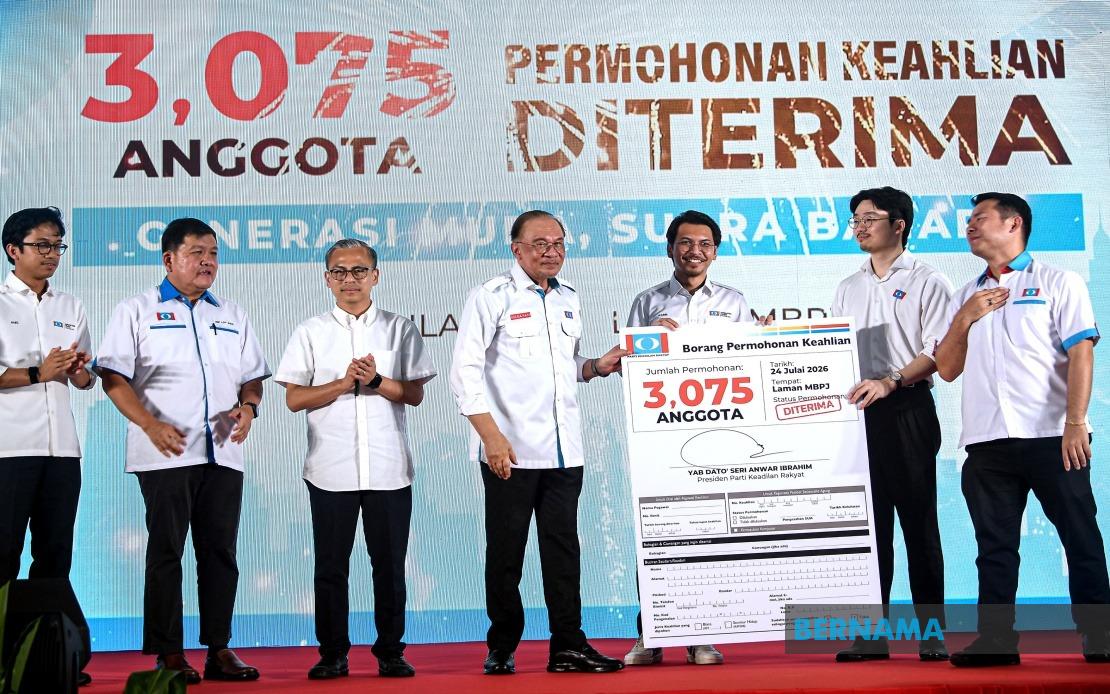
Beyond infrastructure spending, Fahmi highlighted parallel political developments at the event, noting that PKR recruited 3,075 new party members, predominantly from Generation Z cohorts joining through the party's youth wing Angkatan Muda Keadilan. The substantial recruitment figures underscore the party's capacity to mobilise younger voters and expand its organisational footprint beyond traditional support bases. This demographic dimension carries implications for Malaysia's evolving political landscape, as parties increasingly recognise that sustained electoral competitiveness requires sustained engagement with voters born after 2000, who exhibit distinct policy priorities and communication preferences.
The party indicated plans to intensify youth-focused outreach through an expanded national Jelajah AMK Gen Z tour, positioning generational renewal as a strategic priority alongside traditional governance functions. Party officials characterised this initiative as a standing programme rather than election-specific campaigning, though the timing and scale of youth mobilisation efforts inevitably carry electoral significance in the Malaysian context. The programme's expansion to nationwide coverage reflects confidence in the reception generated by earlier activities and recognition that sustainable political renewal requires consistent investment in younger membership bases before critical electoral periods arrive.
For Malaysian residents in these Selangor constituencies, the flood mitigation allocation represents a tangible commitment to addressing environmental vulnerabilities that have periodically disrupted business operations, interrupted transportation networks, and created public health concerns. The specific engineering approaches underlying the 30 projects—whether involving drainage system upgrades, retention pond construction, land-use modifications, or other interventions—will ultimately determine whether the investment produces commensurate reductions in flood frequency and severity. Communities affected by prior flooding episodes will likely monitor implementation closely to assess whether resource allocation translates into measurable improvements in flood resilience.
The coordination model established through the ICU reflects contemporary government practice emphasising centralised oversight of complex national initiatives. This approach aims to reduce bureaucratic friction and clarify accountability lines across federal-state-local administrative hierarchies, though execution quality ultimately depends on sustained political will, adequate budgetary releases, and effective engagement with affected communities throughout the project lifecycle. Malaysia's flood mitigation record demonstrates that technical solutions require complementary improvements in maintenance practices, urban planning alignment, and emergency response systems to yield comprehensive protection.
From a Southeast Asian perspective, Malaysia's substantial infrastructure investment in flood resilience aligns with broader regional recognition that climate variability and urbanisation trends will intensify water-related risks across the coming decades. Investment in urban flood management represents adaptation infrastructure responsive to environmental pressures confronting densely populated metropolitan areas throughout Southeast Asia. The Petaling Jaya-Damansara initiative thus exemplifies how individual national governments are positioning flood mitigation as a development priority requiring sustained, multi-year resource commitments and sophisticated coordination mechanisms.

