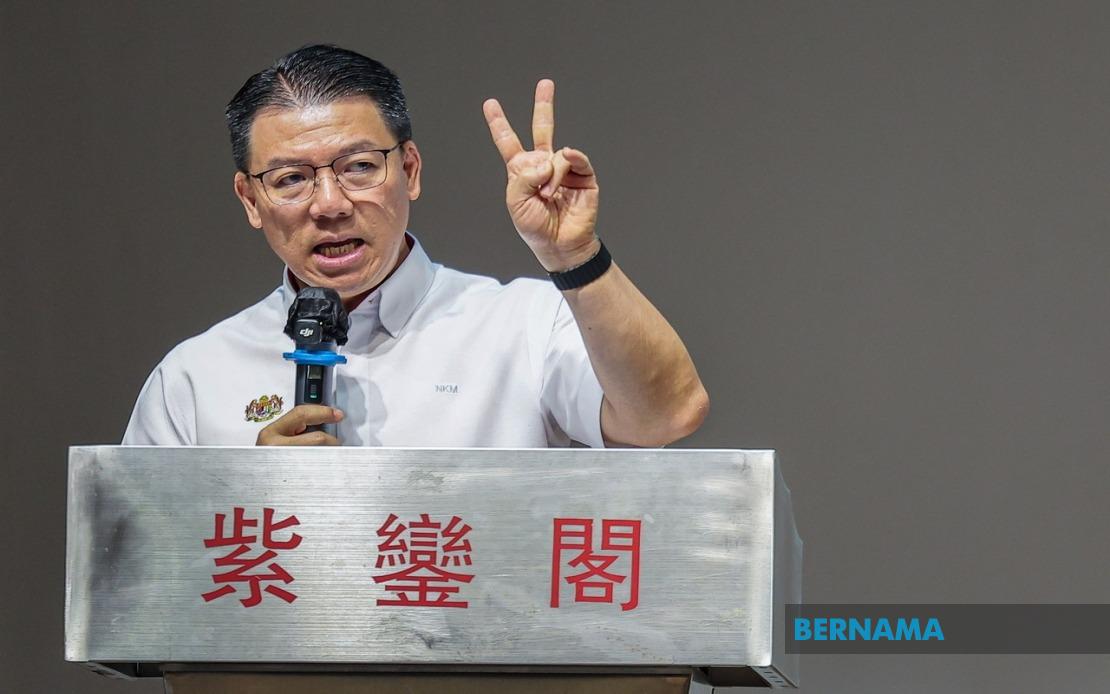
The Ministry of Housing and Local Government has earmarked RM200 million over a four-year period beginning in 2023 to support the maintenance of non-Muslim houses of worship across Malaysia, according to Minister Nga Kor Ming. The comprehensive initiative, formally known as the Non-Muslim Houses of Worship (RIBI) Maintenance Initiative, aims to sustain churches, gurdwaras, Hindu temples, Buddhist temples, and related religious institutions throughout the country, positioning the funding as emblematic of the government's pledge to treat all segments of society equitably.
Making the announcement during a handover ceremony in Kluang, Johor, Nga framed the programme within the broader context of national unity and inclusive development. He emphasised that the MADANI government's development philosophy extends beyond narrow considerations of ethnicity or faith, instead prioritising fair and equitable benefit distribution across Malaysia's diverse population. This messaging appears designed to reinforce the government's commitment to managing religious and ethnic sensitivities at a time when such issues remain politically delicate in the Malaysian context.
The uptake of the initiative has been substantial. Since its launch, the e-RIBI System has processed 1,478 applications requesting maintenance assistance, with the collective value of these requests exceeding RM279 million. This figure significantly surpasses the available allocation, underscoring genuine demand within religious communities for infrastructure improvements and repairs. The gap between applications and available funds suggests either that demand will need to be rationed, or that the government may consider increasing allocations depending on fiscal capacity and political priorities.
Johor, Malaysia's southernmost state, has emerged as a primary beneficiary of the programme. The state received RM3.14 million specifically for 2026, distributed across 27 religious institutions within its borders. Since the initiative's inception through May 2026, Johor has accumulated total allocations worth RM18.75 million benefiting 154 separate RIBIs. This concentration of funding reflects both the religious diversity of the state and its significant Christian, Hindu, Sikh, and Buddhist populations, particularly in urban centres like Johor Bahru.
The maintenance work covered under the initiative encompasses renovation projects, routine maintenance schedules, new construction where expansion is necessary, and emergency repairs to ensure continued safe operation. By categorising these activities, the scheme addresses both immediate infrastructure concerns and longer-term facility enhancement, acknowledging that religious institutions often operate with constrained budgets and minimal government support. For many smaller congregations, particularly those in rural areas, such assistance represents critical lifeline funding without which facilities might deteriorate beyond functional use.
Transparency and accountability form key pillars of how the ministry intends to administer the programme. Nga committed KPKT to continuous professional monitoring of every approved project to ensure that government funds reach genuinely deserving organisations and are deployed as intended. This emphasis on oversight reflects awareness that large maintenance programmes can become vehicles for misallocation if governance standards slip, and the ministry appears conscious of the need to maintain public confidence in fair administration across faith communities.
The initiative sits within Malaysia's broader governance narrative around inclusivity and national cohesion. Nga invoked the metaphor of bridge-building rather than wall-construction, positioning the maintenance programme as part of a larger effort to strengthen intercommunal relations. In Malaysian political discourse, such language carries significant weight, particularly given historical tensions around religious accommodation and minority rights. By anchoring the funding programme to these broader themes, the government attempts to frame fiscal allocations as moral commitments rather than mere transactional expenditures.
The economic dimensions of the scheme deserve consideration for Malaysian and regional observers. By maintaining places of worship and supporting religious communities materially, the government indirectly stabilises the institutional infrastructure upon which social cohesion depends. Religious institutions frequently function as community centres, providing social services, education, and welfare support that might otherwise fall to government agencies. Maintaining their physical facilities thus represents preventive spending on social stability.
Regionally, Malaysia's approach to minority religious accommodation under this programme offers a model worth observing. Neighbouring countries with significant religious diversity face similar challenges in ensuring equitable public resource distribution. Malaysia's systematic approach through dedicated funding mechanisms and transparent application processes demonstrates one approach to managing these sensitivities at scale, though effectiveness ultimately depends on consistent implementation and genuine neutrality in fund distribution.
The programme also reflects evolving attitudes toward religious pluralism within government structures. Explicit allocation of substantial public funds to non-Muslim institutions would have been politically contentious in earlier decades. That such expenditure now occurs without major controversy suggests shifting baseline expectations around state obligations to minority communities, at least among current political leadership. However, this progress remains contingent on continued political will and remains subject to potential reversal should electoral or security considerations shift.
For religious organisations themselves, the initiative offers tangible relief from deferred maintenance backlogs that have accumulated due to limited community fundraising capacity. Many congregations, particularly smaller ones, operate facilities constructed decades ago with limited subsequent investment. Systematic government support allows prioritisation of safety improvements and essential repairs that might otherwise remain unfunded indefinitely.
Moving forward, the sustainability of this commitment depends on budgetary allocation decisions in future government cycles. At RM200 million over four years, the programme represents meaningful but not transformative investment relative to total government spending. Its continuation beyond current allocations remains subject to shifting fiscal priorities and political judgments about competing spending demands.

