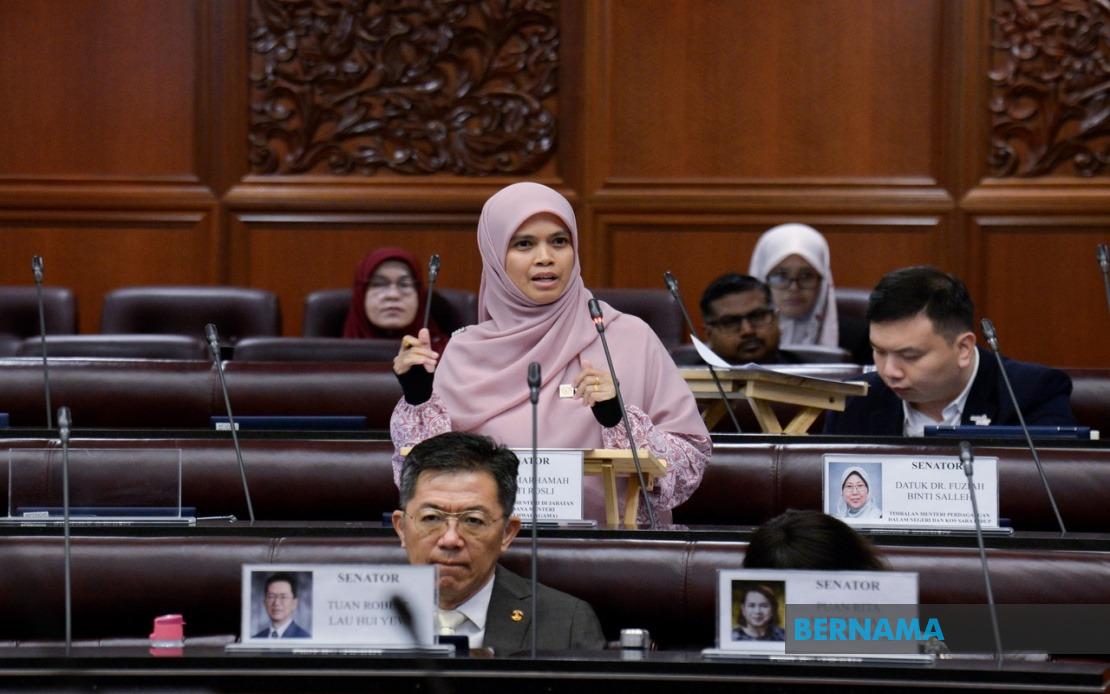
The Malaysian government has approved funding for 92 mosque construction projects totalling RM160.82 million from 2023 through June 2024, reflecting a substantial commitment to religious infrastructure development under the MADANI administration. According to Deputy Minister in the Prime Minister's Department (Religious Affairs) Senator Marhamah Rosli, who disclosed the figures to the Dewan Negara, this investment encompasses a nationwide portfolio at varying stages of completion. Of the total project count, 54 mosques have been fully completed and handed over for community use, whilst 16 additional facilities are currently undergoing construction. The remaining 22 projects remain in earlier phases, either awaiting implementation approval or navigating procurement requirements that typically characterise government infrastructure programmes.
The allocation strategy reflects a carefully considered approach to mosque development that extends beyond simple numerical targets. State religious authorities play a crucial role in recommending new mosque locations, with decisions informed by demographic trends, particularly the growth and concentration of Muslim populations in specific regions. Planners also assess the adequacy of existing mosque infrastructure by examining current facility capacity and geographical distribution, ensuring that new mosques serve genuine community needs rather than creating redundancy. Land considerations, including site suitability and legal ownership status, inform feasibility assessments, whilst commitment from state governments to co-fund construction demonstrates a collaborative federalism model for religious infrastructure.
This financing framework emerged from deliberations at the 139th Meeting of Menteri Besar and Chief Ministers held on 28 June 2022, where consensus formed around shared financial responsibility between federal and state authorities for mosque development. This partnership approach acknowledges that religious infrastructure serves constituent interests across multiple governance levels and reflects the constitutional distribution of religious affairs responsibilities in Malaysia's federal system. The sharing of construction costs incentivises states to prioritise projects aligned with genuine population needs and local planning priorities, rather than viewing mosque development as an unfunded federal mandate.
Beyond their traditional spiritual function, mosques under the MADANI government's vision increasingly operate as community welfare hubs addressing broader social challenges. Senator Marhamah outlined an expanding array of social initiatives leveraging mosque infrastructure and networks to reach marginalised populations, including homeless individuals, urban poor families, and low-income households. The Department of Islamic Development Malaysia (JAKIM) coordinates with state-level Islamic religious departments, local councils, and civil society organisations to deliver these programmes, creating integrated support ecosystems.
These welfare interventions encompass multiple dimensions of material assistance and social support. Food security features prominently through aid distribution to asnaf recipients—persons entitled to zakat—alongside food basket programmes and community kitchen operations that provide subsidised or free meals. Financial hardship receives attention through emergency assistance schemes targeting families facing acute economic crises, complemented by educational support removing cost barriers to schooling. Psychological and spiritual dimensions receive recognition through counselling services addressing personal difficulties, whilst practical support extends to funeral management assistance for families lacking resources for dignified burial practices. Temporary shelter facilities provide refuge for homeless persons during crisis periods, representing tangible acknowledgment of housing insecurity in urban centres.
This broadening of mosque functions reflects regional trends across Southeast Asia where religious institutions increasingly serve as delivery platforms for social welfare, particularly where government capacity remains limited or unevenly distributed. In the Malaysian context, where significant poverty persists despite overall development achievements, leveraging established mosque networks and community trust accelerates welfare programme reach. Mosques typically enjoy high community visibility and regular congregation contact, offering comparative advantages over standalone government welfare offices in identifying need and building beneficiary confidence in assistance schemes.
The project approval process itself demonstrates governance sophistication regarding infrastructure development in the religious sector. Rather than adopting standardised approaches, planners contextualise each proposal within specific demographic and geographical circumstances. Areas experiencing significant Muslim population growth—driven by natural increase, internal migration, or development-related relocations—receive priority assessment. The distance thresholds between existing and proposed mosques reflect practical considerations about accessibility, recognising that elderly worshippers, women with childcare responsibilities, and disabled congregants benefit from neighbourhood facilities reducing travel burdens.
Malaysian readers should recognise the MADANI government's mosque investment programme as part of broader infrastructure modernisation spanning multiple sectors. Religious facilities compete for development resources alongside transportation networks, educational institutions, and healthcare infrastructure, suggesting priority allocation reflects deliberate policy weighting toward religious development. For states with significant Muslim majorities, this investment scales impacts across their populations, whilst federal funding contributions recognise the national dimension of Islam's constitutional position and religious affairs' centralised elements.
The completion rate of approximately 59 percent over eighteen months suggests reasonable project execution pacing, though variations across states likely reflect differing administrative capacity, land acquisition complexity, and construction market conditions. The remaining projects represent ongoing government commitment extending beyond the current fiscal year, indicating sustained investment patterns regardless of electoral cycles. For communities awaiting new mosque facilities, project staging provides certainty regarding infrastructure timelines, though pre-implementation delays can frustrate populations experiencing genuine religious infrastructure deficits.

