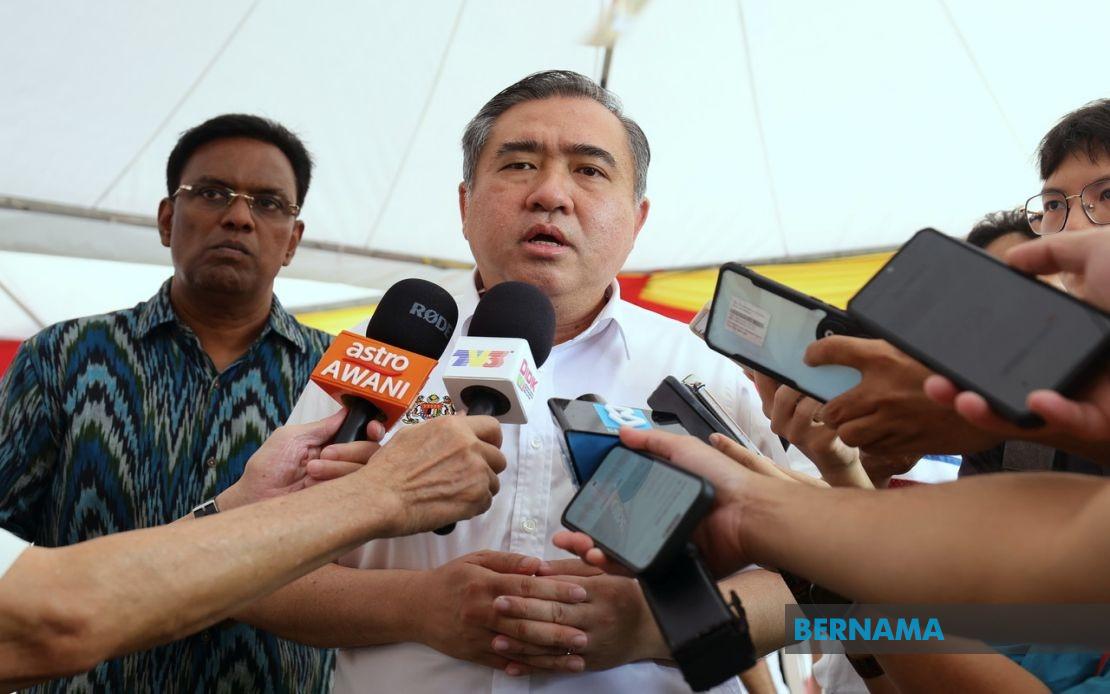
Transport Minister Anthony Loke has channelled RM100,000 towards upgrading Kampung Bukit Temiang's community infrastructure as part of the government's MADANI Adopted Village Programme, marking another step in the administration's grassroots engagement strategy. The initiative demonstrates how federal allocations can be leveraged at the constituency level to address residents' most pressing concerns before development work commences.
The funding package comprises two equal tranches of RM50,000 each. The Railway Assets Corporation, positioned under the Transport Ministry's administrative framework, is contributing one half, while Loke's personal allocation as Seremban Member of Parliament provides the other. This dual-source arrangement exemplifies how government entities and elected representatives can coordinate resources to maximise impact in rural communities, a practice increasingly emphasised across Malaysia's administrative structure.
Responsibility for project execution rests with the Federal Village Development and Security Committee, a coordination body tasked with translating capital allocation into tangible community outcomes. Rather than imposing top-down development priorities, the government engaged directly with Kampung Bukit Temiang residents to identify their most urgent needs. The consultation process yielded a diverse list of community requirements spanning multiple infrastructure domains, signalling a deliberate shift towards participatory planning in rural development.
The proposed upgrades encompass refurbishing the community hall, mending residential roof structures, enhancing the village's drainage infrastructure, and addressing other facility gaps residents identified. This multifaceted approach recognises that rural development cannot focus narrowly on single sectors but must encompass the interconnected systems supporting daily community life. The phased implementation strategy allows for managed spending and adaptive project management as circumstances evolve.
Loke emphasised that the MADANI Adopted Village Programme reflects a broader philosophical commitment within government to forge direct channels between ministries and local communities. By positioning each ministry as an active participant in village-level development rather than a distant bureaucratic entity, the framework aims to create feedback mechanisms where community voices shape resource allocation and project design. This represents a departure from traditional centralised planning models that historically dominated Malaysian rural development.
The execution framework offers flexibility in delivery mechanisms. The Federal Village Development and Security Committee may coordinate gotong-royong collective work campaigns leveraging volunteer labour, or alternatively engage local contractors to undertake repairs professionally. This adaptive approach acknowledges the resource constraints facing rural administrations whilst maintaining quality standards and timely project completion. The roof repair initiative, for instance, can benefit from either community participation or skilled contractor work depending on technical requirements and available resources.
Beyond the village-specific allocation, Loke outlined the government's parallel commitment to taxi industry modernisation through the MADANI Taxi Renewal Programme. An additional RM10 million injection recently announced by Prime Minister Datuk Seri Anwar Ibrahim complements the RM10 million originally allocated under Budget 2026, creating a RM20 million intervention aimed at systemic transformation within Malaysia's taxi sector. This expanded investment reflects recognition that urban transport sustainability requires direct support for drivers transitioning to improved operational models.
The taxi renewal initiative extends considerably beyond simple vehicle replacement financing. Rather, it constitutes a comprehensive ecosystem addressing multiple dimensions of driver welfare and industry modernisation. Participants receive education regarding available government benefits, access to driver-friendly financing mechanisms, guidance on permit applications, and instruction on income-generation opportunities. Social protection provisions ensure drivers have security alongside commercial opportunities, whilst incentives supporting industry modernisation create alignment between individual operator interests and sectoral sustainability objectives.
Loke's characterisation of e-hailing platforms and traditional taxi operators as complementary rather than competitive forces suggests evolving government thinking regarding urban mobility market structure. Rather than viewing the digital transport revolution as threatening traditional transport, the administration proposes a collaborative framework where different service models coexist and potentially strengthen each other. This perspective requires taxi operators to adapt their service quality and operational practices to remain competitive, whilst platform operators ostensibly facilitate regulatory compliance and professional standards across the sector.
The Ministry of Transport, Land Public Transport Agency, and associated government bodies are positioning themselves as coordinators facilitating multi-stakeholder collaboration encompassing taxi associations, financial institutions, automotive manufacturers, and e-hailing platform operators. This institutional approach acknowledges that sustainable transport sector transformation requires alignment across multiple actors holding divergent interests and capabilities. Loke's emphasis on the taxi community benefiting collectively suggests concern that modernisation initiatives might advantage certain operators disproportionately, necessitating governance structures ensuring equitable outcomes.
For Malaysian readers and Southeast Asian observers, these twin initiatives illuminate the government's broader approach to balancing rural development with urban sector modernisation. The MADANI framework emphasises participatory planning and direct ministry engagement with communities, whilst the taxi renewal programme demonstrates targeted intervention supporting specific occupational groups through transition periods. Together, they signal a shift towards outcome-focused governance prioritising stakeholder consultation and multi-level coordination.
The success of these programmes ultimately depends on implementation fidelity and stakeholder commitment. Kampung Bukit Temiang's residents must genuinely drive project prioritisation, whilst taxi operators require confidence that government support translates into sustained competitive advantage rather than temporary subsidies. Monitoring mechanisms and feedback loops will prove critical in determining whether these initiatives achieve their stated objectives of enhancing rural living standards and supporting sustainable urban mobility transformation.

