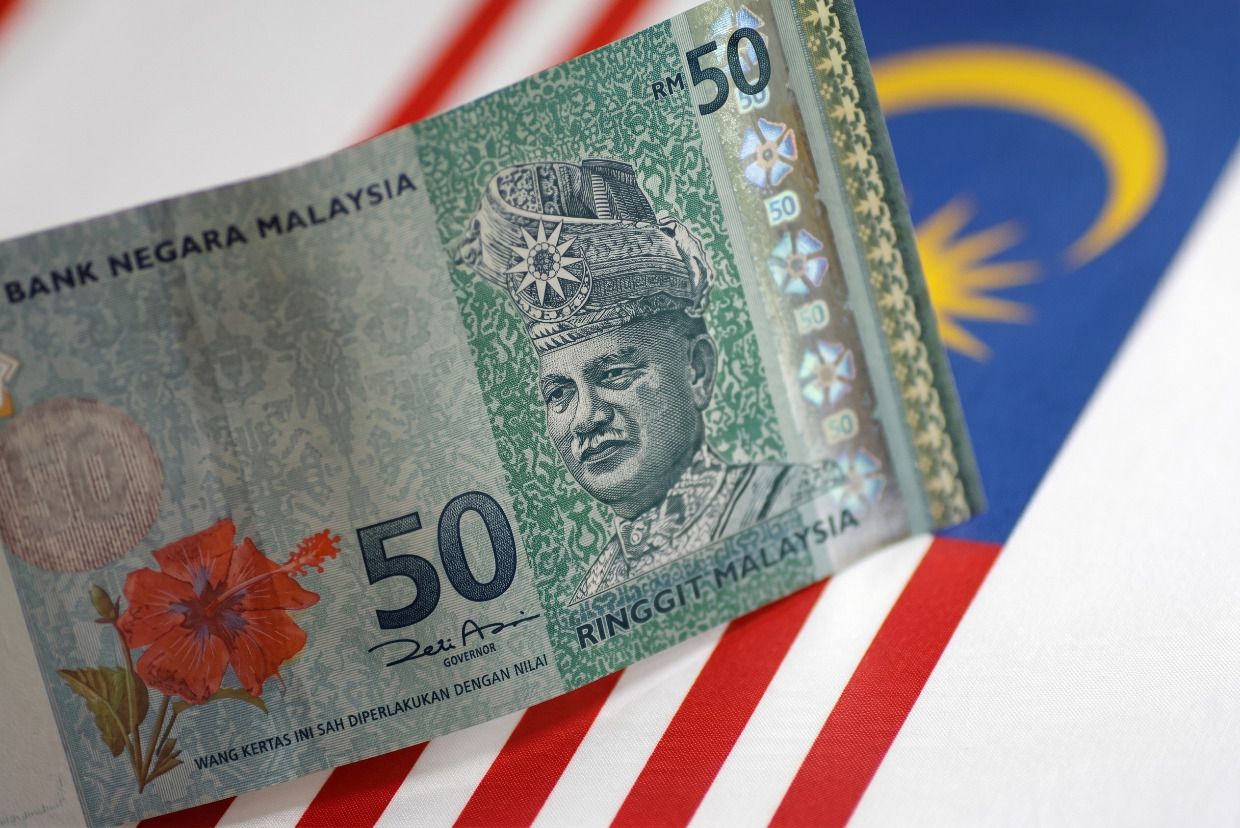
Malaysia's ringgit currency is gathering momentum for a recovery that could see it reach its strongest levels in nearly a decade, as policymakers and market analysts grow increasingly optimistic about capital flows and export-driven economic fundamentals. After ending June as the worst-performing currency across Asia, the ringgit has already begun to rebound following Bank Negara Malaysia's June 24 pledge to intensify efforts aimed at boosting foreign-exchange inflows into the country. Major financial institutions are now publishing forecasts suggesting the currency could appreciate significantly in the coming months, marking a sharp reversal from recent weakness that had pushed the ringgit to levels not seen since the 1998 Asian financial crisis.
Royal Bank of Canada has forecast that the ringgit will trade at 3.95 per dollar by the end of 2024, reflecting growing confidence in Malaysia's macroeconomic trajectory and the effectiveness of Bank Negara's policy interventions. Even more bullish is the outlook from Australia & New Zealand Banking Group, where strategists believe the ringgit could strengthen to 3.80 per dollar—a level that would represent the strongest performance since 2015 and signal a substantial recovery from recent lows. These forecasts carry weight given the track record of both institutions in currency markets, and they suggest that market participants are increasingly willing to back their confidence with real capital allocations. The ringgit's performance on Friday, when it closed 0.2% higher at 4.0722 against the dollar, provided early evidence that the anticipated recovery may already be materialising.
The driving force behind this anticipated turnaround centres on Bank Negara's strategic initiative to encourage Malaysian companies and institutions to repatriate and convert their overseas earnings back into ringgit-denominated assets. This policy lever targets a specific pain point for the currency: the accumulation of foreign-exchange deposits held by businesses that remain unconverted. Abbas Keshvani, a macro strategist at RBC in Singapore, emphasises that these conversion measures represent a critical connection between Malaysia's substantial trade surpluses and actual currency performance. Without an active mechanism to convert export proceeds into local currency, even robust external surpluses may not translate into sustained currency appreciation. By creating incentives and removing friction from the repatriation process, Bank Negara is attempting to ensure that Malaysia's economic strengths are reflected in ringgit valuations.
Malaysia's export sector has emerged as a powerful tailwind for currency appreciation. The nation has capitalised substantially on the global artificial intelligence boom, with surging demand for data centre infrastructure and components, combined with the country's established position as a producer of electrical and electronic goods. May's export figures illustrated this momentum vividly: total exports jumped 45% year-on-year, catapulting Malaysia's monthly trade surplus to a record 40 billion ringgit, equivalent to approximately $9.8 billion. This exceptional performance reflects not merely cyclical strength but structural advantages in global supply chains that position Malaysia to capture a disproportionate share of technology-related manufacturing and investment flows.
The resilience of Malaysia's export machine has begun attracting renewed investor interest in local financial markets, creating a virtuous cycle where currency appreciation prospects draw capital inflows. Global fund managers purchased approximately $2.1 billion of Malaysian bonds through June 29, a pace that would deliver the largest monthly inflow into local debt markets since May 2025 if sustained. This capital activity demonstrates that international investors are willing to commit resources to ringgit-denominated instruments, a crucial indicator that sentiment regarding the currency has shifted materially in a positive direction. Such inflows not only directly support the exchange rate but also create momentum effects that encourage further participation from the investment community.
Bank Negara's current capital repatriation initiative echoes a playbook that proved effective in 2024, when the central bank deployed similar measures to rescue the ringgit from its weakest position against the dollar since the 1998 crisis. The currency staged a remarkable turnaround that year, eventually becoming Asia's strongest performer by year-end. This recent precedent provides both reassurance and a credible template for how policy interventions, combined with favourable economic fundamentals, can reverse even severe currency weakness. Market participants have consequently calibrated their expectations based partly on the visible success of these mechanisms in the previous cycle.
The foreign direct investment landscape also supports bullish ringgit projections. Kausani Basak, an FX analyst at ANZ, points to measurable increases in foreign currency deposits held by businesses during the March-May period, noting that Bank Negara's repatriation measures will facilitate conversion of these holdings into ringgit. Resilient FDI inflows into Malaysia, driven by the artificial intelligence infrastructure expansion and electronics manufacturing clusters, are expected to add additional layers of support to currency strength over coming quarters. These structural capital flows, distinct from volatile speculative movements, typically underpin sustained currency appreciation.
Despite these favourable dynamics, the ringgit does confront genuine headwinds that could constrain or interrupt its recovery trajectory. The Federal Reserve's increasingly hawkish policy stance, signalling reluctance to cut interest rates quickly, creates an interest rate differential that benefits dollar holdings relative to emerging-market currencies. A higher-for-longer interest rate environment in the United States exerts downward pressure on currencies like the ringgit, as investors gravitate toward dollar-denominated assets offering superior yields. Additionally, Malaysia's domestic political situation presents some uncertainty, particularly with upcoming state elections that will test support for Prime Minister Anwar Ibrahim and his ruling coalition before national polls are held. Political volatility historically weighs on currency performance, and investors remain attentive to signals regarding political stability and policy continuity.
The convergence of supportive economic fundamentals, well-designed policy measures, and international investor confidence suggests that the ringgit's recovery narrative possesses genuine substance. However, the pace and extent of appreciation will ultimately depend on whether Bank Negara's repatriation initiatives succeed in converting the accumulating foreign-exchange deposits into ringgit inflows at the scale envisioned. Additionally, external factors—particularly the Federal Reserve's trajectory and global risk sentiment—retain the capacity to disrupt even well-founded recovery scenarios. For Malaysian policymakers, the critical task involves maintaining the momentum of capital repatriation while ensuring that policy credibility and economic fundamentals remain sufficiently robust to attract sustained interest from international investors.

