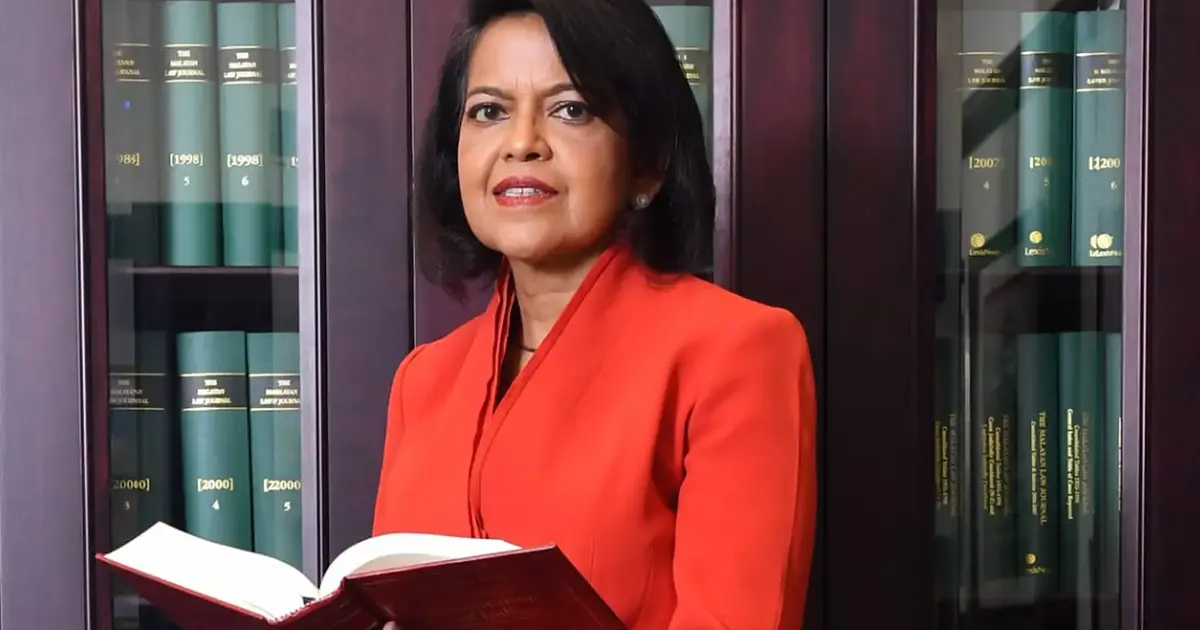
Nallini Pathmanathan, who previously served as a judge in Malaysia's highest court, has taken over leadership of the Malaysian Media Council at a pivotal moment for the country's media landscape. The appointment underscores the council's intention to strengthen governance and institutional oversight as the sector navigates an increasingly complex operating environment. Her judicial background brings a fresh perspective to an organisation traditionally tasked with safeguarding editorial independence while upholding professional standards across print, broadcast, and digital platforms.
The Malaysian Media Council's decision to elevate Pathmanathan to its top position signals recognition that the industry requires leadership grounded in legal expertise and institutional credibility. Her experience on the Federal Court, Malaysia's apex judicial body, positions her to understand the intricate relationship between press freedom, constitutional protections, and regulatory frameworks. This knowledge proves invaluable as the council confronts mounting pressure from multiple directions—including evolving government policies, technological disruption, and shifting audience behaviours that have fundamentally reshaped how news organisations operate and sustain their business models.
The broader context for this appointment reflects genuine turbulence within Malaysia's media ecosystem. News outlets across all platforms have struggled with declining advertising revenues, accelerating audience fragmentation, and competition from unregulated social media channels that operate beyond traditional accountability structures. Simultaneously, the regulatory environment has become more intricate, with authorities imposing stricter oversight of online content while newsrooms grapple with the financial and operational costs of maintaining quality journalism in an increasingly digital world. Pathmanathan's appointment suggests the council recognises these tensions require sophisticated leadership capable of advocating for the industry's interests whilst maintaining ethical standards.
A judicial career provides distinctive preparation for navigating the delicate balance between competing interests that now defines the Malaysian Media Council's role. Judges routinely weigh constitutional principles against practical realities, a skill directly applicable to mediating between press organisations seeking operational flexibility and public expectations of responsible reporting. Pathmanathan's transition from the bench to media governance also carries symbolic weight—it reinforces the notion that media regulation should be principled and grounded in law rather than arbitrary or politically motivated. For Malaysian news organisations and their readers, this signals an effort to anchor the council's work in judicial philosophy and institutional legitimacy.
The council operates within an environment where multiple stakeholders hold competing visions for media's proper role. Government agencies, corporate interests, civil society organisations, and ordinary citizens frequently disagree about what constitutes appropriate coverage, fair adjudication of complaints, and the boundaries of acceptable editorial independence. Pathmanathan's background suggests she understands how legal institutions manage such conflicts through transparent processes, reasoned judgment, and precedent-based decision-making. These approaches could help the Malaysian Media Council restore public confidence in its ability to arbitrate disputes fairly, regardless of which party lodges a complaint.
The appointment also reflects broader questions about professional self-regulation in an era of regulatory uncertainty. Many jurisdictions have seen government involvement in media oversight expand at the expense of industry-led governance structures, and Malaysia is no exception. By recruiting a respected judicial figure, the Media Council strengthens its claim to institutional independence and competence, potentially bolstering its authority when defending press freedom against regulatory encroachment. A former Federal Court judge leading the council carries more persuasive weight than political appointees might, particularly when arguing that professional bodies rather than government agencies should adjudicate media disputes.
For journalists and news organisations, Pathmanathan's elevation may offer qualified reassurance. Her judicial impartiality—judges are trained to base decisions on law rather than personal preference—suggests she will approach the role with principles rather than ideology. However, the appointment also raises questions about what specific priorities she will pursue. Will the council emphasise protecting digital-era journalism against new regulatory threats? Will it focus on maintaining ethical standards as business pressures intensify? These questions will shape how her leadership affects Malaysia's media landscape over the coming years.
The timing of the announcement deserves scrutiny. Media industries across Southeast Asia are undergoing profound transformation, with traditional business models collapsing whilst regulatory frameworks remain rooted in older assumptions about how news flows and how it should be controlled. Malaysia's Media Council faces particular urgency in responding to these shifts, particularly regarding online news, social media's role in distributing information, and the rise of misinformation that blurs boundaries between journalism and manipulation. Pathmanathan's appointment suggests the council intends to tackle these challenges with institutional seriousness rather than reactive crisis management.
Pathmanathan's career trajectory—from judicial service to media governance—also reflects a broader trend of institutional mobility among Malaysia's professional elite. Senior judges, civil servants, and corporate leaders increasingly move between roles, bringing accumulated expertise and networks to new positions. This pattern can strengthen institutional capacity if managed thoughtfully, though it also risks creating an insular professional class somewhat disconnected from ordinary Malaysians' concerns and perspectives. The Malaysian Media Council under her leadership will face pressure to demonstrate that this elite circulation serves the public interest rather than merely benefiting an interconnected network of powerful institutions.
Looking forward, the council's effectiveness will ultimately depend not merely on Pathmanathan's qualifications but on her strategic vision and the resources allocated to her office. Malaysia's media landscape requires leadership that can navigate between defending press freedom, maintaining professional standards, and acknowledging legitimate public concerns about accuracy and responsibility. Her judicial background equips her with relevant skills, yet the challenges facing news organisations—existential business model questions, rapid technological change, rising polarisation—extend well beyond what courts or traditional regulators alone can address. The Malaysian Media Council will need to position itself as a constructive partner to newsrooms whilst remaining an honest arbiter when disputes arise.