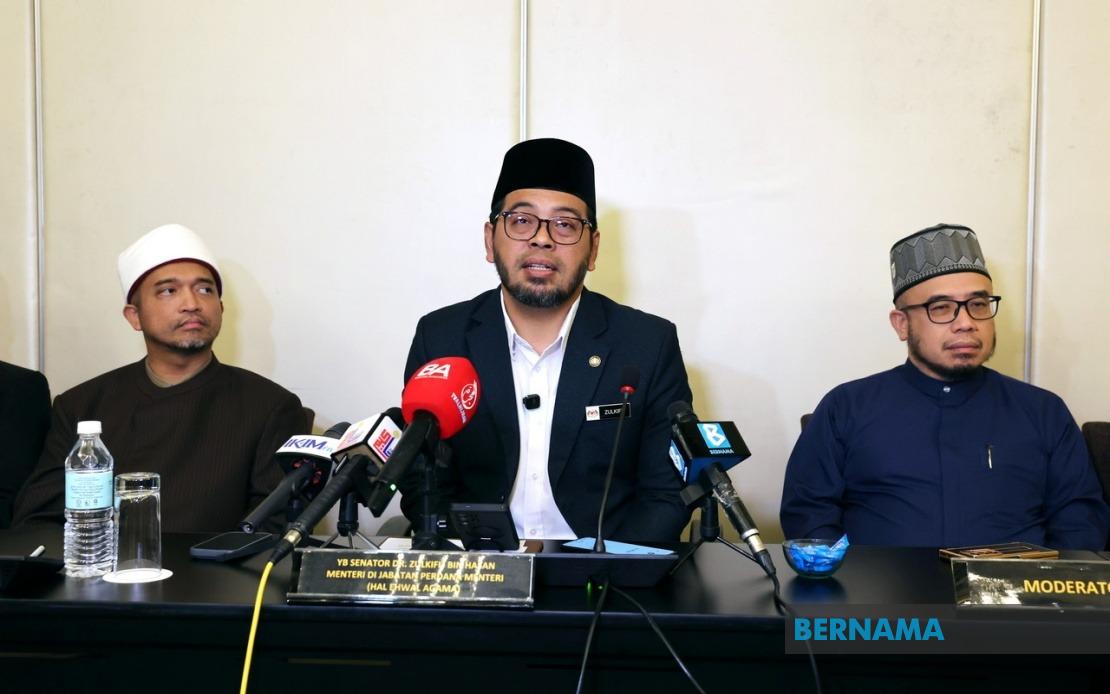
Dr Zulkifli Hasan, the Minister in the Prime Minister's Department overseeing Religious Affairs, has drawn a clear line against the use of 'kafir harbi'—a classical Islamic designation for hostile non-believers—in the Malaysian national context. Speaking in Putrajaya on August 10, he articulated why this religious terminology, while historically grounded in Islamic jurisprudence, does not fit modern Malaysia's constitutional and social framework. The declaration followed a dedicated roundtable discussion convened to examine the implications and appropriateness of the term within the country's diverse, multi-religious landscape.
The fundamental thrust of Zulkifli's position rests on Malaysia's constitutional structure and the binding obligations it creates for all residents regardless of faith. Every Malaysian citizen, he emphasised, remains subject to the Federal Constitution and therefore cannot be categorised as external enemies or hostile parties. This constitutional binding creates a shared civic identity that transcends religious divides and establishes mutual responsibilities between individuals and the state. The logic is straightforward: if the Constitution itself recognises citizens' fundamental rights and duties without religious discrimination, then applying a label that denotes religious enmity becomes intellectually and legally contradictory.
The minister framed the issue beyond narrow legalism, however, positioning it within the broader context of national cohesion and societal integration. Malaysia's strength, in his formulation, depends on citizens recognising themselves as members of a single polity bound by common purpose and shared territorial identity. When religious terminology suggests that some citizens are inherently adversarial or hostile based on their faith alone, it undermines the psychological and social foundations necessary for genuine national unity. Zulkifli invoked the notion of a common homeland where all inhabitants, irrespective of religious conviction, bear equal responsibility for the nation's defence and development.
The roundtable discussion that preceded the minister's statement brought together various stakeholders to examine the 'kafir harbi' question systematically. Through presentations and structured dialogue, participants reached a consensus that the term's application to Malaysian citizens creates unnecessary religious division and contradicts the inclusive principles embedded in Malaysia's constitutional order. This collaborative examination suggests that the government is taking seriously the need to address religiously charged language that might fracture the delicate balance of Malaysia's pluralistic society.
Zulkifli announced that the Department of Islamic Development Malaysia, commonly known as JAKIM, would take the lead in a coordinated campaign to disseminate information, provide clarification, and raise public awareness about why 'kafir harbi' lacks legitimacy in the Malaysian setting. This commitment to active public education reflects recognition that merely issuing a ministerial statement is insufficient; rather, the government intends to work through established Islamic institutions and networks to reach communities and scholars who might otherwise continue invoking or defending the term. The emphasis on clarification rather than outright prohibition suggests a strategy of persuasion and education rather than coercive restriction.
Crucially, Zulkifli stressed that this effort would not be confined to the religious sector or to Islamic institutions alone. Instead, he called for a comprehensive, whole-of-government approach involving multiple ministries and agencies. This framing acknowledges that strengthening national integration is fundamentally a multifaceted endeavour requiring input from education, security, social development, and other portfolios. When religious terminology intersects with social cohesion, the response cannot be compartmentalised within religious bureaucracies; it demands coordination across the state apparatus.
The timing of this declaration carries significance within Malaysia's ongoing discourse on religious tolerance and communal relations. In recent years, Malaysia has witnessed periodic tensions arising from incendiary religious rhetoric, including accusations of religious disrespect levelled across faith communities. The government's decision to formally address 'kafir harbi' signals an intention to proactively manage religiously charged language rather than waiting for crises to emerge. By establishing that certain Islamic terminology is unsuitable for Malaysian application, the government is attempting to set normative boundaries around acceptable religious discourse in a plural society.
For Malaysian Muslims, the minister's statement need not be read as a rejection of Islamic jurisprudential categories themselves. Rather, it represents a contextual application of Islamic principles to Malaysia's particular constitutional and social reality. Islamic scholarship has long recognised that rules governing relations with non-Muslims vary depending on political circumstances and territorial context; a Muslim-majority nation with constitutional protections for religious minorities and citizens of other faiths occupies a different category than historical Islamic concepts of 'dar al-harb', the realm of war. Zulkifli's position essentially argues that Malaysia's constitutional framework places it outside the conditions under which 'kafir harbi' classifications would apply.
The minister's appeal to all Malaysians emphasised reciprocal obligations: respecting one another, fostering brotherhood, understanding different cultures and religions, and working together to strengthen national unity. This language reflects a vision of citizenship built on mutual recognition and voluntary cooperation rather than on enforced conformity or religious hierarchy. By framing unity as something to be continuously cultivated through respect and understanding, rather than imposed through institutional authority, Zulkifli positioned religious pluralism as compatible with Islamic values properly understood within the Malaysian context.
For the broader Southeast Asian region, Malaysia's formal stance against 'kafir harbi' carries implications for how Muslim-majority democracies navigate religious expression and national cohesion. As other countries in the region grapple with similar tensions between traditional religious categories and modern pluralistic constitutionalism, Malaysia's approach offers one model for how government can address religiously divisive language through education and institutional coordination rather than through prohibition or confrontation. The effort also demonstrates that taking religious concerns seriously need not mean accepting every invocation of traditional terminology; instead, it involves examining how those concepts function within contemporary political and social contexts.
The government's willingness to convene structured dialogue on this issue, and subsequently to publicise its conclusions through ministerial statements, reflects growing recognition that allowing inflammatory or divisive religious language to circulate unchallenged in a plural society exacts costs in terms of social cohesion and mutual trust. Whether JAKIM's subsequent awareness campaigns will effectively shift ground-level sentiment remains to be seen, but the clear policy signal from the Religious Affairs Ministry establishes that those invoking 'kafir harbi' to describe fellow Malaysian citizens will face institutional opposition and alternative Islamic interpretations emphasising constitutional citizenship and shared nationhood.

