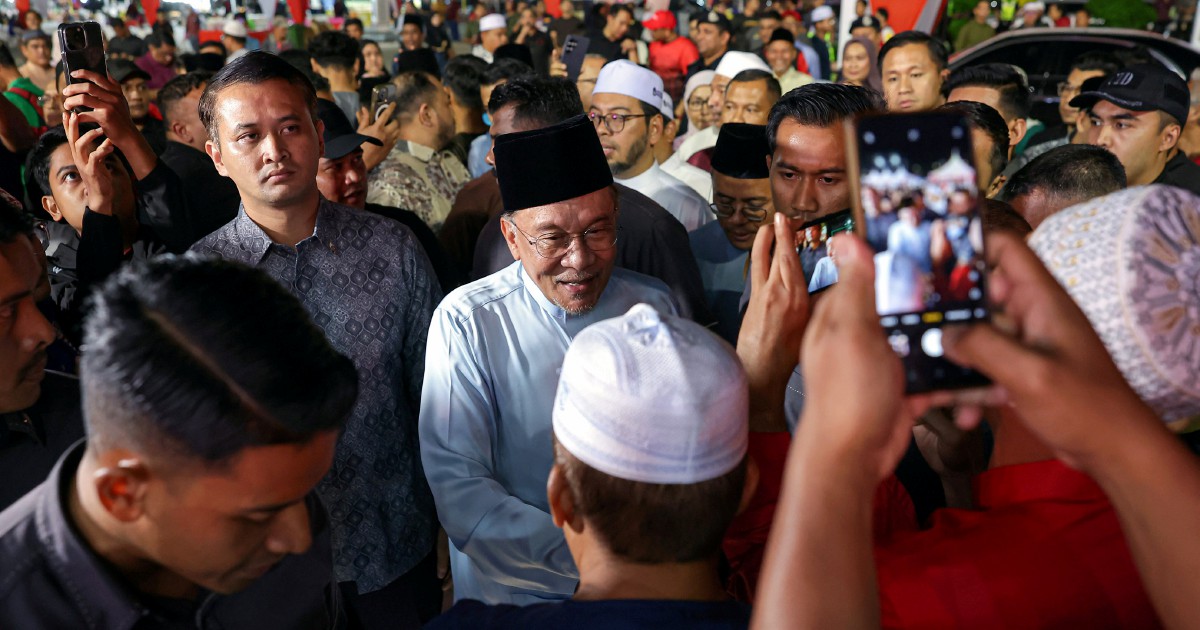
Prime Minister Datuk Seri Anwar Ibrahim has rejected suggestions that disclosing the Royal Commission of Inquiry report on Lembaga Tabung Haji represents partisan politics, instead positioning the decision as a fundamental obligation to shield the financial interests of millions of Muslim Malaysians who have entrusted their savings to the institution.
Speaking in Port Dickson, Anwar underscored that the transparency surrounding the RCI findings stems from a deeper commitment to accountability and institutional reform within one of the country's largest pilgrimage and savings bodies. His comments address criticism that the government's handling of the report could be motivated by political considerations, a charge he firmly disputes. By reframing the disclosure within the context of fiduciary duty, the Prime Minister signals that the administration views the matter as transcending ordinary party politics and touching on the welfare of a significant segment of the Malaysian population.
The Tabung Haji institution has long served as a crucial financial vehicle for Malaysian Muslims, combining the aspirations of performing the Hajj pilgrimage with structured savings mechanisms. For many ordinary Malaysians, particularly those in rural and urban middle-income brackets, the organisation represents a trusted repository for religious savings and pilgrimage funds. Any controversies or mismanagement within the institution therefore carry implications far beyond boardroom politics, affecting the livelihoods and spiritual commitments of ordinary depositors.
The RCI was established to investigate allegations and concerns surrounding Tabung Haji's operations, governance structures, and financial management. The inquiry's findings have evidently raised sufficient concern to warrant official disclosure and scrutiny. Anwar's defence of releasing these findings suggests the government believes transparency serves the public interest and restores confidence in an institution that plays a vital role in the Islamic financial ecosystem within Malaysia.
By emphasising trust and responsibility, Anwar is appealing to a narrative of institutional integrity and public accountability. This approach reflects a broader governance philosophy that positions government action around protecting citizen interests rather than advancing factional agendas. In the Malaysian political context, where accusations of politically motivated decision-making frequently surface, such framing attempts to establish moral and ethical grounds for contentious administrative choices.
The disclosure of RCI findings also carries implications for corporate governance standards across Malaysia's government-linked companies and statutory bodies. If systemic weaknesses or management failures are identified within Tabung Haji, the remedial steps taken and lessons learned could influence reform trajectories across similar institutions. This extends the relevance of the RCI report beyond the immediate institution to encompass broader questions about oversight mechanisms and accountability frameworks within the public sector.
For depositors themselves, access to RCI findings provides critical information for understanding what may have affected their savings and what corrective measures authorities plan to implement. In many cases, individuals may have contributed to Tabung Haji for decades, viewing it as a secure mechanism for accumulating funds for pilgrimage. Concerns about mismanagement or financial irregularities strike at the heart of that trust relationship. Transparency therefore serves a practical function in allowing depositors to make informed decisions about their continued participation in the scheme and to hold leadership accountable.
The political dimensions of the RCI report's release cannot be entirely divorced from the broader Malaysian political landscape. However, Anwar's assertion that institutional protection supersedes partisan considerations reflects the complexity of governance challenges that transcend simple left-right political categorisation. Questions of fiduciary responsibility, corporate governance, and public trust engage moral and ethical frameworks that cross factional boundaries, even when political actors disagree on solutions.
Looking forward, the RCI report's release should ideally catalyse concrete remedial actions and strengthened governance protocols within Tabung Haji. Whether the institution implements recommendations effectively will determine whether the disclosure ultimately achieved its stated purpose of protecting depositor interests. From a broader Southeast Asian perspective, transparent handling of similar inquiries into government-linked institutions influences regional investor confidence and demonstrates commitment to standards of accountability that increasingly characterise competitive emerging economies.
Anwar's Port Dickson remarks also signal that his administration intends to continue prioritising transparency and accountability across public institutions, positioning this as a defining characteristic of the current government's approach to governance challenges. Whether this commitment extends consistently across all contested institutional matters will test the sincerity of claims that such disclosures transcend political calculation. For Malaysian Muslims with deposits in Tabung Haji, however, the immediate question centres on whether the revealed findings and anticipated reforms will genuinely restore institutional health and safeguard their financial interests.

