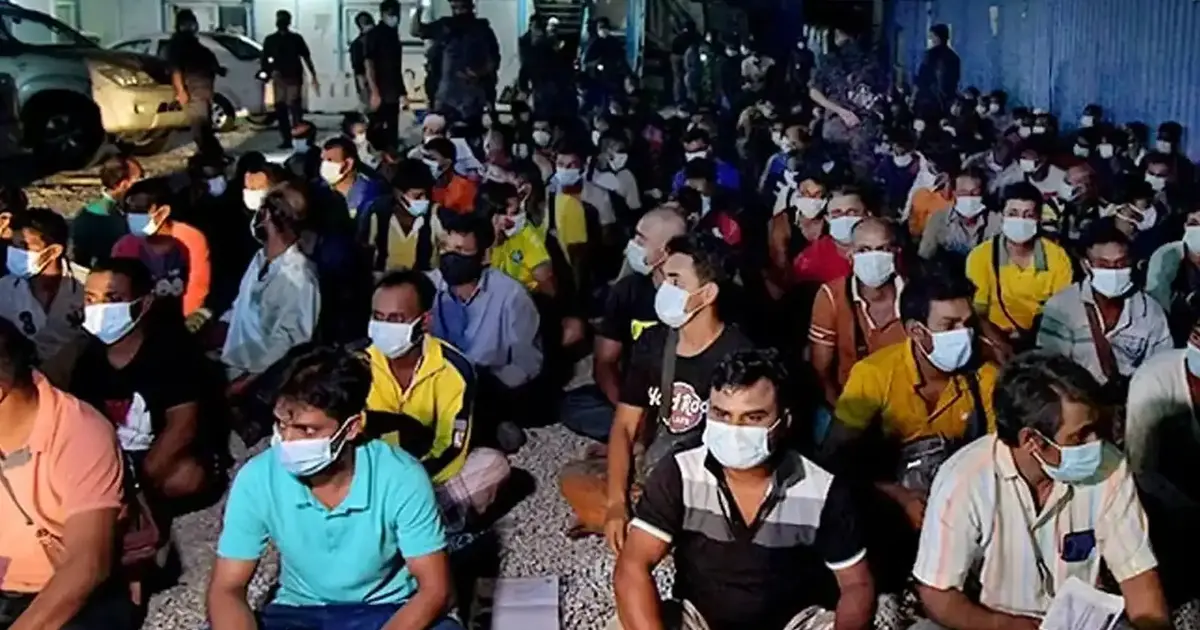
Formal employment pathways for refugees remain blocked by fundamental legal deficiencies and widespread community opposition, according to economist Yea Kim Leng, who has examined the structural challenges preventing Malaysia from regularising refugee labour participation.
The absence of a cohesive policy framework stands as the primary impediment to any employment initiative, Yea Kim Leng argues. Malaysia currently lacks integrated legislation that would clarify the rights, responsibilities, and working conditions of displaced persons seeking productive engagement within the formal economy. This legislative vacuum leaves both employers and refugees in uncertain territory, with no clear guidelines governing work permits, labour protections, or social security contributions. The resulting uncertainty discourages private sector participation and leaves government agencies hesitant to develop binding regulations.
Localised resistance from Malaysian communities compounds these regulatory obstacles. Concerns about job competition, wage pressures on domestic workers, and broader anxieties about demographic change have fostered public scepticism toward formalised refugee employment schemes. This grassroots opposition translates into political friction, making policymakers reluctant to pursue initiatives that lack visible public support. The resistance underscores a disconnect between humanitarian impulses and practical community tolerance for large-scale labour integration.
Yea Kim Leng points specifically to the collapse of a 2017 pilot project as instructive evidence of the difficulties involved. That initiative, which attempted to create structured employment opportunities for selected refugee populations, ultimately faltered despite initial design intentions. The failure analysis reveals multiple points of breakdown: inadequate stakeholder coordination, insufficient resources allocated to implementation, weak monitoring mechanisms, and insufficient engagement with host communities prior to programme launch. Rather than learning and scaling success, the failed pilot has become a cautionary reference point that weighs against future attempts.
The 2017 experience demonstrates that technical policy design alone proves insufficient without parallel investments in institutional capacity and social preparation. Officials involved in that effort lacked adequate training in refugee protection frameworks and labour regulation simultaneously. Support structures for participating employers remained thin, and communication with local residents failed to address underlying concerns constructively. When the programme encountered initial difficulties, no institutional resilience existed to troubleshoot problems or adapt implementation strategies.
For Malaysia, a nation hosting over 180,000 UNHCR-registered refugees alongside undocumented displaced populations, the employment question carries substantial implications. Refugee communities, denied formal work authorisation, frequently resort to irregular employment in construction, manufacturing, and domestic work—sectors where protections are minimal and exploitation risks acute. Formalising pathways could theoretically improve working conditions, increase tax revenues, and create transparency in labour markets. However, realising these benefits requires overcoming the specific barriers Yea Kim Leng identifies.
The regional context amplifies these tensions. Across Southeast Asia, countries grapple with similar refugee employment dilemmas as displacement patterns intensify. Thailand, Indonesia, and Bangladesh have experimented with various approaches, each encountering resistance and implementation challenges. Malaysia's cautious approach reflects broader regional hesitation about opening labour markets to displaced populations, despite humanitarian obligations under international conventions. Yet prolonged restrictions also impose costs: stagnant skills development among refugee populations, increased vulnerability to trafficking, and constrained economic contributions that both refugees and host communities might otherwise realise.
Yea Kim Leng's analysis suggests that any future employment initiative must simultaneously address three dimensions currently underdeveloped. First, legislators must draft comprehensive frameworks that integrate refugee employment within existing labour law rather than creating separate regulatory tracks. Second, government agencies require capacity building to administer and monitor new schemes while maintaining labour standards. Third, sustained public engagement remains essential—not gestures of consultation, but genuine dialogue addressing community concerns while building understanding of refugee contributions and integration benefits.
The economist's emphasis on the failed 2017 pilot carries particular weight for policymakers currently considering employment reforms. That initiative failed not because the concept lacked merit but because execution neglected these foundational elements. Subsequent attempts importing similar designs without deeper structural reform would likely encounter comparable difficulties. The lesson suggests that employment initiatives cannot succeed through pilot projects alone; they require systemic policy change supported by adequate resources and political will.
Moving forward, Malaysian stakeholders face a choice between continued prohibition—which perpetuates irregular employment and humanitarian concerns—or genuine reform involving law reform, institutional development, and community engagement. Yea Kim Leng's critique points toward the substantive work required: this extends far beyond announcing schemes to encompass the unglamorous but essential labour of building institutional capacity, crafting coherent legislation, and creating political space for populations whose presence has become permanent demographic reality. Without addressing these foundations, future employment initiatives will likely reproduce the same implementation failures that constrained the 2017 effort.

