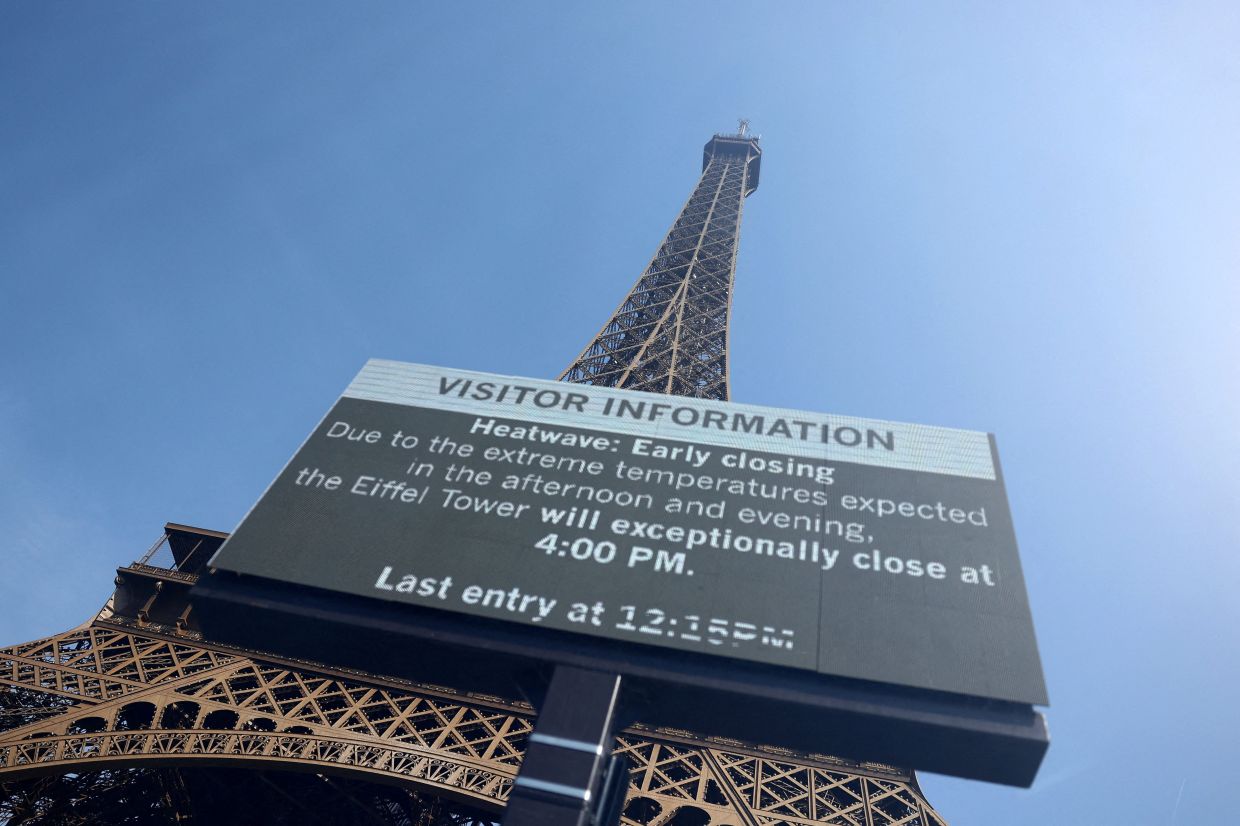
A severe heatwave gripping France this week has disrupted tourism across the country, with iconic Paris landmarks including the Eiffel Tower and the Louvre Museum announcing emergency early closures as temperatures reached record-breaking levels. On June 23, France recorded its hottest day since temperature measurements began in 1947, sending shockwaves through the tourism sector and leaving thousands of international visitors scrambling to salvage their long-planned vacations.
For many tourists, the extreme conditions have forced fundamental changes to their itineraries. Maite Blazques, a 35-year-old Spanish nurse from Madrid, had spent months saving to bring her six-year-old son to Paris, only to find her carefully planned holiday unravelling in the face of unprecedented heat. The family was forced to abandon visits to several major attractions, including guided tours of the historic Marais district, a river boat cruise along the Seine, and an ascent of the Eiffel Tower—experiences that typically define a Paris visit. The disappointment was evident as she reflected on the necessity of completely restructuring their holiday around the weather crisis.
The operators of the 324-metre Eiffel Tower, which ordinarily welcomes seven million visitors annually and typically remains open past midnight during peak season, made the exceptional decision to close at 4pm on June 23. Management indicated that shortened operating hours would very likely continue in subsequent days, forcing tour companies to cancel activities and leaving tourists like American visitor Tamara Dancer without the experiences they had booked and paid for. "It hurt our vacation," she said of her cancelled guided tour on Tuesday afternoon, capturing the frustration felt across the city.
The situation reflects broader challenges facing Paris's tourism infrastructure as climate patterns intensify. The Louvre Museum, the world's most visited museum with approximately nine million annual visitors, also implemented restrictions and early closures. Museum officials acknowledged that the vast palace, constructed over centuries by successive French monarchs and presidents, was "not sufficiently adapted to climate change." This candid admission underscores a critical vulnerability: many of Europe's most treasured cultural institutions were built long before climate projections suggested such extreme temperature scenarios, leaving them inadequately equipped with modern cooling systems.
Tourists who remained outdoors faced gruelling conditions. John Beeler, a 45-year-old American engineer, described the experience bluntly: "Visiting Paris in this heat is awful." He and his wife resorted to purchasing umbrellas, hats, and portable fans to navigate streets that seemed to radiate heat itself. Even moving through the city's underground metro system and staying in their rental accommodation provided no relief, prompting them to relocate to an air-conditioned hotel. Such adaptive strategies, while available to some visitors, remain inaccessible or impractical for others, particularly budget-conscious travellers and families with young children.
Drake Winners, a 66-year-old retiree from London, highlighted another dimension of the crisis: the fundamental alteration of how visitors experience the city. "You discover Paris by walking, but in this heat, it's impossible," he observed, shifting instead to climate-controlled indoor spaces—museums and churches where cooler temperatures offered respite. While such venues provide temporary sanctuary, they represent a diminished version of the Paris experience that visitors anticipate, constraining exploration and spontaneous discovery to air-conditioned interiors.
The Louvre's situation illustrates how climate stress compounds existing institutional challenges. Beyond the current heatwave, the museum has confronted a series of significant problems in recent months, including a brazen jewellery heist valued at US$100 million (RM414 million), structural water leaks, and various maintenance issues. These cumulative pressures on one of the world's most prestigious cultural institutions signal that climate adaptation requires urgent investment alongside addressing security and infrastructure deficiencies.
The crisis extends far beyond Paris. More than half of mainland France remained under the weather service's highest alert level, prompting numerous tourist sites across the country to implement early closures or issue cautionary guidance. Mont Saint-Michel, the spectacular island fortress in Normandy and France's most visited attraction outside the capital region, explicitly warned visitors to postpone their trips during the red alert. Such widespread disruptions have cascading economic implications for regional tourism operators, hospitality businesses, and local economies dependent on seasonal visitor spending.
For Southeast Asian and Malaysian travellers planning European holidays, the Paris heatwave serves as a cautionary indicator of how climate variability increasingly influences international tourism. As extreme weather events become more frequent and intense, traditional peak travel seasons and iconic destination experiences may no longer be reliably available. Travel insurance, flexible booking arrangements, and itinerary diversification have become practical necessities rather than optional precautions. The incident also highlights how developing resilient tourism infrastructure—particularly climate-controlled facilities at major attractions—has become essential for destinations competing for international visitors in an era of accelerating climate change.

