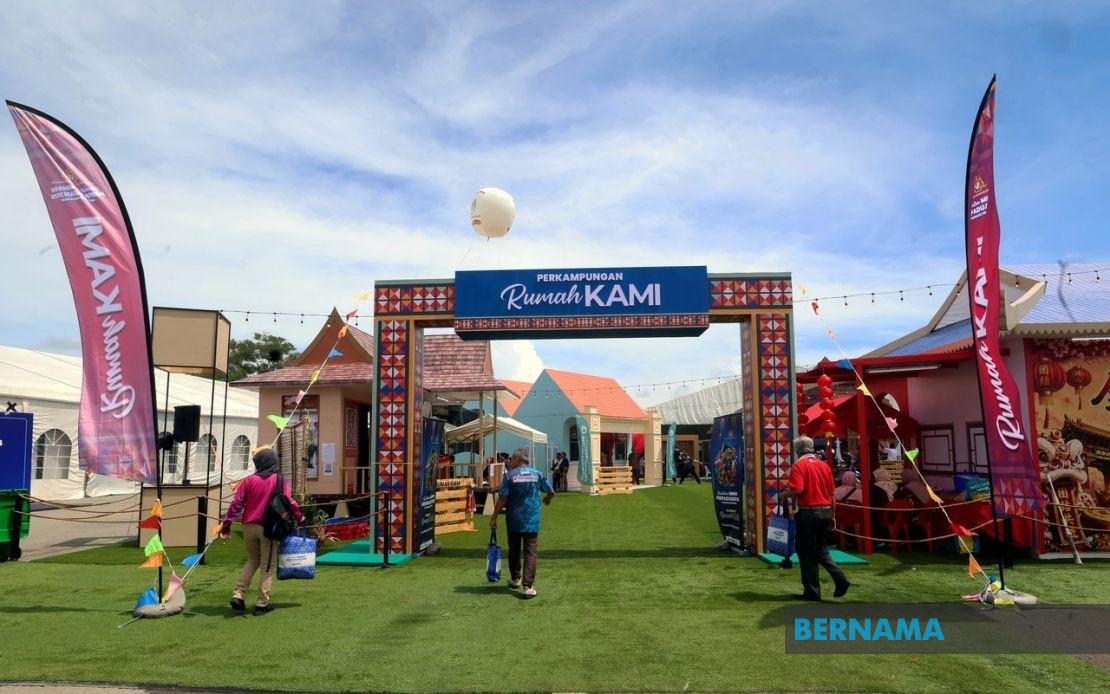
The National Unity Week 2026 celebration in Kota Kinabalu has shattered previous attendance records, drawing 284,448 visitors across its four-day run from June 11 to 14. This landmark achievement represents the strongest public turnout since the national programme was first launched in 2023, signalling deepening Malaysian engagement with initiatives designed to celebrate and strengthen the country's multicultural fabric.
National Unity Minister Datuk Aaron Ago Dagang attributed the exceptional attendance figures to Malaysians' heightened recognition of their nation's rich cultural diversity and the essential role heritage and identity play in building a stronger, more cohesive society. The minister's statement underscores a broader societal shift toward embracing Malaysia's plural nature as a source of national strength rather than division, a message that resonates particularly in a region where ethnic and religious tensions occasionally threaten social stability.
Three exhibition components emerged as the primary magnets for visitors throughout the event, each addressing distinct dimensions of Malaysian identity and history. The Ethnic Village provided an immersive window into the quotidian practices and traditions of Malaysia's principal communities, allowing attendees to experience cultural authenticity beyond textbook knowledge. This hands-on approach proved particularly effective in moving beyond abstract notions of unity to tangible, lived realities of how Malaysians from different backgrounds navigate daily existence.
Equally compelling for visitors was the Ethnic Houses exhibition, which provided detailed architectural and cultural insights into the heritage of communities including the Bajau, Melanau, Banjar, Kedayan and Portuguese populations. By highlighting the distinctive contributions and identities of these groups, the exhibition reinforced the concept that national unity emerges not from cultural homogenisation but from mutual recognition and respect for difference. This nuanced presentation addresses a critical challenge in multiethnic societies: demonstrating that celebrating particular identities strengthens rather than fragments the national whole.
The third major draw, the Negara Bangsa and Raja Kita Exhibition, successfully captured the imagination of younger visitors, introducing them to Malaysia's historical trajectories and contemporary constitutional framework. Engaging youth in conversations about national history and institutions proves strategically important for long-term social cohesion, as it grounds abstract notions of unity in concrete historical narratives and institutional arrangements that younger generations will inherit and shape.
Datuk Aaron Ago Dagang emphasised that superficial or episodic initiatives cannot generate the sustained unity that nations require. Rather, he advocated for integrated, multi-generational approaches that embed values of integration and mutual understanding into educational systems, community practices and institutional cultures. This perspective acknowledges that while celebratory events serve important consciousness-raising functions, they must connect to broader structural and cultural changes to produce durable social cohesion.
The Ministry of National Unity has signalled its commitment to maintaining National Unity Week as an annual fixture on Malaysia's national calendar. By institutionalising this platform, the government aims to create recurring opportunities for Malaysians across regional, religious and ethnic lines to interact, build relationships and deepen mutual comprehension. For a nation geographically dispersed and administratively divided into states, such centralised platforms can facilitate cross-regional connection and shared national purpose.
The ministry's strategic approach recognises that genuine integration requires coordinated effort from multiple societal sectors. Government leadership alone proves insufficient; the private sector, civil society organisations and individual Malaysians must actively participate in constructing the networks of trust and understanding that underpin stable pluralism. This multi-stakeholder framework reflects international best practices in conflict prevention and social cohesion building.
The strong attendance figures and positive visitor feedback align closely with the MADANI Government's broader development vision, which emphasises building a united nation transcending racial, religious and geographical boundaries. By connecting discrete cultural events to overarching national development narratives, the government attempts to frame unity initiatives not as peripheral cultural programming but as central to Malaysia's future prosperity and stability. This positioning proves important for maintaining political and budgetary support for such initiatives across successive government administrations.
For Malaysia's regional position, sustained domestic cohesion holds strategic significance. As Southeast Asia navigates geopolitical tensions and economic competition, nations that successfully manage internal diversity while maintaining strong institutional capacity gain diplomatic and soft power advantages. Malaysia's ability to celebrate its multicultural character while constructing effective governance institutions could position it as a model for inclusive development in a region where many countries confront similar ethnic and religious pluralism challenges.
The record attendance also suggests growing public appetite for spaces where Malaysians from different backgrounds can encounter one another authentically. In an increasingly polarised media environment, such face-to-face encounters may prove increasingly valuable for building interpersonal bridges and challenging stereotypes rooted in limited exposure or partisan messaging. Future iterations of National Unity Week might expand such interactive dimensions to maximise these relationship-building opportunities.
Looking forward, the ministry faces the challenge of converting momentary enthusiasm into sustained behavioural and attitudinal change. While the 284,448 visitors represent an impressive mobilisation, translating their week-long engagement into year-round commitment to multicultural values and inter-community cooperation demands complementary initiatives in education, employment and local governance. The ministry's recognition that unity requires generational commitment suggests awareness of this deeper challenge beyond attendance metrics.