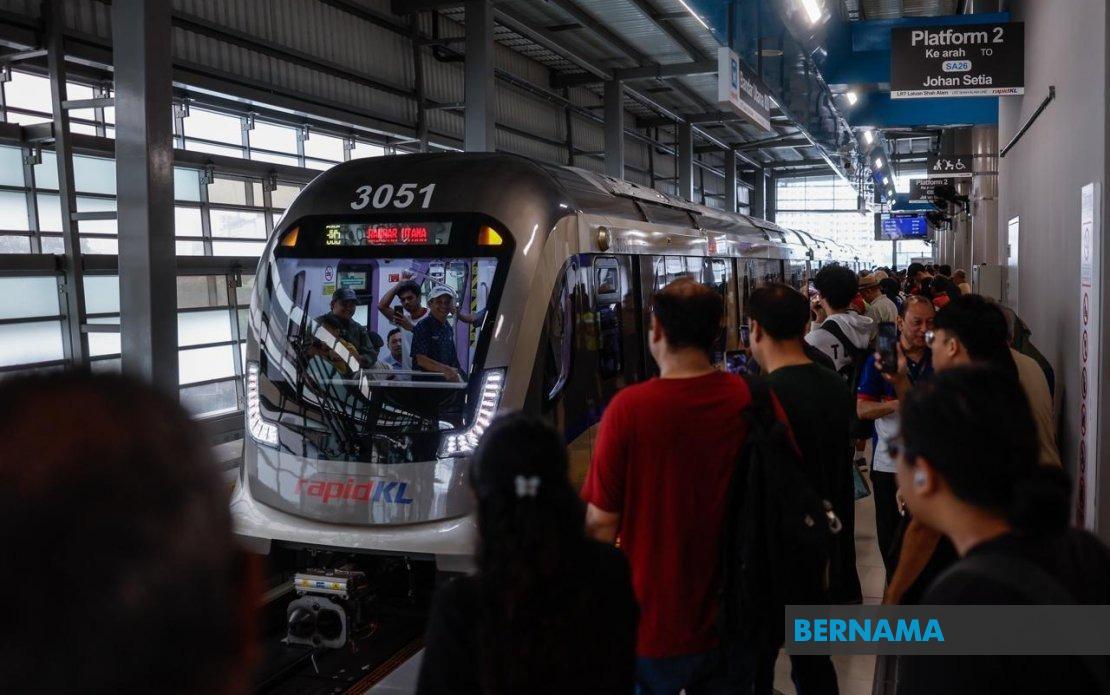
Rapid KL announced on Wednesday that the complimentary travel arrangement for the Light Rail Transit 3 Shah Alam Line will continue through August 14, extending the initial promotion that Prime Minister Datuk Seri Anwar Ibrahim inaugurated at the service's launch in late June. The decision to prolong the zero-fare period reflects the transport operator's commitment to building ridership on the newly operational route, which represents a significant addition to the Klang Valley's public transit network.
The Shah Alam Line represents a critical infrastructure investment for the greater Kuala Lumpur region, threading through Petaling Jaya, Shah Alam and terminating in Klang. By maintaining free fares beyond the originally scheduled expiration date of July 31, Rapid KL aims to accommodate more commuters who wish to familiarise themselves with the system's operations, station layouts and integrated transport options before paid service begins. This gradual introduction strategy recognises that substantial shifts in commuting behaviour require time and repeated exposure to build confidence among the travelling public.
When Datuk Seri Anwar Ibrahim launched the service at the Johan Setia LRT Depot in Klang on June 28, he announced that the initial promotional period would run until July 31. The subsequent extension signals that ridership patterns during the opening weeks warranted continued free access, potentially indicating either strong initial demand that justified maintaining momentum or organisational readiness to ensure systems operated smoothly before introducing revenue collection. The transport authority clearly perceives value in sustaining the interest and goodwill generated during the service's debut month.
The extended free travel encompasses not merely the trains themselves but the entire integrated ecosystem of shuttle bus connections and Park N' Ride parking facilities at designated stations. This comprehensive approach recognises that modern public transport effectiveness depends on seamless connectivity between modes. Commuters transitioning from private vehicles will require assurance that the final-mile problem is adequately addressed through convenient feeder services. By extending free shuttle and parking privileges alongside rail fares, Rapid KL removes financial barriers that might otherwise discourage trial usage among motorists accustomed to the convenience of personal transportation.
Rapid KL's public statement emphasised that the extension aims to position public transport as a primary commuting option for daily travel across the region. This messaging reflects broader policy objectives within Malaysia's transport planning, which has increasingly prioritised reducing automobile dependency in urban centres. The LRT3 Shah Alam Line opening addresses a genuine transportation need, particularly for residents and workers moving between these three municipalities, many of whom previously relied entirely on congested road networks. Successfully converting even a fraction of these commuters to rail transit could yield substantial benefits for traffic congestion, air quality and urban livability.
The transport operator's framing of the extension as an opportunity for users to develop familiarity with the system before paying fares represents a pragmatic recognition that behavioural change requires confidence-building. First-time rail users may harbour concerns about navigating unfamiliar infrastructure, understanding fare structures, identifying correct platforms or managing peak-hour crowds. The extended grace period allows potential passengers to resolve these anxieties through direct experience, reducing the psychological and practical barriers to conversion from vehicle use. Research on transit adoption consistently demonstrates that initial trial periods substantially improve long-term ridership when users gain positive first-hand experience.
Rapid KL's statement also encourages advance journey planning and compliance with operational regulations, suggesting that even during the free service period, the operator maintains standards of conduct and efficiency. This messaging serves a dual purpose: it shapes passenger behaviour toward responsible transit use while simultaneously assuring regular commuters that system integrity will be maintained as volumes potentially increase. The emphasis on safety and smoothness indicates organisational confidence in the service's readiness to accommodate expanded ridership.
For Malaysian commuters and the transport sector more broadly, the LRT3 Shah Alam Line represents progress toward reducing traffic congestion in one of the nation's most densely travelled corridors. The Klang Valley region generates substantial traffic volumes daily, with significant portions consisting of commuters travelling between these three municipalities. A functional rail alternative could meaningfully reduce pressure on increasingly congested highways and arterial roads. The extension of free fares should be understood within this context—as an investment in establishing a new transport habit among the region's working population.
The decision also carries implications for the broader public transport narrative in Malaysia. As the government continues investments in urban rail expansion, demonstrating successful ridership adoption and positive public reception becomes important for justifying future infrastructure spending. The Shah Alam Line's launch and extended promotional period provide concrete evidence that Malaysians will utilise modern public transit when convenience and cost barriers are minimised. This evidence could strengthen policy arguments for additional rail development in other congested metropolitan areas across the country, from Penang to Johor Bahru.
Looking toward the August 14 extension deadline, Rapid KL's subsequent actions will prove revealing. Whether the operator implements a gradual fare structure, introduces concessional pricing for bulk users, or transitions directly to standard rates will signal organisational confidence in having converted sufficient commuters to sustain operations through voluntary payment. The extension period ultimately represents a calculated business decision—investing in early ridership to establish the service's credibility and reach the critical mass of regular users necessary for long-term financial viability and public transport network effectiveness.

