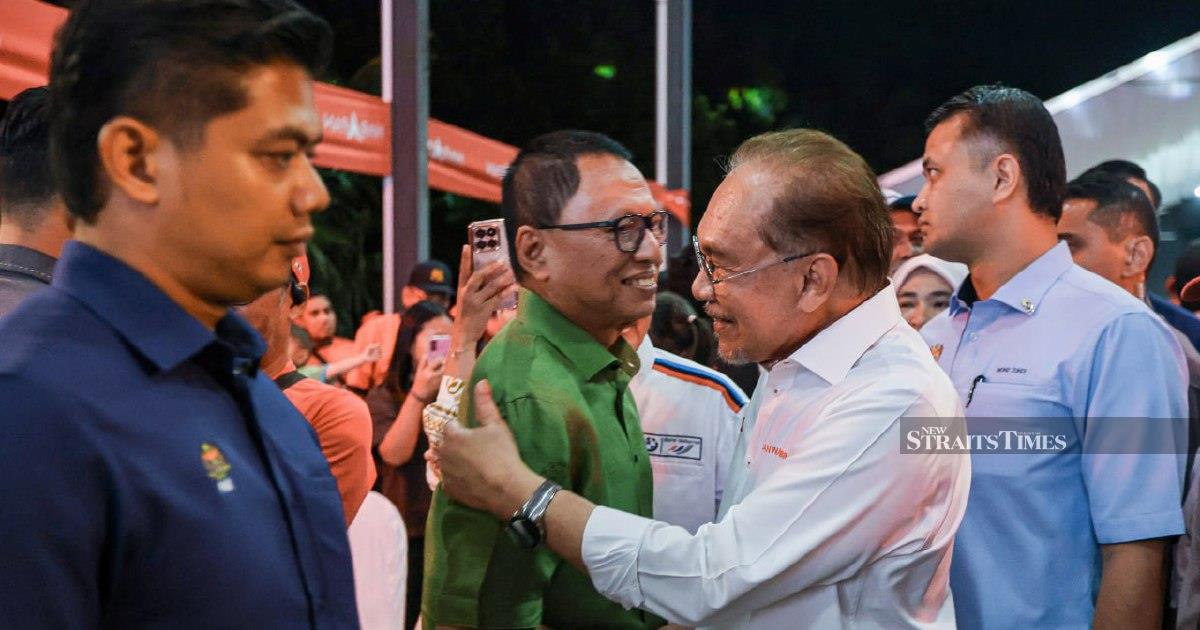
The Malaysian political landscape shifted into higher relief in Johor Baru when Bersama leader Datuk Seri Rafizi Ramli deployed characteristic wit to comment on Umno politician Datuk Dr Mohd Puad Zarkashi's conspicuous public display of camaraderie with Prime Minister Anwar Ibrahim during a weekend gathering. The quip, suggesting that Puad had relocated his political "portfolio" from Umno to Pakatan Keadilan Rakyat, underscores the delicate balance within Malaysia's ruling coalition and the undercurrents of suspicion that continue to animate relations between its constituent parties.
Rafizi's remarks should be understood within the context of the broader political manoeuvres that have characterised the Anwar Ibrahim government since its inception. The administration has had to navigate complex interparty dynamics, particularly in managing the relationship between PKR and Umno, which represents the senior component of Malaysia's dominant political bloc. Moments of apparent camaraderie between government figures and Umno politicians can trigger scrutiny and commentary from coalition partners, particularly those who view such interactions with underlying concern.
The notion of switching portfolios carries particular resonance in the Malaysian context, where political alignment and party loyalty have historically carried substantial consequences. By framing Puad's public embrace with the prime minister as a transfer of allegiance or interest, Rafizi was engaging in the sort of political theatre that has become familiar in Malaysian commentary. Yet beneath the humorous surface lies a genuine anxiety about intracoalition stability and the possibility that prominent figures might be shifting their commitments across party lines.
Umno's position within the current political settlement remains strategically important but also structurally precarious. The party has historically dominated Malaysian politics and continues to command substantial parliamentary representation and grassroots support, particularly among rural and traditionally-minded constituencies. However, its incorporation into the PKR-led Pakatan government represents a significant recalibration of Malaysian political architecture, one that requires careful management of symbols, signals, and public interactions to maintain internal coalition cohesion.
Bersama, the party that Rafizi leads, occupies a particular niche within the coalition structure, and its members have reasons to monitor closely how other parties navigate their relationship with the prime minister. The party's position depends partly on the stability of the broader coalition arrangement and partly on maintaining its own distinct identity and influence within government deliberations. Comments like Rafizi's can serve multiple purposes: they demonstrate alertness to coalition dynamics, signal that smaller parties are watching major players carefully, and create space for their own voices within collective decision-making.
The Saturday embrace between Puad and Anwar, whatever its actual significance, became immediately susceptible to interpretation and reinterpretation by various political actors. What one party might view as a simple gesture of collegial warmth another might read as a sign of deeper political realignment or the cultivation of new alliances. In Malaysian politics, where coalition mathematics ultimately determine government formation and survival, such visual moments carry weight disproportionate to their intrinsic content.
Rafizi's intervention also reflects the broader challenge facing the current administration: maintaining sufficient internal unity to govern effectively while accommodating the distinct interests and identities of multiple parties. PKR has had to balance its role as the leading government party with the need to respect the status and sensitivities of larger and more historically entrenched partners like Umno. Comments from coalition partners like Rafizi create opportunities to test boundaries, signal concerns, and keep other parties calibrated to the coalition's expectations.
The exchange illustrates how Malaysian political discourse operates at multiple registers simultaneously. On one level, it is humorous commentary on a public moment between two political figures. On another level, it reflects ongoing negotiations about the structure and expectations of the ruling coalition. On yet another, it serves as a form of political communication that allows smaller parties to maintain visibility and relevance within larger structures of power and decision-making.
For observers seeking to understand contemporary Malaysian politics, such moments reveal important truths about coalition government and multiparty administration. The constant monitoring, commentary, and occasional gentle ribbing between coalition partners is not merely colourful political theatre but rather an essential mechanism through which parties maintain their distinct identities while participating in collective governance. Rafizi's quip about Puad's portfolio represents a textbook example of how Malaysian politicians use wit and wordplay to navigate substantive questions about allegiance, interest, and commitment within complex political arrangements.
The incident also underscores the importance of maintaining coalition discipline and clarity about party lines at a moment when the government's majority, while secure, operates within relatively narrow margins in parliament. Each coalition partner brings particular constituencies and concerns to the governing arrangement, and the ability of leaders like Rafizi to comment publicly on perceived shifts in alignment demonstrates both the transparency and the underlying tensions inherent in Malaysia's current political structure. As the government navigates forthcoming legislative sessions and policy challenges, such intracoalition dynamics will likely continue to shape both the substance and the presentation of ministerial action.

