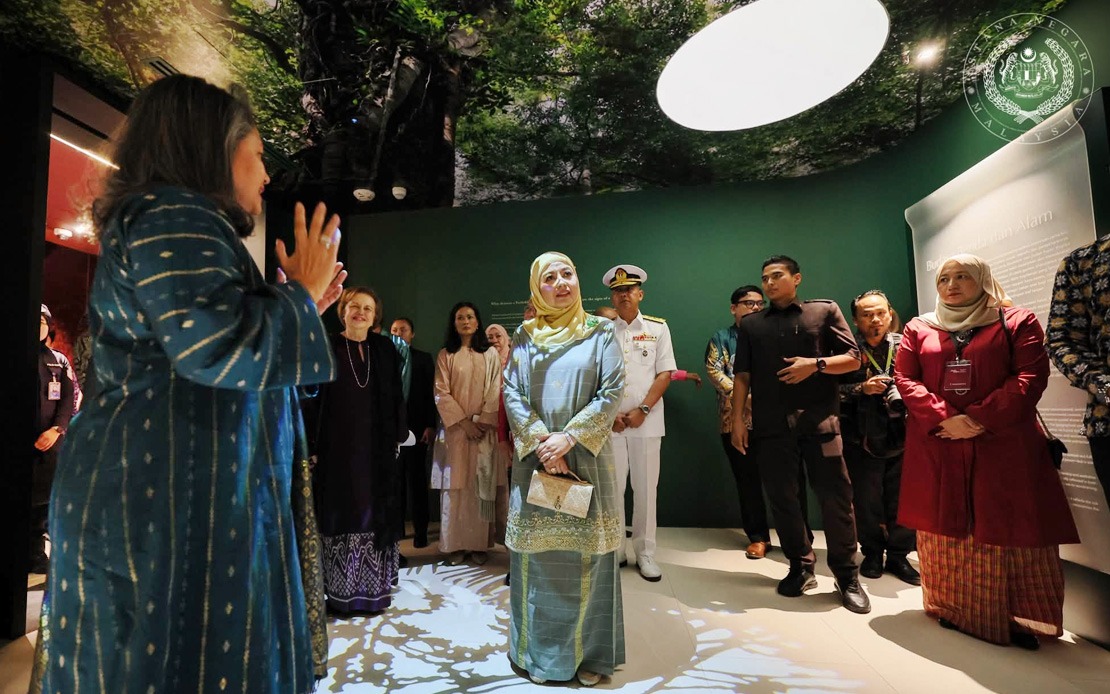
Her Majesty Raja Zarith Sofiah, Queen of Malaysia, formally opened the Merdeka Textile Museum on August 21 at the Menara Merdeka Maybank compound in Kuala Lumpur, marking an important milestone in the nation's efforts to safeguard its cultural treasures. The museum, established by PNB Merdeka Ventures Sdn Bhd—a subsidiary of the state-owned Permodalan Nasional Berhad—represents a significant institutional commitment to showcasing the textile traditions that have defined Malay identity across generations.
The Queen's remarks during the inauguration underscored the universal imperative for all societies to treasure, maintain, and transmit their cultural legacy. In her view, the preservation of heritage is not merely an academic exercise but a foundational responsibility that nations owe to their citizens and future generations. She framed textile traditions specifically as windows into the deeper values and identity that characterise Malaysian society, suggesting that the museum transcends its role as a repository of objects to function as a mirror reflecting national values.
A central dimension of the Queen's vision involves inspiring contemporary Malaysian women and younger citizens to engage meaningfully with this heritage. Her concern that cultural traditions risk being forgotten without deliberate preservation efforts points to a broader regional challenge facing Southeast Asian nations as modernisation accelerates. The museum, in this context, becomes a bulwark against cultural erosion, offering tangible proof that traditional knowledge and artistic practices retain contemporary relevance and dignity.
The museum's founding collection draws substantially from the personal assemblage of the late Sharifah Azah Syed Mohammed Alsagoff, a figure of considerable cultural significance whose family includes Tan Sri Dr Ungku Zeti Akhtar Aziz, the former governor of Bank Negara Malaysia. The Azah Aziz family's donation of 240 pieces of clothing alongside 69 traditional jewellery items—encompassing songket sarongs, Limar Baju Kurung pieces, and intricately embroidered Tekat Emas garments—establishes a curatorial foundation of exceptional quality. These items represent not merely personal possessions but material evidence of refined aesthetic sensibilities and mastery of textile arts that characterised elite households across generations.
The architectural and programmatic scope of the Merdeka Textile Museum extends considerably beyond conventional display functions. Organised across eight distinct galleries, the facility incorporates a sophisticated study centre housing a conservation laboratory, a specialised fabric library, and a dedicated textile knowledge centre. This infrastructural complexity signals recognition that preserving textiles demands ongoing scientific expertise, organised access to materials for scholarly examination, and institutional capacity to conduct restoration work. For Malaysian researchers, designers, and cultural practitioners, the facility offers rare infrastructure for rigorous textile studies.
The museum's positioning within Menara Merdeka Maybank—a landmark associated with independence commemoration—carries symbolic weight beyond mere location convenience. The merger of commercial development, public cultural programming, and state heritage stewardship reflects an evolving model wherein private institutional partners facilitate national cultural objectives. This arrangement also potentially enhances accessibility for urban visitors and positions textile heritage within conversations about economic development and modernity rather than relegating it to specialist or nostalgic contexts.
The presence of Minister Hannah Yeoh, the Chief Secretary to the Government Tan Sri Shamsul Azri Abu Bakar, and PNB group chairman Raja Tan Sri Arshad Raja Tun Uda at the inauguration ceremony underscores governmental institutional support for the initiative. Such cross-sector attendance demonstrates coordination between federal territory administration, central government bureaucracy, and state-linked commercial entities. For Malaysian stakeholders in cultural preservation, this alignment suggests potential for sustained resourcing and policy support.
The museum arrives during a period of renewed attention to traditional arts across Malaysia and the region more broadly. Rising interest in heritage tourism, coupled with younger generations' growing curiosity about pre-modern aesthetic practices, creates conditions favourable to institutional innovation in cultural presentation. The Merdeka Textile Museum positions itself to serve both educational missions and tourism objectives, potentially becoming a destination attraction that legitimises investment in similar facilities across Malaysian cities.
For the broader Southeast Asian context, the museum's emphasis on textile traditions carries particular resonance. Textile arts represent a cultural domain where Malaysia shares profound connections with neighbouring countries—from Indonesian batik traditions to Thai silk practices. A well-resourced Malaysian institution dedicated to textile scholarship and exhibition potentially stimulates regional dialogue and collaborative preservation efforts whilst establishing standards for Southeast Asian cultural institutional practice.
The museum's educational programming will likely determine its long-term significance. Beyond static display, opportunities exist for workshops, apprenticeships with traditional craftspeople, academic conferences, and travelling exhibitions that extend the institution's reach beyond Kuala Lumpur. The presence of the study centre and fabric library suggests institutional appetite for supporting serious textile research, distinguishing this facility from entertainment-oriented heritage presentations.
The Queen's closing appeal that young Malaysians develop deeper appreciation for national heritage points toward essential questions about how contemporary institutions can make traditional knowledge compelling and relevant. The Merdeka Textile Museum's success will be measured partly by whether it succeeds in transforming textile heritage from abstracted national symbol into living knowledge that shapes how Malaysians understand themselves and their communities. In this sense, the museum becomes not merely a repository of the past but a platform for ongoing dialogue about cultural identity in contemporary Malaysia.

