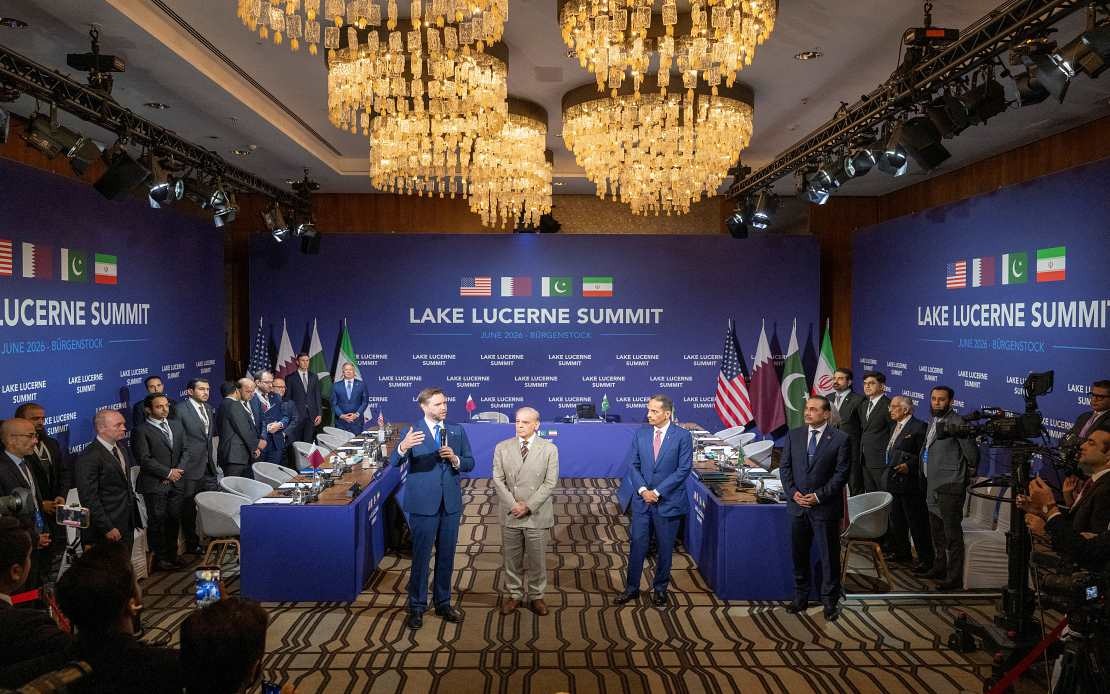
Diplomatic efforts to bridge the widening gulf between Washington and Tehran have entered a more structured phase following the inaugural high-level negotiations at the Lake Lucerne Summit in Switzerland. Qatar and Pakistan, acting as key mediators in this delicate process, released a joint statement on Monday characterising the opening round of talks as taking place within a constructive and positive environment. The tone of their assessment suggests that both parties have moved beyond preliminary positioning and are now willing to engage substantively on the core disputes that have strained their bilateral relationship for years.
The mediation framework has gained tangible shape through the establishment of institutional mechanisms designed to sustain momentum beyond the ceremonial aspects of diplomacy. A dedicated technical discussion channel will allow specialist delegations to continue their work on specific contentious issues without the publicity and political constraints that often accompany high-level meetings. This separation of technical and political tracks represents a conventional approach in complex multilateral negotiations, allowing negotiators to explore compromise solutions in a more insulated environment before decisions cascade back to capitals for final approval.
Perhaps most significantly, the parties have created a high-level political oversight committee that will supervise the entire mediation process. This committee's role encompasses far more than passive observation; it will receive regular briefings from lead negotiators and maintain authority over three specialised working groups. The first concentrates on the Iranian nuclear programme, historically the most contentious issue in US-Iran relations and a matter of acute concern for regional powers including Saudi Arabia and Israel. The second addresses sanctions architecture, which has crippled Iran's economy and remains a non-negotiable element for Tehran's negotiating position. The third establishes dispute resolution mechanisms, acknowledging that even agreed frameworks require neutral arbitration when disagreements arise over implementation.
A 60-day timeline for achieving a final agreement represents an ambitious but not unrealistic schedule for major diplomatic breakthroughs. This roadmap provides both parties with a clear deadline that encourages serious negotiation while avoiding the drawn-out posturing that can characterise talks without temporal constraints. For Malaysia and other Southeast Asian economies, the implications are substantial. Prolonged US-Iran hostility has created unpredictable energy markets and disrupted shipping through critical chokepoints. A resolution would stabilise regional geopolitics and restore predictability to global oil supplies, which directly influence Malaysian inflation, currency stability, and manufacturing competitiveness.
Among the practical outcomes, negotiators established a direct communication channel between Washington and Tehran for the duration specified in their previously signed memorandum of understanding. This seemingly technical measure holds symbolic importance; it creates a hotline intended to prevent miscalculation or inadvertent escalation. The two nations have experienced dangerous incidents in the Strait of Hormuz, through which roughly one-third of global seaborne oil trade passes. Malaysia's position as a maritime trading nation makes the security of these sea lanes fundamental to national economic interests, and any de-escalation mechanism that reduces the risk of military confrontation in the strait deserves careful attention from policymakers in Kuala Lumpur.
The memorandum specifically mandates measures to ensure safe passage of commercial shipping through the Strait of Hormuz. This provision addresses anxieties held by maritime trading nations worldwide, but especially by countries like Malaysia, Singapore, and other ASEAN members whose prosperity depends on unobstructed ocean commerce. Several incidents in recent years—including tanker seizures and drone attacks—have raised insurance premiums and forced some vessels to take costly detours around the Cape of Good Hope. Restoration of normal navigation conditions would reverse these economic penalties and reinvigorate regional shipping activity.
Qatar's role as mediator reflects its growing diplomatic influence and its substantial economic interests in Middle Eastern stability. As the world's largest liquefied natural gas exporter, Qatar faces direct consequences if regional tensions disrupt energy markets or international shipping. Pakistan's involvement signals that South Asian security considerations have been incorporated into the mediation framework. Pakistan shares borders with both Afghanistan and Iran, and benefits substantially from reduced regional volatility. The inclusion of both nations in the diplomatic architecture suggests that the talks transcend bilateral US-Iran concerns and encompass broader regional stability.
The technical working groups represent the real engine of negotiation, where specialists will explore the granular details of nuclear inspections, sanctions relief mechanisms, and verification protocols. These conversations require sustained technical expertise and access to classified information, making them unsuitable for public forums. However, their eventual recommendations will determine whether political leaders can justify an agreement to their respective domestic audiences. For Iran, the nuclear programme carries nationalist symbolism and questions about sovereignty. For the United States, verification and non-proliferation concerns remain paramount. For regional powers and trading nations watching from outside, the critical question centres on whether any agreement will endure or dissolve under political pressure.
The establishment of these mechanisms within the first day of substantive talks indicates that preliminary understandings may have been negotiated privately before the summit. Qatar and Pakistan would not announce such detailed institutional structures unless they possessed assurances from both the US and Iran that these bodies had genuine support. This suggests that behind-the-scenes diplomacy has already cleared significant ground, and Monday's formal announcements formalised arrangements already hammered out in confidence.
For Malaysia and the broader Southeast Asian region, the significance of these talks extends beyond energy security or shipping safety, though those dimensions matter. The resolution of US-Iran tensions carries implications for global trade patterns, financial flows, and the broader configuration of great power competition in Asia. The United States maintains that resolving the Iran question allows it to concentrate resources and attention on competition with China. Iran's integration into the global economy could alter supply chains and investment patterns throughout the region. Southeast Asian economies, increasingly enmeshed in complex trade networks spanning from Japan to the Middle East, stand to benefit from reduced geopolitical turbulence and the restoration of normal international commerce.

