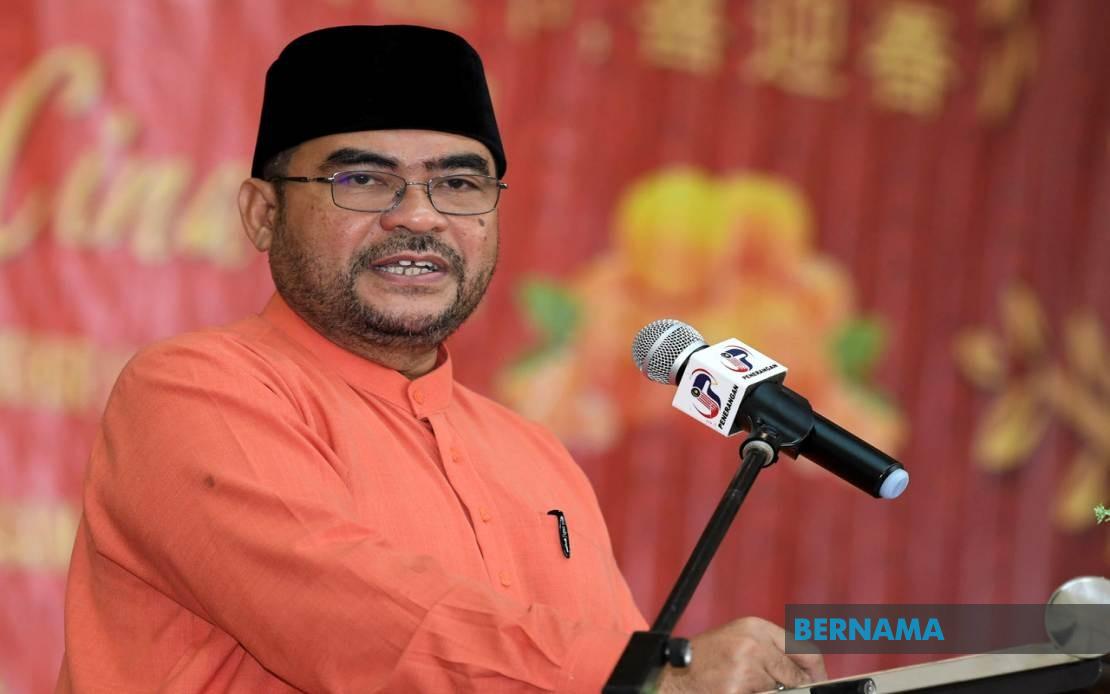
Datuk Seri Dr Mujahid Yusof Rawa, vice-president of Amanah, has made a strong case for immediately disclosing the findings of the Royal Commission of Inquiry into Tabung Haji, contending that public access to the investigation's conclusions would definitively settle lingering doubts about how the pilgrimage fund has been administered. Speaking in Seremban on July 25, Mujahid emphasized that transparency regarding the institution's governance between 2014 and 2020 represents a democratic imperative, allowing citizens rather than political actors to form their own judgments about management decisions during that crucial period.
The institutional credibility of Tabung Haji remains a sensitive matter across Malaysia, given its significance as a savings and investment vehicle for approximately 9.2 million depositors. The fund serves as a critical financial instrument for Malaysian Muslims preparing for the pilgrimage to Mecca, making its stewardship a matter of both religious and economic concern. Years of controversy and competing narratives have eroded public confidence, with various stakeholders offering contradictory interpretations of what transpired during the period under examination. Mujahid's call for transparency reflects recognition that continued secrecy only fuels speculation and undermines institutional legitimacy.
As a former Minister in the Prime Minister's Department overseeing religious affairs, Mujahid occupied a position directly connected to TH's governance during part of the inquiry's timeframe. His willingness to submit himself to judgment based on the RCI's findings demonstrates a degree of political confidence, though it also positions him squarely within the controversy. He explicitly stated his readiness to accept scrutiny of his tenure, signaling that he does not fear the investigation's conclusions regarding his own conduct. This personal vulnerability lends weight to his advocacy for disclosure, as he cannot be accused of selectively promoting transparency only when findings favor him.
The RCI process itself was designed as an independent mechanism to cut through political noise and establish an authoritative factual record. By convening a professional investigative body rather than relying on parliamentary debate or media speculation, authorities theoretically created conditions for objective assessment. However, an inquiry remains meaningless if its conclusions remain hidden from public view. Mujahid articulated precisely this paradox, arguing that maintaining the report's confidentiality contradicts the entire logic of appointing an independent commission in the first place. The investigation's value depends fundamentally on its findings informing public discourse and accountability mechanisms.
Mujahid emphasized that withheld information allows conspiracy theories, partisan accusations, and unsubstantiated allegations to persist unchecked. The absence of definitive, authoritative facts creates a vacuum inevitably filled by speculation, rumor, and politically motivated interpretations. Each faction involved in TH's governance can claim vindication by the secret report, secure in the knowledge that no contradictory evidence exists in the public domain to challenge their narrative. This dynamic corrodes trust not only in Tabung Haji itself but in government institutions more broadly, as citizens perceive that authorities are concealing inconvenient truths.
Restoring confidence among TH's millions of depositors represents a pressing practical concern. These individuals have entrusted their savings to an institution whose integrity has been questioned through multiple channels. Many remain uncertain whether their funds are secure, whether management has acted responsibly, and whether structural reforms are genuinely necessary. Public disclosure of the RCI report would either validate depositor confidence or, if problems are identified, at least clarify what remedial actions are required. The current limbo—where the scope and nature of any institutional failures remain unknowable—creates unnecessary anxiety.
Prime Minister Datuk Seri Anwar Ibrahim signaled openness to the disclosure proposal during the same period, indicating that the Cabinet would likely approve public release of the report following formal tabling of the recommendation on Wednesday. This apparent alignment between Mujahid's advocacy and the Prime Minister's position suggests momentum toward transparency, though institutional resistance or competing political considerations could still delay or obstruct publication. The fact that serious consideration is being given to disclosure reflects broader movement within Malaysian governance toward greater accountability and public information access.
The particular period examined by the RCI—2014 to 2020—encompasses crucial years of political transition, shifting governance priorities, and evolving management approaches at Tabung Haji. These years witnessed multiple administrations and competing visions for the fund's strategic direction. Investigation of this era necessarily implicates various government figures, political appointees, and management personnel who operated across changing political landscapes. Public understanding of how institutional stewardship changed hands and whether continuities or ruptures characterized governance would provide valuable historical documentation.
Mujahid's refusal to prejudge the inquiry's conclusions before publication demonstrates appropriate restraint, even as he advocates for transparency. Rather than predicting which individuals or decisions the RCI will criticize, he acknowledged that comprehensive findings might reveal both failures and positive contributions to institutional preservation. This balanced approach acknowledges that the truth is likely complex, involving multiple actors with varying degrees of responsibility, rather than reducible to simple heroes-and-villains narratives that partisan interests might prefer. The RCI's independence and professional methodology presumably enable such nuance.
For Malaysia's broader governance trajectory, the Tabung Haji inquiry represents a test case regarding public access to investigative findings. Whether authorities ultimately honor commitments to transparency will signal official attitudes toward accountability and public information rights more generally. Establishing precedent that royal commissions can be conducted and their findings publicly disclosed would strengthen democratic norms and citizen oversight capacity. Conversely, maintaining confidentiality despite initial indications otherwise would reinforce cynicism about whether institutional investigations genuinely serve public enlightenment or primarily protect elite interests.
The implications extend beyond Tabung Haji itself to encompass how Malaysia balances governmental transparency with privacy, security, and institutional autonomy considerations. Religious institutions occupy a particular position in Malaysia's constitutional framework, deserving both respect and appropriate oversight. Demonstrating that even sensitive institutions can be subjected to transparent investigation, with findings disclosed to stakeholders and the broader public, would reflect maturation of democratic governance. It would signal that religious authority does not exempt institutions from accountability to beneficiaries and the state.

