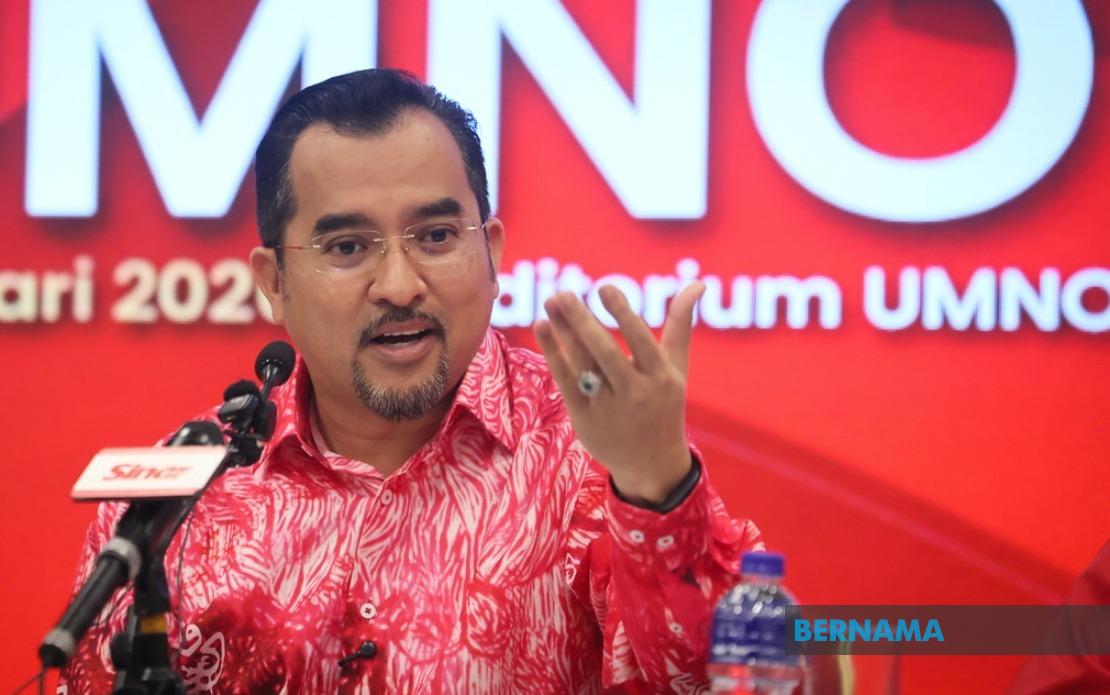
UMNO's internal cohesion faces fresh scrutiny following the resignation of Supreme Council member Datuk Dr Mohd Puad Zarkashi, with party leadership attributing his departure to personal grievances rather than principled disagreement. According to UMNO secretary-general Datuk Dr Asyraf Wajdi Dusuki, Puad's decision to quit stemmed fundamentally from frustration that his son was not considered for the Rengit state seat nomination ahead of the Johor state election scheduled for July 11.
Ashyraf Wajdi unveiled the circumstances through a detailed Facebook post, revealing that Puad had previously communicated his dissatisfaction in writing, explicitly threatening to leave UMNO and publicly attack the party if leadership rejected his request to field his son as a candidate. This pattern of behaviour, the secretary-general suggested, reflected a troubling precedent within the party, pointing to an earlier instance during Najib Tun Razak's presidency when Puad allegedly made similar threats regarding his reselection as Member of Parliament for Batu Pahat. The repetition of this strategy indicates a concerning trend of leveraging personal political ambitions through ultimatums.
The secretary-general's characterisation of events underscores a fundamental philosophical divide within UMNO regarding candidate selection protocols. While acknowledging that Puad's son possesses youth and considerable potential for political development, Asyraf Wajdi emphasised that party machinery must weigh numerous considerations beyond individual promise when determining electoral nominations. This reasoning reflected the party's institutional interest in balancing generational renewal with broader electability concerns, regional dynamics, and established candidate viability across the diverse constituencies competing in the Johor election.
Puad's allegation that the Johor palace exercises controlling influence over UMNO's state operations and orchestrated the State Legislative Assembly dissolution drew sharp rebuke from Asyraf Wajdi, who characterised such claims as slanderous. This aspect of the dispute touches upon deeper sensitivities surrounding the relationship between traditional monarchical authority and partisan political structures in Johor, a state where the sultanate has historically maintained considerable informal influence over governance. The secretary-general's forceful denial suggests UMNO leadership remains acutely aware of reputational risks associated with perceptions of external interference in party decision-making.
The timing of Puad's resignation, announced on Facebook with immediate effect and framed as enabling greater personal freedom of expression, coincides with an intensifying electoral cycle. The Johor State Legislative Assembly dissolution on June 1 initiated a compressed campaign season, with nomination day set for June 27 and polling scheduled for July 11. Puad's exit at this critical juncture represents a visible fracturing of party unity precisely when UMNO requires maximum cohesion to contest what many analysts regard as a significant electoral test in the heartland state.
Ashyraf Wajdi's response crystallised UMNO's institutional position that the party fundamentally differs from hereditary structures that privilege familial succession or accommodate personal demands through coercive tactics. This articulation carries particular weight given UMNO's historical reputation for internecine factional struggles and its recent efforts to rehabilitate party governance following the 1MDB scandal and subsequent internal upheavals. By explicitly rejecting the notion that individual disappointment justifies threats or defection, party leadership sought to establish clearer boundaries around acceptable political conduct within UMNO's ranks.
The broader implications of Puad's departure extend beyond a single intra-party disagreement, reflecting deeper vulnerabilities within UMNO's coalition-building capacity at a moment when party unity remains essential. The Johor state election represents a crucial barometer of UMNO's continued relevance and organisational resilience under current leadership. Internal departures during campaign periods, particularly when attributed to patronage disappointments, inevitably generate questions about the party's ability to retain talented members and manage expectations within its membership base.
From a Malaysian political economy perspective, the episode illustrates the persistent tension between merit-based, institutionalised candidate selection and the traditional patronage networks that continue shaping Malaysian politics across multiple parties. While Asyraf Wajdi's defence of meritocratic selection principles represents contemporary democratic aspirations, the very necessity of mounting such defences reveals the enduring influence of familial and personal networks in determining political opportunity. This dynamic remains particularly pronounced within UMNO, whose roots in communal leadership structures sometimes conflict with modern institutional governance standards.
The characterisation of Puad's son as young with considerable leadership potential, while simultaneously insufficient for immediate candidacy selection, encapsulates UMNO's stated approach to generational transition. Party leadership appears committed to grooming emerging talents within controlled frameworks rather than acquiescing to accelerated promotion demands. This measured strategy, however reasonable in abstract governance terms, inevitably generates frustration among ambitious members and their families who perceive qualified candidates as overlooked due to institutional preferences for established figures or competing regional power dynamics.
Puad's ability to pursue independent advocacy following his resignation may ultimately prove consequential for the Johor election outcome. As a former senior party member with legitimate credibility within Malay-Muslim constituencies, his public criticism could potentially resonate with voters concerned about UMNO's internal management or broader governance approaches. Conversely, his exit could be characterised as sour grapes motivated primarily by personal disappointment, thereby minimising reputational damage to UMNO's campaign messaging. The unfolding Johor election will likely reveal whether Puad's departure constitutes a significant organisational liability or merely another instance of routine factional turbulence within Malaysia's oldest political party.

