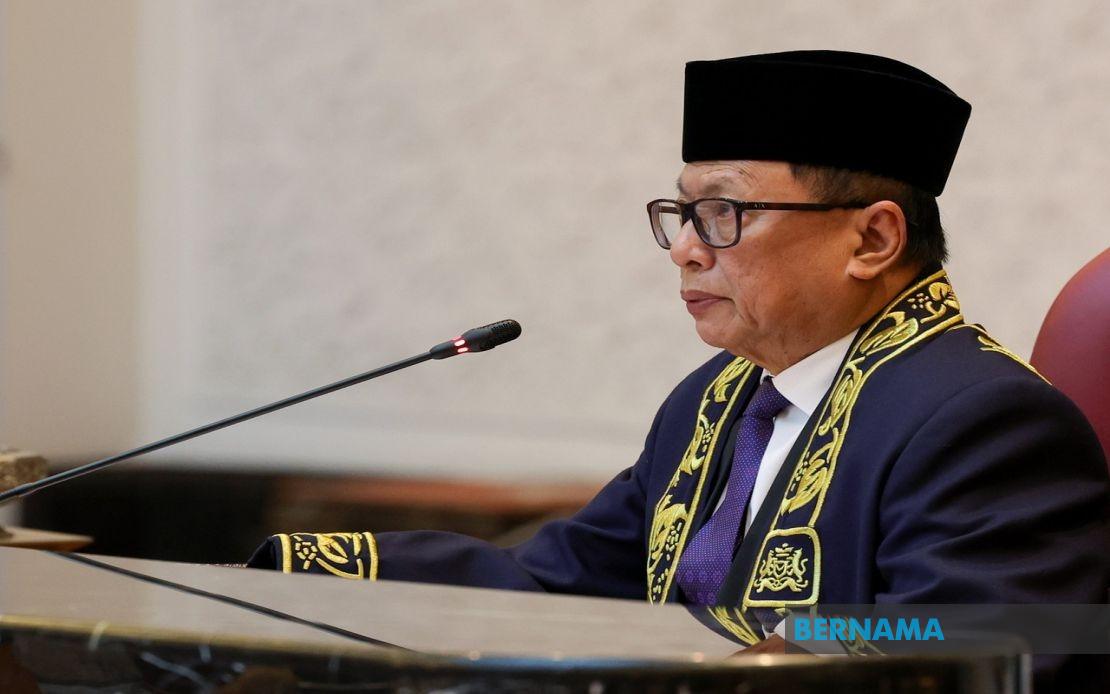
Datuk Dr Mohd Puad Zarkashi, a member of UMNO's Supreme Council and Rengit state assemblyman, announced his departure from the party effective immediately on June 25, 2026, citing his desire to voice criticisms without being branded as disloyal. The move marks a significant blow to UMNO's cohesion in Johor, as Puad is not a marginal figure but a seasoned politician with decades of experience in both state and federal politics.
In a Facebook statement, Puad declared that his exit would liberate him from party constraints, allowing him to openly challenge party decisions that he views as fundamentally flawed. His phrasing—describing himself as now free to criticise UMNO, a platform he professes to love and respect—suggests an attempt to frame his departure as principled dissent rather than a bitter falling out. This rhetorical positioning is significant for a senior party figure, as it maintains a door for future reconciliation while laying down clear ideological grievances.
The core of Puad's complaint centers on Johor Chief Minister Onn Hafiz, whom he characterises as a "pak turut"—a Malay colloquialism for a yes-man or sycophant lacking independent judgment. Puad's allegation extends beyond personal criticism of the Chief Minister to a systemic claim that Johor UMNO, under Onn Hafiz's stewardship, has become a "tethered puppet," effectively stripped of autonomy and reduced to an instrument of executive will. This language suggests deeper organisational dysfunction within the state party structure, where decision-making may be concentrated and dissenting voices marginalised.
Puad's exit comes against a backdrop of tensions within Johor's political establishment regarding candidate selection for the upcoming state election. He had previously raised concerns about irregularities in the Barisan Nasional candidate nomination process, hinting at procedural improprieties that undermined democratic norms within the coalition. His earlier decision to step aside from defending his Rengit seat, ostensibly to make way for younger candidates, now appears to have been a pretext or preliminary signal of deeper disagreement with party direction.
The timing of this departure warrants scrutiny within the broader context of Malaysian politics. Johor remains the stronghold of UMNO's political influence, and internal fracturing at the state level could weaken the party's electoral prospects. Puad's invocation of "political courage" in exposing wrongdoing suggests he believes conditions within Johor UMNO have deteriorated significantly, with ethical concerns overriding considerations of party unity or personal political advancement. For regional observers, this signals that challenges to UMNO's internal cohesion persist despite the party's continued electoral strength.
Puad's political trajectory provides context for evaluating his credibility. He previously served as Batu Pahat Member of Parliament, winning decisively in the 12th General Election with a majority of 12,968 votes before losing the seat in the 13th General Election to PKR's Datuk Mohd Idris Jusi by a narrower margin of 1,524 votes. His tenure as Deputy Education Minister from 2009 to 2013 and his subsequent role as Director-General of the Special Affairs Department (JASA) from March 2015 to April 2018 underscore his integration into federal governance structures. These credentials position him as an insider whose criticism carries institutional weight.
The relationship between state-level UMNO machinery and the Chief Minister's office remains a perennial pressure point in Malaysian politics. While Chief Ministers exercise executive authority, state party structures traditionally maintain nominal independence in matters of discipline and internal governance. Puad's complaint that Johor UMNO has become a puppet under Onn Hafiz suggests an erosion of this separation, with executive power bleeding into party affairs. This pattern, if accurate, would reflect broader centralisation trends within Malaysian political parties where party presidents and state leaders increasingly dominate internal processes.
Puad's departure also raises questions about the durability of Barisan Nasional's coalition government in Johor. Defections or forced exits by senior figures can demoralise party activists and signal to swing voters that internal confidence in leadership is weakening. Though Puad has not indicated plans to join another party, his liberated status as an independent state assemblyman could serve as a platform for ongoing criticism of government policies, potentially emboldening other dissenters within UMNO's ranks.
For Malaysia's broader political landscape, Puad's move illustrates persistent tensions within UMNO between traditionalists who value party autonomy and those seeking stronger centralised control. These internal struggles reflect deeper questions about democratic accountability and institutional integrity within Malaysia's largest political party. As UMNO navigates post-electoral consolidation in various states, such internal divisions could intensify if perceived grievances about fairness and proper procedure remain unaddressed.
The implications for Rengit state constituency appear manageable in the short term, as Puad had already decided not to defend the seat. However, his continued presence as an assemblyman, now freed from party discipline, could complicate legislative proceedings if he becomes a critical voice on government initiatives. His stated commitment to UMNO's values despite his departure suggests he may position himself as a loyal opposition figure rather than a hardened opponent, potentially becoming a barometer of internal party sentiment.
Longer-term consequences depend on whether other senior UMNO figures share Puad's concerns about Onn Hafiz's leadership style and the state party's diminished autonomy. If his departure catalyses broader discussions about governance within Johor UMNO, it could precipitate institutional reforms or further organisational turbulence. Conversely, if his departure is viewed as isolated, the party may simply absorb the loss and proceed undisturbed, treating his criticism as the grievance of a single politician rather than a symptom of systemic problems.

