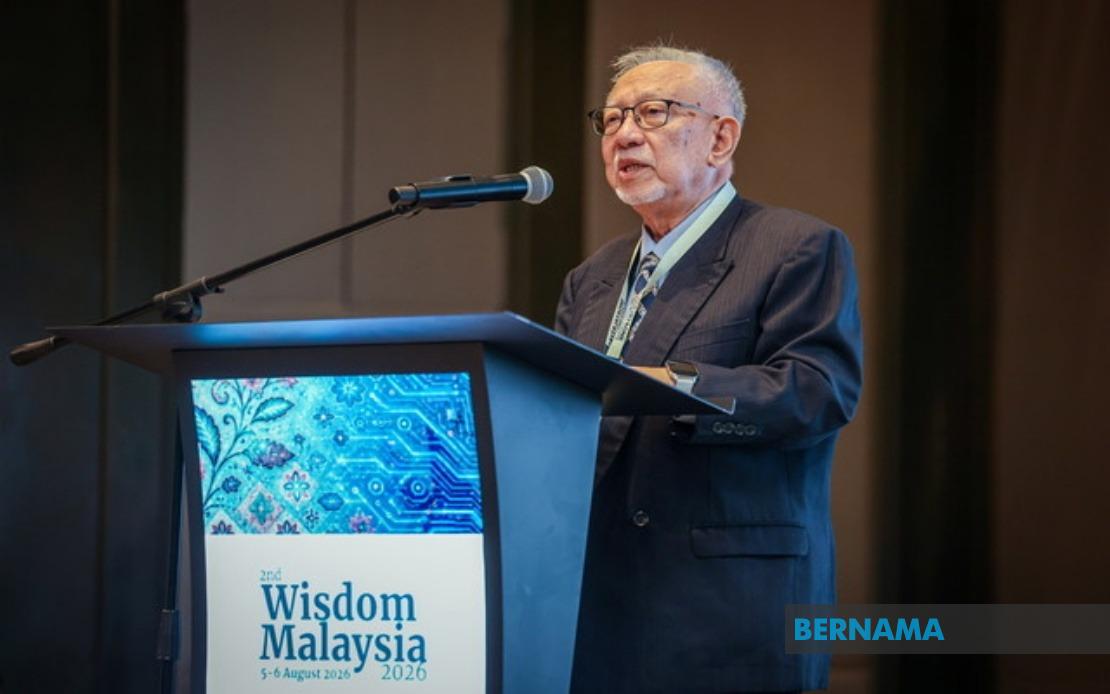
The integrity of Malaysia's fight against corruption hinges critically on creating a safe environment for those willing to expose wrongdoing within government and public institutions. This argument formed the centrepiece of remarks delivered by Datuk Syed Ahmad Idid Syed Abdullah, a former High Court Judge of Malaya and Borneo, at the 2nd Wisdom Malaysia Conference 2026 in Kuala Lumpur on August 6. His intervention arrives at a moment when questions persist about how comprehensively the nation protects those who come forward with evidence of abuse of power and financial misconduct.
When officials face intimidation or suppression rather than protection when they raise concerns about corruption, the consequence extends far beyond individual cases of wrongdoing. The broader institutional culture becomes poisoned by silence and self-preservation. Syed Ahmad Idid drew a sharp distinction between whistleblowing and slander, emphasising that when someone reports evidence of corruption or workplace violations, they are fundamentally engaged in an act of justice. Yet if such individuals discover that speaking up invites retaliation, blacklisting, or social ostracism, the rational response becomes complicity. Over time, organisations drift toward environments where wrongdoing multiplies unchecked.
This dynamic carries profound implications for Malaysia as an economy seeking to attract foreign investment and compete regionally. International investors scrutinise governance frameworks and the freedom with which internal actors can report irregularities. Nations perceived as hostile toward whistleblowers risk acquiring reputations as jurisdictions where systemic corruption festers beneath official statistics. The consequence is not merely reputational but material—capital flees toward countries with demonstrated commitment to transparency and accountability.
The scale of potential financial recovery from successful anti-corruption efforts dwarfs the budgets typically allocated to public services. Syed Ahmad Idid posited that resources recovered from illicit proceeds and leakages could fundamentally transform Malaysia's infrastructure and social investments. He illustrated this possibility concretely: the recovered funds could finance the construction of at least two general hospitals in every state across the nation, alongside between 20 and 50 high-quality schools. This is not rhetorical flourishing but a calculation grounded in the actual scale of corruption documented in past Malaysian cases.
Education, in particular, represents an sector where additional investment could generate multiplicative returns. Better-equipped schools, enhanced teacher training, and improved facilities do not merely provide immediate benefits to students currently in classrooms. They catalyse long-term human capital development that strengthens the entire economy and society. Syed Ahmad Idid connected this educational investment directly to national security and sporting excellence, noting that a superior education system produces both more effective security personnel and outstanding athletes. These outcomes resist easy quantification but contribute substantially to Malaysia's standing internationally.
The argument rests on a premise sometimes overlooked in public discourse: corruption is not a victimless crime affecting abstract government finances. It represents a direct transfer of resources that could have improved ordinary Malaysians' access to healthcare, education, and public infrastructure. Every ringgit diverted through corrupt channels is a ringgit unavailable for a child's school supplies, a patient's hospital treatment, or a community's roads and utilities. Viewed this way, whistleblowers are not disloyal provocateurs but defenders of public welfare.
However, creating genuine protections for whistleblowers extends beyond rhetorical endorsement. It requires institutional mechanisms: anonymous reporting channels that function reliably, investigations conducted by bodies insulated from political pressure, legal protections against retaliation, and cultural acceptance of dissent as responsible rather than disloyalty. Many organisations claim to welcome internal reporting while simultaneously creating conditions that punish those who report upward. The test of genuine whistleblower protection lies in observable outcomes—whether individuals who raise concerns actually experience career advancement or at minimum stability, or whether they disappear from organisations shortly after reporting.
Syed Ahmad Idid's remarks during the dialogue session titled "The Life, Conscience and Costs of the Principled" acknowledge explicitly that principled conduct exacts costs. Individuals who prioritise integrity over advancement sacrifice career progression. Organisations that tolerate rather than celebrate whistleblowing risk losing talented employees. Yet he suggests these costs are negligible compared to the expenses imposed by unchecked corruption. This framing inverts the typical calculus in which whistleblowing appears as costly disruption rather than necessary maintenance of institutional health.
The conference itself, organised by Kerjaya One PLT as a platform for current and former industry leaders to share insights with emerging leaders and professionals, exists within Malaysia's broader ecosystem of governance reform efforts. Conversations at such forums influence leadership perspectives across public and private sectors. When former judges articulate the connection between whistleblower protection and corruption prevention, they provide intellectual ammunition to advocates pushing for stronger institutional safeguards. The accumulated weight of such expert voices can gradually shift political calculus around legislation and enforcement.
Looking forward, Malaysia faces a choice about the kind of institutional culture it wishes to cultivate. One path leads toward environments where feared leaders extract compliance through intimidation, where information asymmetries favour the corrupt, and where larger scandals accumulate until they provoke external intervention. The alternative involves building institutions where honest officers feel sufficiently protected to voice concerns, where investigations genuinely pursue wrongdoing regardless of rank or political affiliation, and where recovered resources circulate back into public goods that benefit the entire population. The transition between these paths depends substantially on whether frameworks protecting whistleblowers function as genuine safeguards or hollow gestures.
Syed Ahmad Idid's insistence that society must not permit skewed or lenient interpretations of corrupt practices serves as a closing reminder that corruption prevention involves not merely formal rules but cultural commitments. When public figures, judges, and business leaders consistently affirm that integrity matters more than loyalty to powerful individuals, they gradually reshape what behaviour appears acceptable. The 2nd Wisdom Malaysia Conference 2026 contributes to this slow cultural work, creating space where principled conduct receives recognition rather than suspicion. Whether such forums translate into meaningful institutional change depends on whether Malaysia's leaders prove willing to implement protections that cost them personal or organisational inconvenience.

