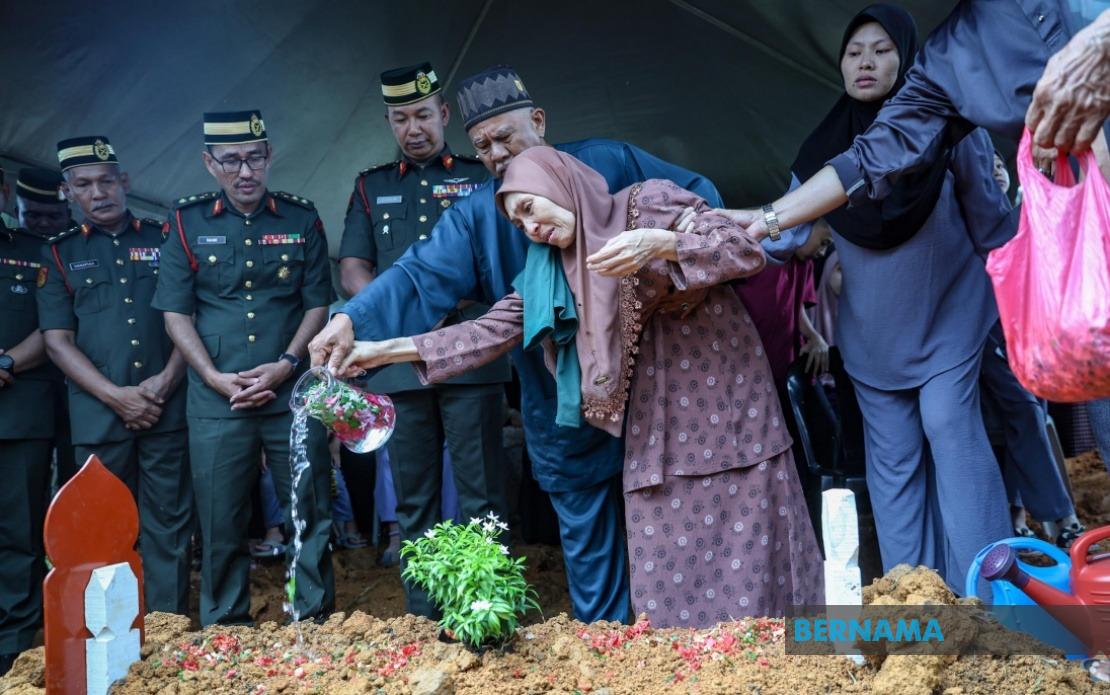
The remains of Private Siti Khadijah Sungip, a 24-year-old serviceman with the Malaysian Army's Royal Engineer Regiment, were committed to earth on June 17 at Taman Sri Lambak Muslim Cemetery in Kluang. The young soldier perished in a tragic explosion during a grenade-throwing exercise at Hobart Camp in Gurun, Kedah, marking a sobering reminder of the hazards inherent in military training operations.
Siti Khadijah's funeral drew a substantial gathering of mourners reflecting the broader impact of her death across military circles and her community. Her family members, friends, relatives and fellow military personnel assembled at the cemetery to observe final rites, creating an atmosphere of collective grief as the nation lost one of its dedicated servicewomen. The procession and ceremony underscored the respect afforded to those who sacrifice their lives in service to the country.
A significant moment during the funeral service involved Brigadier General Datuk Zulhelmy Masdar, the Commander of the 7th Malaysian Infantry Brigade headquartered at Mahkota Camp, presenting the national flag—the Jalur Gemilang—to Siti Khadijah's father, Sungip Jais, 65. This symbolic gesture, steeped in military tradition, honoured the deceased's service and commitment whilst acknowledging the profound loss experienced by her family. The formal nature of this handover conveyed both institutional recognition of her sacrifice and the deep bonds of camaraderie within the armed forces.
The timeline of events leading to the burial reveals the rapid succession of procedures that followed the tragedy. Siti Khadijah's mortal remains underwent post-mortem examination at Sultanah Bahiyah Hospital in Alor Setar, completing the medical investigation at approximately 2.30 am on June 17. Subsequently, her body was returned to Kluang and arrived at her parents' residence in Taman Sri Lambak at 12.10 pm, accompanied by Lieutenant Muhammad Lutfil Hadi Osman from the First Field Troop Leader position and four members of the Royal Engineer Regiment based at Sangro Camp in Taiping, Perak. From there, the funeral cortege proceeded to Darul Iman Mosque for the obligatory prayer ceremony prior to burial.
Major Mohd Azlan Shah Abdul Razak from the TDM Field Engineering Institute led the funeral prayers, ensuring that religious protocols were observed with dignity befitting a military funeral. The involvement of military religious specialists demonstrates the integrated nature of spiritual and institutional support extended to deceased servicemen and servicewomen, acknowledging both their personal faith and their status within the armed forces hierarchy.
The incident itself occurred at 10.57 am on June 16 during a grenade-throwing training exercise at the Hobart Camp target range. Two military personnel were fatally injured in the explosion: Siti Khadijah and Corporal Norazmi Abu Bakar, who belonged to the Sixth Battalion of the Royal Malay Regiment. Both soldiers suffered severe injuries from the blast and were confirmed dead whilst being transported to Sultan Abdul Halim Hospital in Sungai Petani. The rapid fatalities suggest the intensity of the explosion and the grave nature of injuries sustained during the incident.
Training accidents involving explosive devices represent a persistent occupational hazard within military establishments across the globe, and Malaysia's armed forces are no exception. Grenade-throwing exercises, whilst essential for combat readiness and tactical proficiency, carry inherent risks despite stringent safety protocols. The fact that this incident claimed two lives simultaneously indicates either an extraordinary convergence of adverse circumstances or a potential systemic breakdown in safety measures that warrants thorough investigation and remedial action.
For Malaysian military personnel and their families, such tragedies crystallize the tangible dangers that accompany military service beyond traditional combat scenarios. Whilst public discourse often emphasizes battlefield casualties, training-related fatalities serve as stark reminders that preparation itself exacts a toll. The loss of Siti Khadijah, a woman serving in a traditionally male-dominated profession, underscores the shared vulnerabilities and commitments of all soldiers, regardless of gender, in fulfilling their duties to the nation.
The incident also raises important questions regarding training safety oversight and accident prevention protocols within military camps. Malaysia's armed forces, like their counterparts in other nations, operate under demanding schedules that balance readiness with caution. Comprehensive investigations into such incidents typically examine factors including equipment maintenance, adherence to standard operating procedures, training supervision adequacy, and environmental conditions that may have contributed to the accident. Public disclosure of findings from such investigations becomes critical for rebuilding confidence in military safety culture.
Beyond the immediate circle of family and military colleagues, Siti Khadijah's death carries implications for recruitment and retention within the armed forces, particularly among women seeking military careers. Transparency regarding both the circumstances of her death and the preventative measures subsequently implemented by authorities can help assure prospective recruits and current servicewomen that their safety remains a paramount institutional concern. The Malaysian military's commitment to accommodating female personnel across various roles depends partly on demonstrating that appropriate safeguards exist for all soldiers regardless of their background.
The funeral ceremony also represented a moment for the military institution to reaffirm its values and commitments to fallen personnel and their families. Through formal recognition via flag presentation and senior officer attendance, the armed forces acknowledged not merely the loss of a trained soldier but the human dimensions of that loss—the bereaved family members left behind, the comrades who worked alongside Siti Khadijah, and the community she represented.