President Prabowo Subianto's signature free nutritious meals initiative has suffered yet another blow with the unexpected resignation of National Nutrition Agency (BGN) chief Nanik Sudaryati Deyang, barely six weeks into her tenure. Her departure exposes deepening institutional weaknesses in one of Indonesia's most visible and politically sensitive programmes, compounding a series of governance failures that have already undermined public confidence in the scheme since its rollout in early 2025.
Nanik announced her decision to step down via Facebook on Wednesday, explaining that she had requested President Prabowo to accept her resignation so she could seek medical treatment abroad for a serious heart condition. The timing of her departure—coming in the context of a major corruption investigation that ensnared her predecessor—further reinforces the message that overseeing the programme's substantial public resources has become an extraordinarily demanding and stressful responsibility. In a revealing admission posted the day before her resignation, Nanik described the psychological toll of managing such a large budget as inducing "acute trauma," comparing the weight of accountability to standing precariously at the edge of a cliff where any misstep could have catastrophic consequences for public finances.
Nanik's account of her experience shines a light on the deeper structural problems plaguing the agency. She revealed that anxiety over financial stewardship had been so intense that she refused to authorize transactions independently and subjected every policy decision to repeated questioning and scrutiny. While such caution might appear prudent on the surface, it also highlights how the absence of clear institutional frameworks and robust governance protocols has created an environment where individual managers bear unbearable personal responsibility rather than operating within well-established systems of checks and oversight. The doctors who examined her attributed her cardiac complications partly to the extraordinary stress generated by this role, a damning indicator of how poorly the agency has been structured.
Her resignation arrives barely seven weeks after Nanik was promoted to replace former BGN head Dadan Hindayana, who was dismissed by Prabowo in early June and subsequently arrested along with two of his deputies in a corruption probe related to procurement and financial irregularities within the programme. Nanik herself had previously served as Dadan's deputy before her elevation, underscoring how the agency has cycled through leadership in rapid succession as each administrator confronts the magnitude of the challenges embedded in the programme's operations. The hope that installing someone with prior agency experience would restore institutional stability has proven illusory.
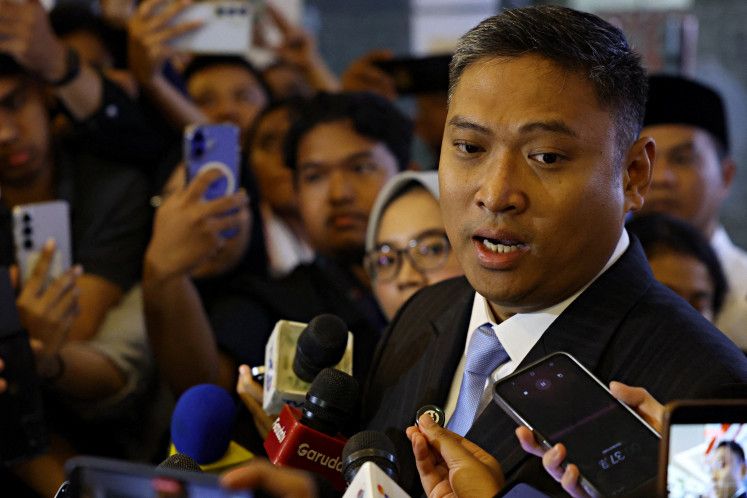
Within hours of accepting Nanik's resignation, Prabowo announced the appointment of Sudaryono, the Deputy Agriculture Minister and a politician from his Gerindra Party who previously served as his aide during the 2010s, to take the helm of the BGN. The decision to elevate Sudaryono represents a pivot toward a more politically aligned leadership structure, with the incoming chief pledging to overhaul the agency's transparency and accountability mechanisms. During his inauguration ceremony at the State Palace, Sudaryono committed to transforming opaque processes into transparent ones and digitizing manual systems to create comprehensive records of all transactions, declaring that "nothing should happen behind closed doors anymore." Yet his statements, while rhetorically reassuring, have not addressed the fundamental question of whether the programme itself has been adequately designed or resourced to achieve its ambitions.
State Secretary Prasetyo Hadi acknowledged on Wednesday that the situation represented a disappointing development and indicated that President Prabowo had mandated a comprehensive overhaul of the agency's governance structures in response to the corruption investigation. The administration's choice of Sudaryono, Prasetyo explained, reflected his involvement in developing the free meals concept from its inception, though it remains unclear whether someone with primarily political credentials rather than administrative or technical expertise represents the optimal qualification for restoring public trust in an institution engulfed by scandal. The frequency of leadership changes at the BGN itself suggests that identifying the right person for the job has proven exceptionally difficult.
The programme's operational track record has deteriorated markedly since its launch, with persistent questions regarding food safety and quality alongside recurring mass poisoning incidents reported across multiple regions. These public health crises have generated significant alarm among parents and community groups, overshadowing the positive intent behind providing subsidized meals to schoolchildren, toddlers, and pregnant women. In response to mounting criticism, Nanik had initiated a moratorium on establishing new kitchen facilities while nearly 28,000 existing locations underwent review, a move that triggered substantial protests from thousands of entrepreneurs who had made substantial financial commitments to operate these facilities under the scheme.
Confronting the scale of these challenges, the government has fundamentally recalibrated its ambitions for the programme. The BGN announced on Tuesday that it had trimmed the provisional budget allocation for 2026 from Rp268 trillion to Rp229 trillion (approximately US$12.8 billion), a reduction reflecting acknowledgment that the original budgetary framework and implementation model were unsustainable. Simultaneously, the targeted beneficiary population for this year was reduced to 62.7 million individuals, down from an initial projection of 82.9 million people across schoolchildren, toddlers, and pregnant women. These significant contractions indicate that the administration now prioritizes improving service quality and institutional credibility over pursuing the quantitative expansion that defined the programme's original ambitions.
BGN deputy chief Agustina Arumsari articulated this reorientation when she stated on Tuesday that "our priority is improving service quality rather than pursuing beneficiary numbers, so there is no fixed target at this stage." This language marks a notable shift from Prabowo's initial campaign messaging, which promised ambitious universal coverage across all eligible demographics. The gap between campaign rhetoric and current operational reality reflects the discovering of harsh truths about implementation capacity, budgetary constraints, and supply chain management that were apparently not fully appreciated during the policy development phase.
Analysts have pointed to these recurring crises as evidence of deeper systemic deficiencies in how the programme was conceived and launched. Political analyst Wasisto Raharjo Jati remarked that while the free meals scheme remains a flagship Prabowo initiative, "these latest problems showed that, institutionally, it has been driven more by political ambition than technocratic preparation." This assessment captures a central tension: major social programmes require both political commitment and rigorous administrative planning, and the BGN's tumultuous recent history suggests that the former significantly outpaced the latter. The absence of robust pre-implementation testing, clear operational protocols, adequate staff training, and realistic timelines for scaling operations has created conditions where successive administrators find themselves overwhelmed by challenges that competent technical planning might have anticipated and mitigated.
The implications of these governance failures extend beyond the BGN itself. Public agencies across Indonesia have watched the free meals programme stumble, and confidence in the government's capacity to manage large-scale social initiatives has suffered accordingly. For Malaysia and other Southeast Asian governments considering similar nutritional or poverty-alleviation programmes, the Indonesian experience offers cautionary lessons about the risks of prioritizing political visibility over institutional capacity and careful phased implementation. The turnover in BGN leadership, combined with the programme's operational struggles and now-reduced scope, suggests that even well-intentioned flagship initiatives require more than political will to succeed—they demand rigorous planning, realistic resource allocation, and honest assessment of institutional capabilities before launch.
The appointment of Sudaryono provides an opportunity to reset institutional culture and governance practices, though the brief window of his honeymoon period will quickly narrow as he confronts the accumulated problems inherited from his predecessors. His technocratic commitments to transparency and digitization address symptoms of poor governance rather than its root causes, which appear to lie in the programme's fundamental conception and design. For the initiative to regain credibility and deliver meaningful benefits to millions of Indonesian children and vulnerable households, the new leadership must undertake more fundamental reforms than improved data recording—it must address the programme's underlying operational architecture and establish realistic performance expectations grounded in actual implementation capacity rather than political aspirations.

