President Prabowo Subianto has ordered a sweeping reassessment of two cornerstone initiatives within his administration, signalling a potential recalibration of both their scope and delivery mechanisms. The directive comes as the government faces escalating public pressure over the cost, execution, and controversies surrounding these flagship programmes, which have become focal points for both public discourse and official scrutiny since their introduction.
During an extended four-hour closed-door session at the Palace on Wednesday, July 15, the President convened key cabinet officials overseeing the implementation of the free nutritious meal scheme and the Red and White cooperative programme. The meeting included representatives from the National Nutrition Agency, the body responsible for coordinating the expansive school feeding initiative. Following the discussion, BGN deputy chief Agustina Arumsari outlined the President's instructions to conduct a methodical and comprehensive evaluation of how the free meals programme currently operates in educational institutions, with a target completion date of one month.
Agustina characterised the President's approach as deliberately cautious and thoroughgoing. She emphasised that Prabowo had stressed the importance of studying every policy dimension comprehensively and ensuring that any improvements would be implemented thoughtfully rather than hastily. This framing suggests recognition within the administration that the programme requires recalibration to address legitimate public concerns and operational challenges that have emerged since its launch.
The core focus of the review centres on examining and potentially tightening eligibility benchmarks for programme beneficiaries. Government officials are actively exploring whether to impose income thresholds that would exclude higher-income households from receiving free meals, thus directing resources toward those facing genuine nutritional hardship. However, implementing such targeting mechanisms presents significant practical and social complications, particularly in schools where the student body spans multiple socioeconomic backgrounds.
The deputy chief highlighted a particularly sensitive dimension of this policy design challenge: the psychological and social ramifications of providing meals to some students while withholding them from classmates seated in the same classroom. This consideration underscores a recognition that policy implementation involves human dimensions beyond mere logistics and budget allocation. The government is contemplating these broader implications before finalising any modifications to beneficiary criteria or delivery approaches.
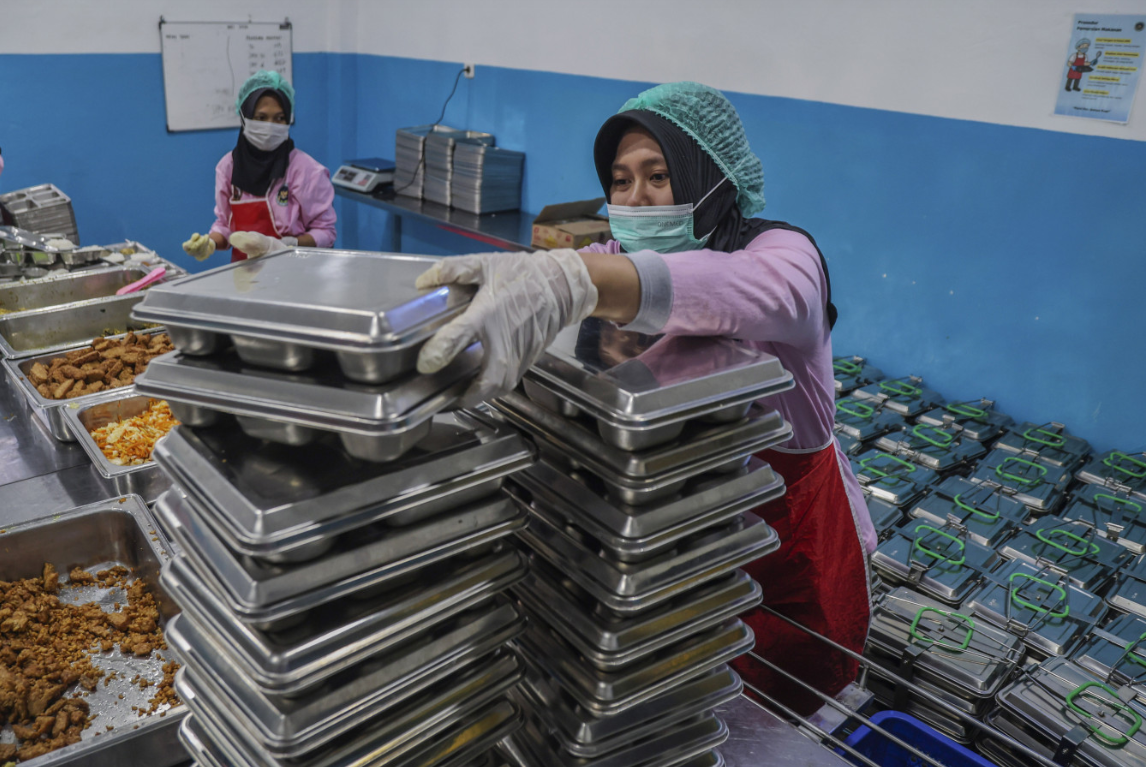
Beyond eligibility restructuring, officials are investigating alternative operational models for programme delivery. One possibility under active consideration involves channelling meals through existing school canteen infrastructure rather than relying exclusively on dedicated free meal kitchen facilities that currently form the backbone of distribution. This shift would represent a meaningful departure from the centralised approach that has defined the programme to date, potentially allowing for greater flexibility and integration with existing school food systems.
The budgetary scale of the free meals initiative underscores why such reviews demand urgent attention. The 2026 allocation reaches Rp 268 trillion rupiah, equivalent to approximately US$19.5 billion, an enormous expenditure designed to serve approximately 83 million beneficiaries encompassing schoolchildren, pregnant women, and other vulnerable populations. This investment reflects the government's ambition to address malnutrition and stunting—persistent public health challenges across the Indonesian archipelago.
Yet the programme has emerged as a credibility test for Prabowo's administration rather than an unqualified policy success. The initiative attracted intense public opposition last month when waves of street protests demanded its suspension. Concurrently, growing scrutiny focuses on the exceptionally high costs relative to comparable international programmes, documented cases of food poisoning affecting beneficiary populations, and an active corruption investigation involving prominent officials from both the National Police and the Indonesian Military. These accumulated pressures created a political environment necessitating visible governmental response and reassessment.
Parallel to the meals programme review, the administration is simultaneously reshaping the Red and White cooperative initiative, which has encountered its own implementation difficulties. Coordinating Food Minister Zulhas Hasan announced that the government intends to expand the cooperatives' functional role, positioning them as the primary governmental distribution channel for multiple assistance schemes and subsidised commodities. This represents a substantial institutional expansion of the cooperative model beyond its original conception.
The expanded cooperative mandate would additionally require these organisations to purchase agricultural commodities—particularly rice and corn—when market prices drop below government-established price floors. This mechanism aims to provide farmers with income stability by guaranteeing minimum purchase prices aligned with official benchmarks, thereby supporting rural incomes and agricultural sector viability. The approach reflects a deliberate strategy to leverage cooperative infrastructure for multiple policy objectives simultaneously.
However, the cooperative programme has generated its own controversies that precipitated the government's decision to expand rather than retreat from the initiative. Mandatory military-style training for cooperative managers resulted in at least four deaths, triggering fierce criticism from civil society organisations and the general public. These fatalities intensified pressure on the administration to examine and modify programme implementation practices. The government's response—expanding rather than scaling back the cooperative system—suggests confidence in the underlying policy approach while acknowledging the necessity of revising specific operational elements.
Together, these reviews reveal an administration grappling with the practical complexities of implementing transformative social programmes at vast scale. The simultaneous assessment of both initiatives indicates that Prabowo's government recognises mounting political costs associated with implementation challenges and public backlash. For Malaysia and other Southeast Asian nations pursuing their own ambitious social spending initiatives, Indonesia's experience offers instructive lessons about the importance of robust programme design, careful beneficiary targeting, adequate training and oversight of implementing personnel, and mechanisms for responsive adjustment based on public feedback and emerging implementation data.

