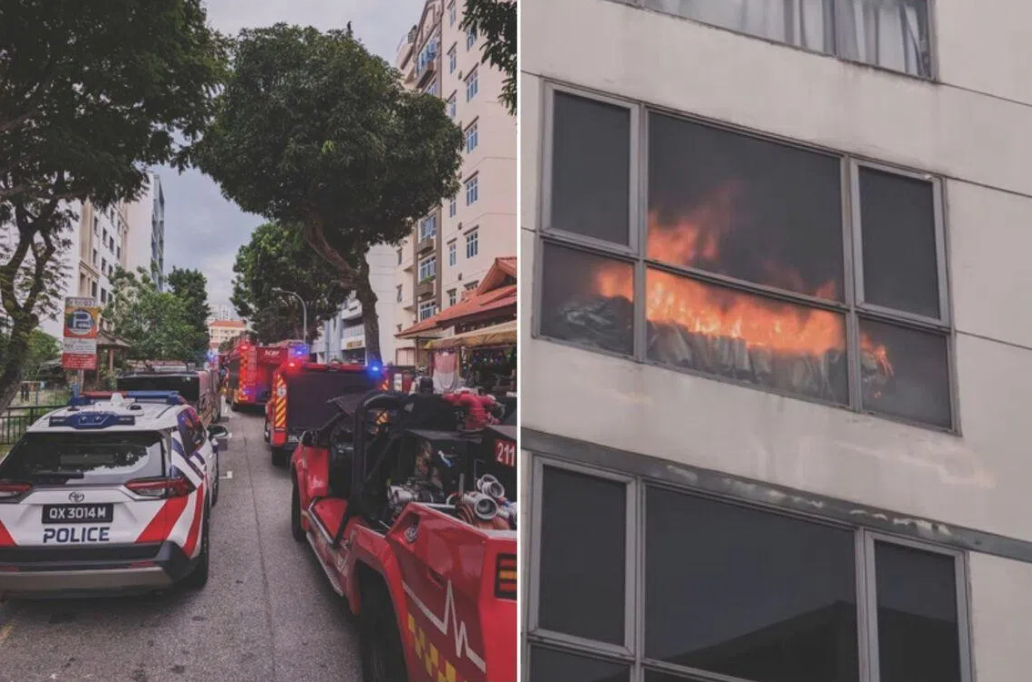
Five residents were displaced from their homes on Sunday evening after a power-assisted bicycle battery caught fire in a seventh-floor unit at Casa Aerata condominium on Lorong 26 Geylang in Singapore. The Singapore Civil Defence Force arrived at the scene at 5.35pm on June 21 to find the battery charging unattended in the living room, where it had ignited and begun spreading flames. Neighbouring residents were swiftly evacuated by police and SCDF personnel as a precautionary measure, though no injuries were sustained during the incident.
The rapid response and controlled evacuation underscored the potential danger posed by charging lithium-ion batteries in residential settings. The SCDF deployed a hosereel and compressed air foam backpack to suppress the blaze, which was determined through preliminary investigation to have originated from an electrical fault in the power-assisted bicycle battery itself. The intensity of the fire was sufficient to compromise structural integrity, with heat eventually causing a window on the affected unit to shatter—a hazard that prompted local Member of Parliament Cai Yinzhou of Bishan-Toa Payoh GRC to personally clear the area below the burning unit after he rushed to the scene upon spotting smoke and hearing emergency sirens.
This incident in Singapore reflects a growing concern across the region regarding the safe use and charging of active mobility devices, which have become increasingly popular for last-mile transportation solutions. Power-assisted bicycles, personal mobility devices, and electric scooters offer convenience and environmental benefits, yet their lithium-ion batteries present significant fire risks when mishandled. The charging process generates considerable heat, and leaving these devices unattended during charging—particularly overnight—dramatically increases the likelihood of thermal runaway, a cascade failure that can lead to sudden ignition.
The SCDF has emphasised that consumers should exclusively use original manufacturer batteries for all active mobility devices rather than purchasing cheaper aftermarket alternatives. Non-original batteries often lack the sophisticated battery management systems and safety features built into genuine components, making them far more susceptible to overheating and fire. The distinction is crucial for Southeast Asian consumers who may be tempted by cost savings when replacing worn batteries, not fully appreciating the safety trade-offs involved in such decisions.
Equally important is the charging protocol. The authorities have cautioned against extended charging periods and overnight charging, practices that many users adopt for convenience without understanding the risks. Leaving a battery connected to a charger for hours beyond the point of full charge causes constant trickle charging and heat generation, gradually degrading the battery's internal chemistry and increasing fire risk. For residents in high-density housing such as condominiums and apartment blocks—commonplace throughout Malaysia and Singapore—such fires pose not only individual dangers but collective risks to neighbouring units and shared facilities.
The 2025 fire statistics from the SCDF provide sobering context for the broader region. Of 304 electrical fires recorded at residential premises across Singapore in 2025, 34 involved active mobility devices. Within that category, personal mobility device fires surged from 25 incidents in 2024 to 31 in 2025, suggesting a troubling upward trajectory. While power-assisted bicycle fires declined from 67 to 49 cases year-on-year, the overall trend across the active mobility device category indicates that battery-related incidents remain a significant public safety challenge requiring sustained vigilance and consumer education.
Malaysian residents should take particular note, as the same devices and battery technologies circulate freely across the region, often without rigorous enforcement of safety standards. Unlike Singapore's more tightly regulated market, Malaysia's electronics and active mobility sectors may lack comparable oversight mechanisms to prevent inferior battery products from reaching consumers. The prevalence of online shopping across Southeast Asia further complicates matters, as sellers operating across borders may not adequately communicate the hazards associated with improper charging or battery sourcing.
Beyond individual precautions, the incident highlights the need for building management and residential associations to establish clear policies regarding the storage and charging of active mobility devices. Many condominiums and apartment complexes in Malaysia lack designated charging stations or safety guidelines, forcing residents to charge devices in their units where fires can spread rapidly through shared ventilation systems and corridors. Implementing dedicated, monitored charging areas with appropriate fire suppression equipment would substantially reduce risk while accommodating the growing number of users.
The case also underscores the importance of fire safety awareness among property developers and urban planners across Southeast Asia. As cities become denser and active mobility solutions proliferate, the infrastructure must evolve to accommodate these devices safely. This extends to public spaces, transportation hubs, and residential developments, all of which require thoughtful integration of charging facilities and safety protocols.
For Malaysian consumers, the key takeaway from the Singapore incident is straightforward yet easily overlooked: purchase only genuine batteries and chargers from authorised retailers, never leave devices charging unattended or overnight, and inform building management or apartment authorities of your active mobility device use. These simple steps can prevent the kind of emergency that disrupted the lives of the five families in Geylang and potentially save lives across the region. As adoption of power-assisted bicycles and similar devices continues to rise, consumer responsibility and regulatory attention must grow in tandem.

