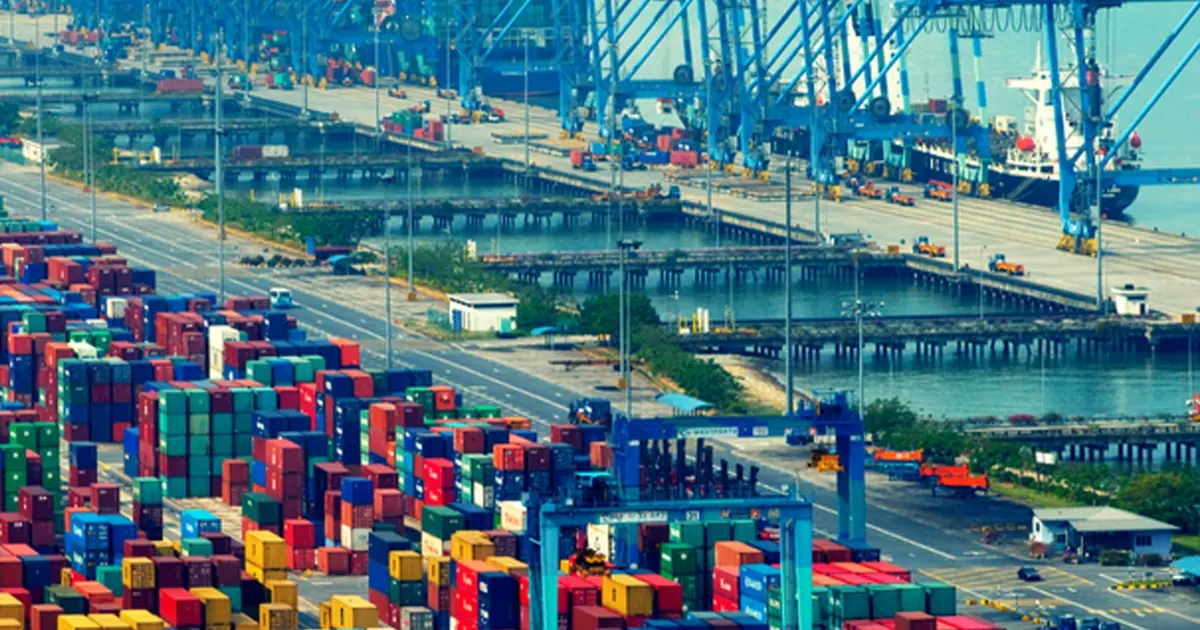
The Port Klang Free Zone is experiencing a notable resurgence, with Transport Minister Loke Siew Fook announcing that the facility has achieved RM108 million in revenue during a period demonstrating sustained momentum and operational recovery. The performance figures highlight the effectiveness of ongoing remediation efforts undertaken over the past 18 months, a timeframe that marks a critical juncture in the troubled port operator's efforts to restore credibility and financial viability after a tumultuous period marked by mismanagement controversies and operational setbacks.
Central to this recovery narrative is the reactivation initiative, which has now reached 86 per cent completion. This metric reveals the extent to which previously dormant or underutilised facilities within the free zone are being brought back into productive service. The reactivation process encompasses physical infrastructure upgrades, systems modernisation, and the re-engagement of tenant companies and logistics operators who had reduced their presence or presence expectations during the facility's troubled years. The Transportation Ministry's direct involvement in driving this transformation underscores the government's commitment to rehabilitating a facility that serves as a critical logistics hub for Malaysia's port operations.
The recovery at the Port Klang Free Zone carries significance well beyond the immediate operational metrics. As one of Southeast Asia's busiest port complexes, the facility's trajectory influences the broader competitiveness of Malaysian logistics infrastructure in an increasingly challenging regional market. During the past decade, the free zone had become emblematic of mismanagement and underperformance, creating investor hesitation and international concern about the reliability of Malaysia's trade infrastructure. The current positive trend signals to trading partners, freight forwarders, and multinational corporations that the facility is regaining its footing as a dependable alternative to competing port systems in Singapore, Thailand, and Indonesia.
The RM108 million revenue figure, while substantial, should be contextualised within the facility's potential capacity. The free zone operates across multiple terminals and warehousing zones designed to accommodate significantly higher throughput and value generation. The 86 per cent reactivation rate suggests that considerable upside remains as the final reactivation phase is completed and fully integrated operations resume. This trajectory points toward future revenue expansion as tenant occupancy improves, transaction volumes normalise, and the facility's integrated supply chain services become fully operational.
The recovery reflects deliberate policy intervention and structural reforms implemented by the Transport Ministry working alongside Port Klang Authority and other relevant agencies. These measures have included improved governance frameworks, enhanced transparency protocols, better tenant engagement strategies, and investment in modern customs and logistics systems. The combination of regulatory tightening and operational excellence initiatives has begun to restore international confidence in the facility's ability to handle complex international trade transactions with reliability and efficiency.
For Malaysian exporters and importers, particularly those engaged in regional trade, the Port Klang Free Zone's recovery offers practical advantages. The facility provides critical customs-bonded storage, value-added logistics services, and integrated warehousing capabilities that can reduce overall supply chain costs when functioning optimally. As reactivation progresses and service quality improves, the facility becomes an increasingly attractive option compared to alternative ports, potentially reducing transport expenses and improving inventory management for companies utilising Malaysia as a regional distribution hub.
The steady growth trajectory over 18 months suggests that the turnaround is not merely statistical but reflects genuine improvements in operational effectiveness and customer satisfaction. Port operators typically do not extend commitments or increase usage unless they observe tangible improvements in service delivery, compliance procedures, and financial reliability. The reactivation percentages reaching 86 per cent indicates that significant portions of the private sector ecosystem surrounding the port have re-engaged with the facility, signalling confidence in its direction.
However, sustaining this momentum presents ongoing challenges. Regional competition for port traffic remains fierce, with neighbouring facilities continuously upgrading infrastructure and enhancing service offerings. The Port Klang Free Zone must continue investing in technological capability, training its workforce, and maintaining the operational discipline that has begun to characterise its recent performance. Furthermore, global shipping patterns and trade dynamics continue evolving in ways that could affect demand for free zone services, requiring strategic agility and forward-looking management.
The success story also carries implications for broader Malaysian infrastructure policy. The Port Klang Free Zone's experience demonstrates that troubled facilities can be rehabilitated through committed government oversight, adequate resources, and clear performance accountability mechanisms. This lesson applies to other infrastructure assets that have underperformed relative to their potential, suggesting that targeted intervention combined with professional management can yield measurable improvements within relatively short timeframes.
Transport Minister Loke Siew Fook's endorsement of the steady, encouraging growth reflects government satisfaction with the reform trajectory, though the ministry will likely maintain close oversight to ensure that momentum does not dissipate. The target must now shift toward completing the final reactivation phase and expanding the revenue base beyond current levels, positioning the Port Klang Free Zone as a genuinely competitive logistics asset within Malaysia's broader port infrastructure network. As the facility approaches full operational capacity, its financial performance and service metrics will increasingly determine whether this recovery proves sustainable or merely represents a temporary upswing in a facility facing deeper structural challenges.

