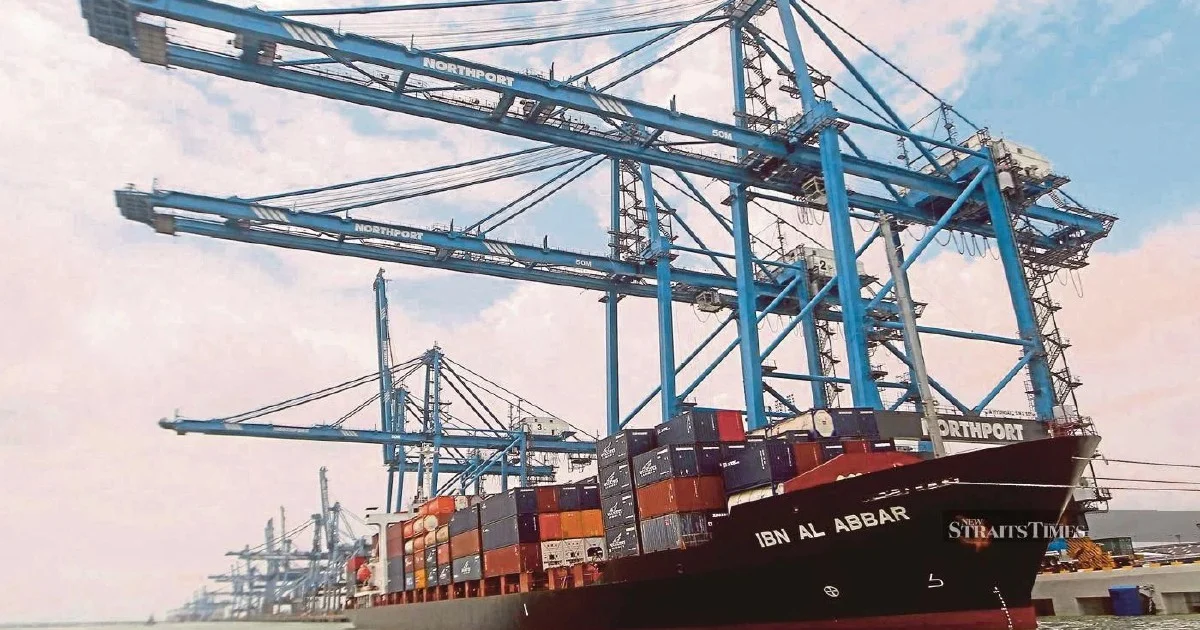
Malaysia's long-awaited Port Klang 3 development maintains its place on the investment timeline, with Transport Minister Anthony Loke indicating that groundbreaking could occur within the current calendar year should territorial negotiations with Selangor's administration conclude successfully. The minister's statement reflects optimism within the federal transport portfolio that bureaucratic and administrative hurdles surrounding the project's site can be cleared without substantial delay, though he acknowledged that land-related complexities remain the immediate pathway to commencing physical construction work.
The Port Klang 3 initiative represents a critical component of Malaysia's wider infrastructure modernisation agenda, particularly as the country's primary containerised cargo hub contends with rising demand from regional and global trade networks. Located within the Klang Valley region, which anchors the country's manufacturing and logistics sectors, the expansion project addresses capacity constraints that have emerged as shipping volumes through the port system have grown substantially over the past decade. Industry observers have long flagged the necessity of additional terminal infrastructure to prevent congestion that could disadvantage Malaysian exporters competing in time-sensitive markets.
Land acquisition in densely developed areas surrounding Port Klang has historically presented friction points for major infrastructure schemes. The involvement of Selangor state authorities introduces a layer of administrative complexity, as large-scale port expansion requires coordination across multiple governmental tiers and stakeholder interests. Minister Loke's framing of land matters as "pending resolution" suggests active dialogue rather than fundamental disagreement, though the specific nature of outstanding issues—whether involving compensation valuations, relocation protocols, or tenure disputes—remained unelaborated during his comments.
The economic implications of Port Klang 3 extend beyond maritime operations into the broader supply chain ecosystem that underpins Malaysian manufacturing and trade. Delay in establishing expanded container handling capacity would impose efficiency penalties across export-oriented industries from electronics to petrochemicals, sectors where Malaysian producers face intense global competition. Port infrastructure serves as the physical spine connecting domestic production to international markets, and any constraints on throughput capacity translate into competitive disadvantages and rising logistics expenditures for local enterprises.
Regional port developments across Southeast Asia have intensified competition for container traffic and transhipment operations. Nearby facilities in Singapore, Thailand, and Indonesia have invested substantially in terminal modernisation and technological upgrades to capture market share. Port Klang's expansion into a three-terminal configuration positions Malaysia to maintain relevance in an increasingly crowded regional marketplace, where operational efficiency and cargo handling capacity determine which ports capture proportional shares of expanding Asian trade volumes.
The timing of Minister Loke's announcement carries significance within Malaysia's broader infrastructure renewal narrative. The federal government has prioritised port modernisation as central to competitiveness in post-pandemic supply chain restructuring, where Asian economies compete to position themselves as preferred gateways for global commerce. Port Klang 3 aligns with this strategic positioning, offering capacity expansion without requiring construction of entirely new facilities—an approach that economises on capital deployment while maximising existing infrastructure assets.
Financial markets have watched Port Klang 3 with interest, as the project's realisation would generate construction contracts, maritime services employment, and ancillary business opportunities across logistics, warehousing, and transportation sectors. Domestic companies involved in port operations, container handling, and maritime support services view expansion of national gateway infrastructure as foundational to their medium-term growth trajectories. The year-to-date trajectory of project announcements and feasibility assessments suggests that planning cycles have advanced substantially, creating reasonable grounds for believing that land resolution and construction commencement within calendar year timeframes represent plausible outcomes rather than aspirational rhetoric.
Selangor's position in port expansion negotiations reflects the state government's interests in ensuring that major infrastructure projects align with broader development priorities and revenue considerations. States hosting major commercial infrastructure hold considerable leverage in negotiations concerning land use and project parameters, particularly when substantial acreages are involved. That Minister Loke characterised ongoing discussions in terms of resolution rather than stalled negotiations suggests that negotiating parties maintain sufficient common ground to envision successful conclusion of outstanding matters.
International port operators and container shipping lines have maintained interest in Malaysian port development, given the country's geographic position along major east-west shipping corridors. Port Klang's expansion capacity would attract operations from carriers and logistics companies seeking diversified gateway options across the region. The commercial viability of Port Klang 3 thus extends beyond Malaysian national interests into the broader calculus of global supply chain architecture and shipping companies' network strategies throughout Southeast Asia.
Successful land resolution would unlock substantial construction activity across the Klang Valley region, generating employment in marine engineering, terminal construction, and supporting infrastructure development. The multiplier effects of major port construction extend into secondary industries providing materials, equipment, and professional services to primary construction contractors. From an economic stimulus perspective, Port Klang 3 commencement would inject significant activity into Malaysia's construction sector during a period where major infrastructure projects provide important counterweights to economic uncertainty in consumer and manufacturing sectors.
The minister's conditional optimism regarding 2024 commencement suggests that governmental coordination between federal and state administrations has progressed beyond planning phases into implementation readiness. While land issues remain substantively unresolved, characterising them as surmountable within the current year's calendar rather than extending across multiple years represents a shift in project trajectory expectations. Whether Port Klang 3 achieves this ambitious timeline will serve as a barometer for Malaysia's capacity to execute major infrastructure initiatives in the face of bureaucratic complexity and multi-tier governmental coordination requirements.

