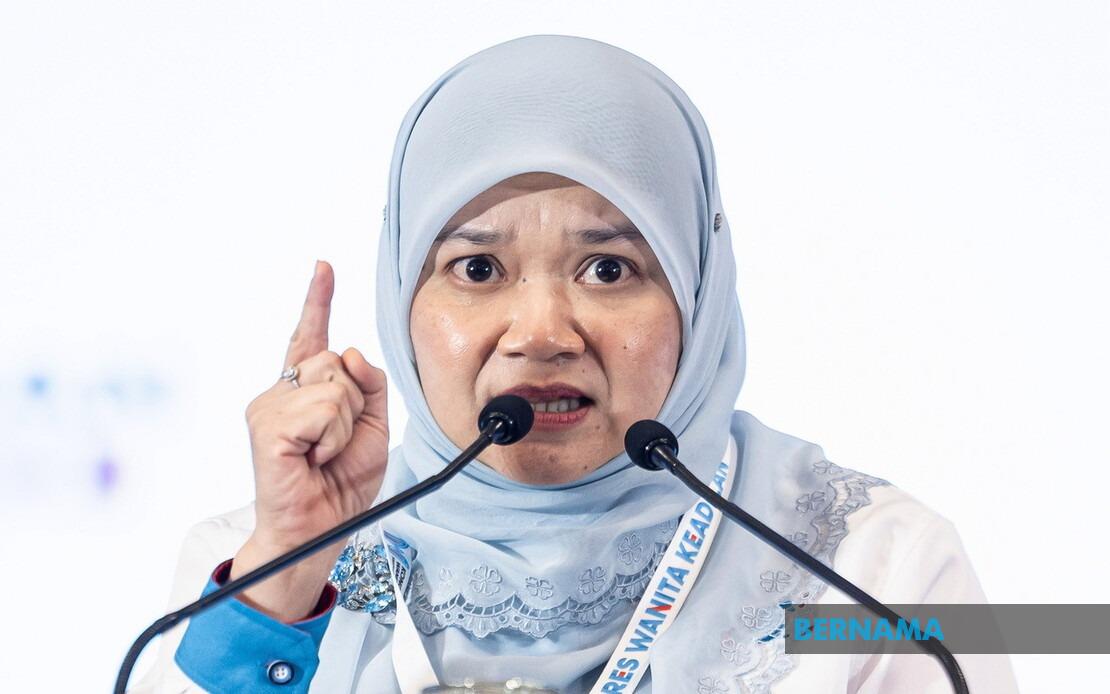
Wanita PKR chief Fadhlina Sidek has made a forceful case for depoliticising religious discourse, arguing that Malaysia's political landscape would benefit from a fundamental shift towards substantive competition centred on policy ideas and practical solutions. Speaking at the 2026 Wanita PKR National Congress in Melaka, Fadhlina contended that faith-based matters deserve respect and protection from the machinery of electoral politics, which too often commodifies spiritual and religious sensitivities for narrow party advantage.
The call comes at a time when Malaysian politics continues to grapple with the intersection of religion and electoral competition. Fadhlina's remarks suggest growing concern within PKR about the deployment of religious rhetoric as a campaign tool, particularly during election cycles when politicians have traditionally sought to mobilise voters through appeals to faith and identity rather than through competing visions of governance. Her position reflects a broader argument that such tactics, while potentially effective in the short term, ultimately corrode public discourse and deepen social divisions.
Fadhlina articulated a vision wherein political parties establish their credibility through the quality of their ideas and their demonstrated capacity to address community problems. Rather than resort to what she characterised as disparaging campaigns that rely on character assassination or religious provocation, parties should instead present coherent policy frameworks that voters can evaluate on merit. This approach assumes that Malaysian voters are sophisticated enough to distinguish between substantive proposals and inflammatory rhetoric, and that they would prefer authentic engagement with their concerns over simplistic appeals to sectarian sentiment.
The Wanita PKR chief's emphasis on reconnecting with grassroots communities suggests a strategic concern that the party risks losing its anchor in ordinary Malaysians' daily struggles if it becomes consumed by the mechanics of identity-based politics. She urged party leaders and members at all organisational levels to step beyond the confines of party headquarters and engage directly with neighbourhoods, listening to residents' concrete needs and responding with tangible assistance. This prescription implies that sustainable political strength derives not from mobilising voters through divisive messaging, but from building relationships of trust through consistent community service.
Fadhlina's observations about sensitivity to community circumstances carry particular weight in the Malaysian context, where socioeconomic disparities remain pronounced and many Malaysians struggle with issues ranging from housing affordability to employment security to access to quality healthcare. When political parties frame campaigns primarily through religious or identity lenses, they risk overlooking or postponing engagement with these material concerns. By contrast, a politics organised around ideas and solutions would necessarily require parties to develop detailed policy responses to the practical challenges affecting different communities.
The call for loyalty and steadfastness within PKR, which occupied a significant portion of Fadhlina's remarks, underscores the pressures the party faces in maintaining internal cohesion while pursuing electoral competitiveness. Political organisations in Malaysia have historically experienced fragmentation when members feel that core principles have been compromised or when the party's direction appears muddled. By framing continued struggle and hard work as foundational to PKR's identity, Fadhlina sought to reinforce collective commitment beyond electoral cycles and beyond the immediate fluctuations of public opinion.
The distinction Fadhlina draws between ideas-based competition and faith-based campaigning carries implications that extend beyond PKR itself. If this perspective gains traction across Malaysia's political spectrum, it could contribute to a broader recalibration of how election campaigns are conducted. Such a shift would require discipline from political operatives accustomed to mining religious sentiment for electoral returns, and it would demand confidence that voters will reward substantive policy engagement over simplified emotional appeals.
From a Southeast Asian perspective, Malaysia's political trajectory matters considerably. As the region's most multi-ethnic, multi-religious democracy, Malaysia's experience with managing the relationship between religious sentiment and electoral competition influences how other countries in the region approach similar challenges. Should PKR succeed in establishing a competitive model based on ideas rather than sectarian appeals, it would provide a valuable demonstration of an alternative approach that other parties and countries might emulate or learn from.
Fadhlina's emphasis on understanding neighbours' needs and providing direct assistance reflects a conception of political leadership grounded in service rather than authority. This framing suggests that a party's strength ultimately derives not from its capacity to mobilise voters through divisive messaging, but from its ability to demonstrate genuine commitment to community welfare. The practical implication is that PKR members should view community service not as peripheral to political activity, but as central to building the relationships that enable sustained electoral support.
The challenge facing Fadhlina's vision, however, is formidable. In an electoral environment where other parties may continue to deploy religious rhetoric aggressively, maintaining such discipline requires not only internal commitment but also confidence that the electorate will reward principle with votes. Political parties operate within competitive pressures that can erode idealistic principles when electoral performance appears threatened. Fadhlina's remarks thus function simultaneously as both aspiration and warning—articulating what Malaysian politics could become while acknowledging that achieving that transformation demands sustained effort across multiple election cycles.
Looking forward, the effectiveness of this approach will become apparent as Malaysia approaches subsequent electoral contests. Whether PKR's emphasis on ideas-based competition resonates with voters, and whether other parties recognise comparable advantages in reorienting their strategies away from religious provocation, will shape the broader tenor of Malaysian political discourse. Fadhlina's intervention at the National Congress suggests that within at least one major party, there exists serious reflection on the costs of faith-based campaign strategies and genuine interest in exploring alternatives that might serve both party interests and broader social cohesion more effectively.

