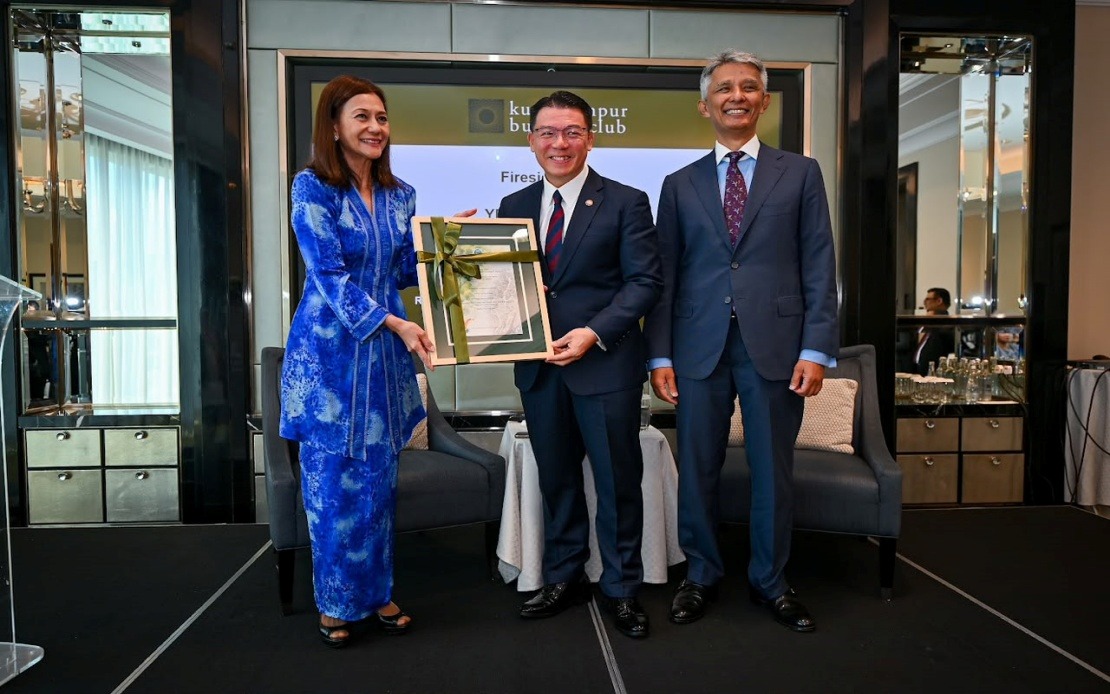
Housing and Local Government Minister Nga Kor Ming has underscored the importance of maintaining consistent policy direction under the MADANI framework as a cornerstone for Malaysia's sustained economic transformation. Speaking at a fireside chat organised by the Kuala Lumpur Business Club yesterday, Nga emphasised that without unwavering commitment to ongoing reforms, the nation risks losing momentum on initiatives already in motion that are delivering measurable results across multiple economic sectors.
The minister's remarks highlight a critical challenge facing developing economies in the region: the difficulty of maintaining reform trajectory across election cycles and political transitions. Nga argued that a government with a renewed mandate would possess the necessary stability and longevity to deepen structural reforms, build institutional capacity, and fully realise long-term economic transformation objectives that require patience and sustained investment. This argument reflects growing recognition among Malaysian policymakers that transformative economic change cannot be achieved through short-term initiatives alone, but demands multi-year commitment and institutional memory.
Ga pointed to concrete achievements under Prime Minister Datuk Seri Anwar Ibrahim's administration as evidence that the MADANI framework is delivering tangible benefits. These accomplishments encompass improved governance standards, enhanced economic management practices, and expanded international engagement that has repositioned Malaysia within the global investment landscape. The government's efforts have reportedly strengthened investor confidence by signalling that institutional reforms are genuine and irreversible, rather than subject to reversal with each change in administration.
Among the measurable gains cited by Nga is Malaysia's ascension as a preferred investment destination, underpinned by transparent policy frameworks, solid economic fundamentals, and political stability. In an increasingly volatile global environment where investors seek predictability, Malaysia's positioning as a stable jurisdiction with clear investment guidelines has become a valuable competitive advantage against other Southeast Asian economies vying for foreign direct investment.
The minister also highlighted improvements in Malaysia's standing on the Corruption Perceptions Index, signalling that anti-corruption efforts have gained international credibility. This metric matters significantly because multinational corporations and institutional investors increasingly factor governance quality into investment decisions. A higher CPI ranking reduces perceived risks associated with doing business in Malaysia and can justify larger capital commitments by international firms assessing regional opportunities.
Equally important to Malaysia's investment profile are the upgraded international credit ratings the country has achieved, reflecting greater fiscal credibility in the eyes of global financial institutions. These ratings translate directly into lower borrowing costs for government and corporate entities, freeing resources for productive investment in infrastructure and economic diversification rather than debt servicing. For a country seeking to transition toward higher-value economic activities, this improvement in financial reputation creates breathing room for necessary structural investments.
Nga also emphasised the foreign policy dimension of Malaysia's economic strategy, pointing to major bilateral partnerships forged under the current administration. The RM52.73 billion strategic partnership with Turkmenistan and long-term energy collaboration initiatives with Russia exemplify how disciplined diplomatic engagement can translate into concrete economic opportunities. These partnerships are particularly significant given Malaysia's reliance on energy imports and the strategic importance of diversifying supply sources beyond traditional Middle Eastern suppliers.
The session, themed "Future Cities, Future Growth: How MADANI Reforms Are Reshaping Malaysia's Urban Economy", brought together Malaysia's business leadership and key stakeholders to examine the government's urban development vision. This focus on cities reflects understanding that Malaysia's economic future depends heavily on creating globally competitive metropolitan centres capable of attracting and retaining high-value sectors such as technology, finance, and advanced manufacturing.
Nga's emphasis on continuity implicitly acknowledges that Malaysia faces structural challenges requiring multi-year solutions. Urban congestion, infrastructure gaps, skills mismatches, and the need to move up the value chain cannot be solved through sporadic policy announcements. Instead, they demand consistent investment, institutional learning, and the political capital to make unpopular decisions—such as rationalising inefficient industries or redirecting resources from politically favoured constituencies toward future-growth priorities.
The minister's framing of sustained policy as essential to remaining competitive and resilient carries particular resonance for Malaysian business leaders anxious about the country's economic trajectory. With regional competitors such as Indonesia and Vietnam aggressively pursuing investment and modernisation, Malaysia's competitive advantage increasingly depends on demonstrating governance stability and follow-through capacity. Investors who have committed capital based on current MADANI reforms need assurance that these changes will persist, justifying the costs of structural adjustment and adaptation.
For Malaysia's broader economic strategy, Nga's remarks suggest that the government views political continuity as instrumental to achieving its transformation objectives. This perspective aligns with orthodox economic development theory, which emphasises that institutional quality and policy consistency are preconditions for sustained growth. However, it also reflects the practical reality that Malaysia's economy has stalled in recent years relative to regional peers, and recovery requires the kind of sustained effort that only a government with a fresh mandate can credibly provide.
The implications for Malaysian businesses are significant. Those positioned to benefit from infrastructure development, financial-sector reforms, or energy partnerships will likely face reduced policy risk if the current administration maintains power. Conversely, sectors reliant on subsidies or protected from competition may face continued pressure to modernise, as the MADANI framework prioritises efficiency and market discipline.
Ultimately, Nga's message frames the coming election as a choice between reform continuity and uncertainty. Whether Malaysian voters agree with this framing remains to be seen, but his emphasis on the connection between political stability and economic transformation reflects a strategic calculation that sustained growth requires not just better policies, but the institutional and political conditions necessary to implement them effectively across multiple economic cycles.

