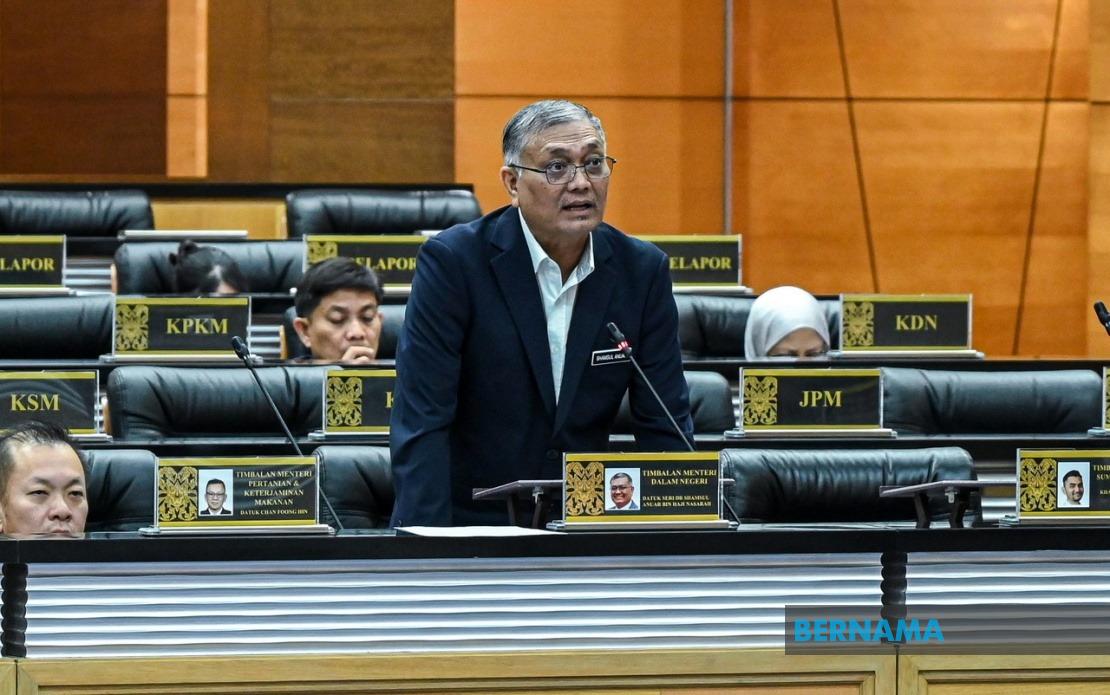
Malaysia's Deputy Home Minister Datuk Seri Dr Shamsul Anuar Nasarah has made a firm declaration that the Royal Malaysian Police (PDRM) will not extend special protection or preferential treatment to any individual during high-profile investigations, emphasising the institution's commitment to impartial law enforcement regardless of a person's status or political connections.
Addressing parliament during a special chamber session, Shamsul Anuar responded to questions about the progress of sensitive investigations by stressing that the PDRM operates according to established professional standards, maintaining transparency and fairness as guiding principles. His statement carries particular weight given Malaysia's ongoing struggle to rebuild public confidence in law enforcement institutions, especially in cases involving prominent political figures or government-connected individuals.
One prominent case under active investigation involves an intimate video recording that circulated widely in 2019 and was reportedly associated with a former Cabinet member. Investigators continue their work to locate the original recording and identify all devices and equipment involved in its distribution, representing a complex digital forensics challenge. The case is being pursued under multiple legal provisions, including Section 292, Section 377B, and Section 504 of the Penal Code, as well as Section 233 of the Communications and Multimedia Act 1998, indicating the multifaceted nature of the alleged offences.
The deputy minister's commitment to impartial investigations extends to another significant matter involving the son-in-law of former Prime Minister Tan Sri Muhyiddin Yassin. In this instance, the Malaysian Anti-Corruption Commission (MACC) has taken the investigative lead and issued an arrest warrant, demonstrating the involvement of separate enforcement bodies in addressing cases touching on high-ranking political figures and their family networks. Shamsul Anuar indicated that he could not provide further details given the MACC's active role in the investigation.
The government's position reflects broader international expectations regarding the rule of law and equal application of criminal procedures. For Malaysian readers and observers in the region, such assurances are significant, as questions about political interference in law enforcement remain a persistent concern across Southeast Asia. The explicit acknowledgment that position and political affiliation carry no weight in police investigations represents an attempt to address widespread scepticism about whether powerful individuals receive different treatment from ordinary citizens.
Beyond domestic investigations, Shamsul Anuar addressed Malaysia's capacity for international cooperation in law enforcement matters. The nation currently maintains extradition treaties with eleven countries and has signed the ASEAN Extradition Treaty, positioning Malaysia as an active participant in regional security frameworks. The government has expressed readiness to negotiate additional extradition agreements with foreign nations, recognising that cross-border cooperation has become essential in addressing complex criminal matters that transcend national boundaries.
Malaysia's extradition architecture operates under the Extradition Act 1992, which provides the legal foundation for surrendering individuals to foreign jurisdictions in accordance with bilateral and multilateral treaties. This framework is crucial for Southeast Asian countries seeking to address transnational crimes including financial fraud, human trafficking, and organised crime. The willingness to expand extradition arrangements signals Malaysia's commitment to international law enforcement cooperation and its recognition that modern criminal networks operate across borders.
The deputy minister's parliamentary statements address a critical juncture in Malaysia's institutional development. Public trust in law enforcement agencies depends substantially on the perception that investigations proceed according to law rather than political calculations. When cases involve former or current government figures, the appearance of impartiality becomes even more important, as any suggestion of selective prosecution undermines confidence in the entire justice system. By publicly stating that PDRM will not discriminate based on political position, Shamsul Anuar is attempting to reinforce this essential principle.
For regional observers, Malaysia's approach to high-profile investigations offers insights into how Southeast Asian democracies attempt to balance institutional independence with political pressures. The region has witnessed numerous instances where law enforcement appears politicised, leading to questions about whether courts and police serve justice or partisan interests. Malaysia's stated commitment to professional, transparent, and fair investigations suggests an aspiration toward higher standards, though implementation and public perception remain ongoing challenges.
The complexity of the video case—involving digital forensics, evidence preservation, and multiple legal statutes—also highlights the evolving nature of criminal investigations in the digital age. Police forces across Southeast Asia face increasing demands to develop sophisticated capabilities in handling cybercrime and digital evidence. Malaysia's pursuit of this investigation demonstrates the technical dimensions of modern law enforcement, where investigators must trace digital footprints, identify devices, and establish chains of custody for electronic evidence.
Shamsul Anuar's remarks should be understood within the context of Malaysia's broader institutional reform agenda. Recent years have seen various initiatives aimed at strengthening the independence and professional standards of law enforcement agencies. These efforts operate against historical scepticism regarding police impartiality, particularly in cases touching on political elites. The deputy minister's explicit assurance therefore serves both as a clarification of current policy and as a reaffirmation of institutional commitments to professional conduct.
The convergence of domestic investigations and international cooperation frameworks reflects a sophisticated approach to law enforcement in an interconnected world. High-profile cases increasingly involve cross-border elements, requiring coordination between Malaysian authorities and international partners. The government's emphasis on both domestic impartiality and international cooperation suggests recognition that credible law enforcement demands consistency across all investigative endeavours, whether purely domestic or involving foreign jurisdictions.

