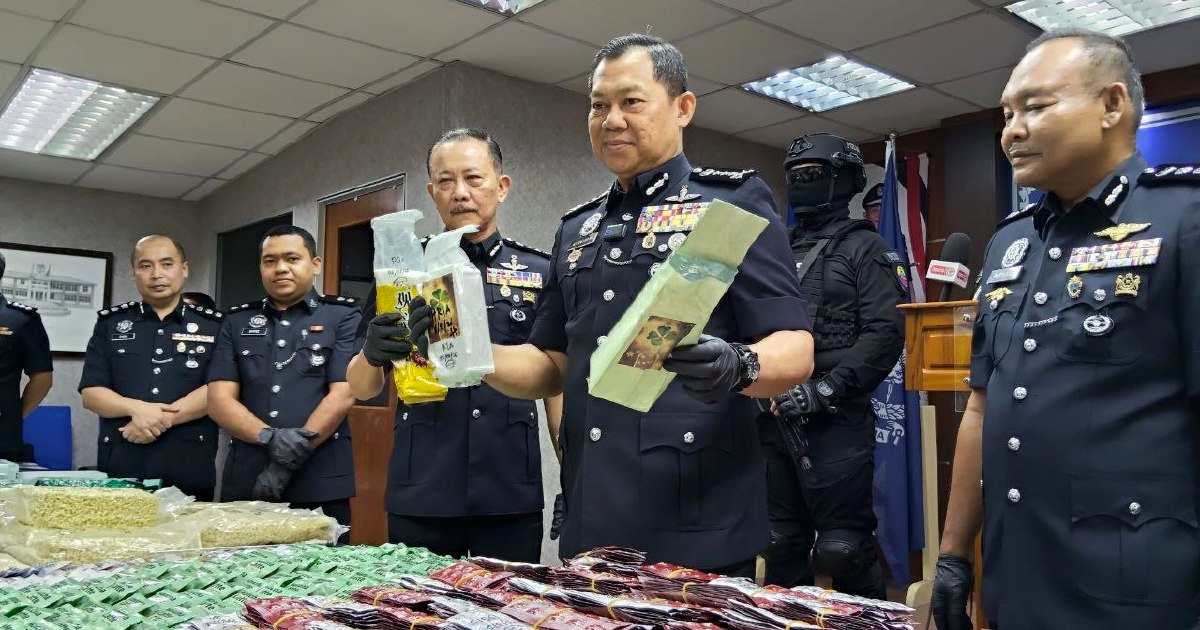
In a major blow against organised drug trafficking in Johor, police have successfully dismantled a distribution syndicate responsible for storing and distributing large quantities of narcotics across the state. The breakthrough came after officers executed a raid on a residential apartment in Persiaran Senibong, Masai, where they uncovered approximately 96.76 kilograms of various controlled substances with an estimated street value of RM8.49 million. The scale of the seizure underscores the sophistication of drug networks operating in the Johor region, where distribution cells typically operate from multiple locations to minimise detection risk.
The apartment in Masai had been deliberately rented as a storage and transshipment hub, according to initial investigations. This operational tactic reflects evolving patterns among drug syndicates across Southeast Asia, where criminal organisations increasingly compartmentalise their functions to insulate higher-level leadership from direct liability. By maintaining separate facilities for warehousing, packaging, and distribution, these networks can continue functioning even if individual nodes are compromised. The use of residential properties for such purposes presents particular challenges for law enforcement, as distinguishing between legitimate rentals and those serving illicit purposes requires sustained intelligence gathering and surveillance.
Two individuals were arrested at the scene and remain in police custody pending investigation. Authorities have not yet disclosed details regarding the suspects' alleged roles within the syndicate structure, though their detention at the storage location suggests they held operational responsibilities in the distribution chain. The investigation phase will prove critical in determining whether these individuals represent mid-level operatives or possess knowledge of higher-ranking members, which could lead to further dismantling of the network's organisational hierarchy.
The drug haul's composition and packaging methods will be analysed to identify production sources and intended distribution networks. Understanding the specific drug combinations seized can reveal whether the syndicate was manufacturing products locally or importing finished substances from overseas suppliers. This analysis carries particular significance for Malaysian and regional authorities, as it indicates trafficking patterns between production centres in the Golden Triangle and destination markets across Southeast Asia. The Johor location itself is strategically significant, serving as a major transit point for northbound trafficking into peninsular Malaysia and southbound movement into Singapore.
This seizure represents one of the largest drug interdictions recorded in Johor during recent months, reflecting enhanced enforcement efforts by state and federal narcotics agencies. The operation demonstrates that despite the sophisticated methods employed by trafficking syndicates, sustained intelligence work and coordinated police action remain effective countermeasures. Enhanced cooperation between different police units and intelligence agencies has proven instrumental in identifying such operations before they can fully establish distribution networks in Malaysian communities.
For Malaysian readers, the implications extend beyond this single syndicate dismantling. The existence of such substantial storage facilities indicates that drug distribution remains a persistent challenge, with criminal organisations continuing to adapt their methods to evade detection. The scale of the haul—nearly 100 kilograms—underscores that Malaysia remains a significant market for illicit drugs, attracting investment from international trafficking networks seeking to capitalise on regional demand. Communities in Johor and surrounding states should remain vigilant for suspicious rental activities or unusual patterns of visitor traffic to residential properties.
The monetary value assigned to the seizure reflects current street prices for various narcotics in Malaysian markets. This valuation helps contextualise the economic incentives driving trafficking operations and the profit margins available to distributors at various levels of the supply chain. Understanding these financial flows is essential for developing comprehensive counter-narcotics strategies that address both supply reduction through interdiction and demand reduction through community-based interventions.
Investigations are continuing to trace the syndicate's upstream suppliers and downstream customer networks. Establishing these connections will require forensic analysis of communications records, financial transactions, and vehicle tracking data. Authorities will likely seek to determine how long the operation functioned before detection, how frequently substances were moved through the facility, and which distributors or retailers received products from this location. Such intelligence gathering can yield valuable insights into syndicate structure, operational procedures, and geographic reach across Johor and potentially into neighbouring states.
The success of this operation underscores the importance of community vigilance and public cooperation with law enforcement. Residents who observe unusual activity in their residential areas—including frequent visits by different individuals, deliveries at irregular hours, or attempts to maintain privacy through excessive security measures—are encouraged to report such observations to authorities. Anonymous tip lines and dedicated narcotics hotlines provide mechanisms for public participation in disrupting drug networks without exposing informants to personal risk.
Looking forward, this seizure will likely prompt reviewing and reinforcing of anti-trafficking protocols at residential rental agencies, property management companies, and financial institutions involved in facilitating such transactions. Enhanced due diligence in verifying tenant identities and monitoring suspicious rental patterns could substantially impede syndicate operations. Law enforcement agencies may also intensify surveillance of known trafficking hotspots and enhance cooperation with Singaporean authorities, given the proximity of the Masai location to the southern border and Singapore's significant role as a regional narcotics market.
The broader significance of this operation for Southeast Asia reflects ongoing regional challenges with drug trafficking and the necessity for sustained, coordinated enforcement efforts across borders. As production capacity in the Golden Triangle remains substantial and synthetic drug manufacturing capacity expands, Malaysian authorities must maintain vigilance and continue strengthening their interdiction capabilities and intelligence networks.

