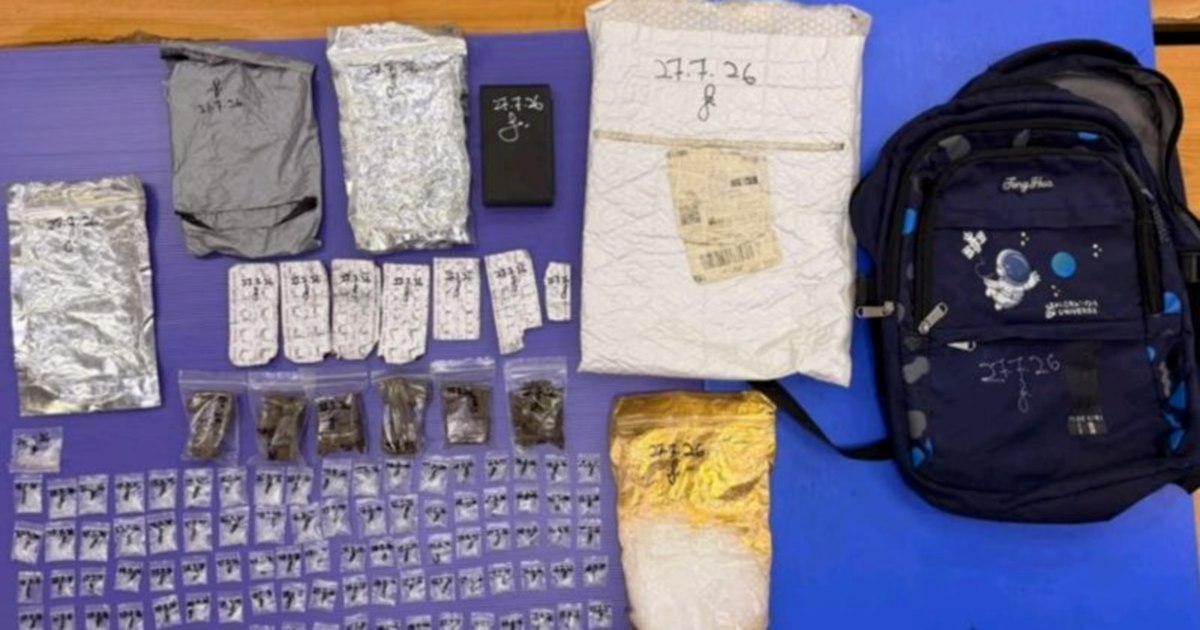
Law enforcement authorities in Pahang have disrupted what appears to be a significant narcotics operation following the arrest of a suspected drug dealer and the seizure of substantial cash holdings in the Bera district. The initial apprehension of the suspect yielded drugs valued at RM21,500, prompting investigators to conduct a thorough search of the suspect's residential property in Felda Tembangau. The subsequent raid uncovered nearly RM100,000 in cash, suggesting a well-established distribution network operating within the local community.
The coordinated operation demonstrates the continuing pressure that state and federal law enforcement agencies are applying to dismantle drug trafficking activities across Pahang. Intelligence-led policing has become increasingly sophisticated in the state, with authorities focusing on dismantling the financial infrastructure that sustains organised narcotics operations. The recovery of such substantial cash reserves indicates that this particular suspect may have been operating at a significant level within the distribution chain, rather than engaging in small-scale street-level dealing.
Felda Tembangau, situated within one of Peninsular Malaysia's largest Federal Land Development Authority schemes, has historically experienced challenges with drug-related activities. The presence of an entrenched narcotics operation within a settlement primarily inhabited by agricultural workers and their families underscores a persistent problem affecting rural communities throughout the region. Rural areas often present unique enforcement challenges, as lower population densities can make monitoring and intelligence gathering more difficult compared to urban centres.
The monetary value of the seized cash—approaching RM100,000—provides insight into the profit margins and operational scale of this particular distribution network. Such volumes suggest the suspect may have been involved in wholesale or mid-level distribution rather than simple possession for personal consumption, indicating potential connections to larger trafficking organisations. The distinction carries significant implications for sentencing and investigation protocols, as authorities typically treat mid-level operatives as valuable sources of intelligence regarding broader supply chains.
Drug enforcement agencies across Malaysia have identified narcotics trafficking as an increasingly transnational criminal enterprise, with trafficking routes extending across Southeast Asia. Pahang's geography, positioned along major transport corridors linking the southern and northern regions of Peninsular Malaysia, makes it a strategically important location for narcotics distribution networks. Law enforcement operations such as this one represent frontline efforts to interrupt the flow of illicit substances through critical transit areas.
The investigation's progression from initial arrest to property search reflects standard operating procedures designed to maximise asset recovery and prevent suspects from maintaining access to proceeds derived from illegal drug sales. Financial investigations have become integral to modern drug enforcement strategies, recognising that dismantling criminal networks requires targeting not merely the substances themselves but the economic foundations that make trafficking profitable. Cash seizures under relevant legislation allow authorities to disrupt the reinvestment cycle that enables criminal organisations to expand operations.
Community safety implications of this operation extend beyond the immediate apprehension of a single suspect. Every narcotics distributor removed from circulation disrupts the availability chain that sustains local drug markets, potentially affecting pricing and accessibility for dependent individuals within the community. Public health authorities recognise that while supply-side enforcement alone cannot resolve addiction issues, reducing market efficiency can create opportunities for health and social intervention programmes to reach affected populations.
The arrest also highlights ongoing collaboration between various law enforcement agencies operating within Pahang's jurisdiction. Successful operations of this nature typically involve intelligence sharing between the Royal Malaysian Police's narcotics division, state police contingents, and specialised investigation units. Such inter-agency coordination has become increasingly important as drug trafficking organisations develop more sophisticated operational structures designed to evade detection and compartmentalise their criminal activities.
For Malaysian readers, particularly those residing in Pahang and surrounding states, this operation represents a tangible example of enforcement capacity and investigative persistence. However, it also underscores the ongoing nature of the narcotics challenge, requiring sustained commitment from law enforcement and continued community vigilance. Authorities typically encourage public reporting of suspected drug activities through established channels, recognising that community intelligence frequently proves essential for targeting higher-level criminal networks operating behind street-level distribution points.
The value of seized narcotics and cash combined—exceeding RM120,000—demonstrates the economic incentives driving individuals into trafficking operations. Understanding these financial motivations proves crucial for developing comprehensive responses that combine enforcement with socioeconomic interventions addressing factors that make drug trafficking financially attractive to vulnerable populations. Regional efforts to combat transnational narcotics trafficking will require sustained operations of this type throughout Malaysia's key distribution corridors.

