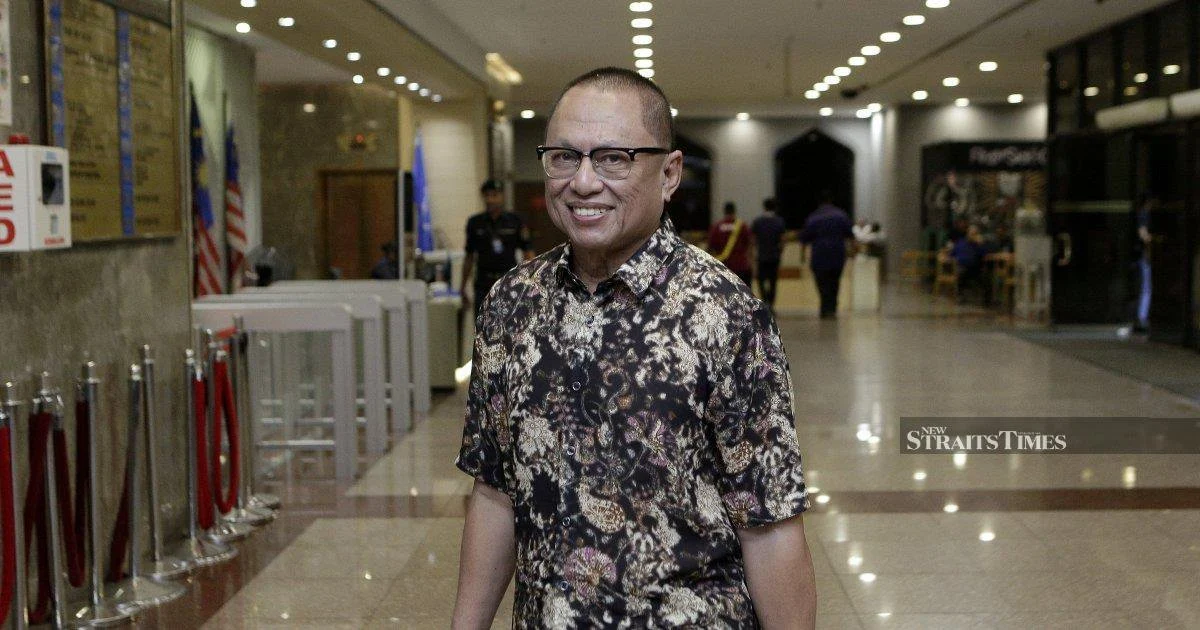
Authorities in Johor Baru have opened a formal investigation into controversial remarks allegedly posted on social media by Datuk Dr Mohd Puad Zarkashi, a prominent figure within the Umno establishment. The move came after a coordinated wave of police reports flooded precincts nationwide, with 153 complaints lodged on a single day, indicating the scale of public concern or organised response to the former politician's statements. The investigation marks a significant moment in Malaysia's ongoing conversation about the boundaries of permissible political speech, particularly regarding sensitive national matters.
The comments in question centre on the so-called 3R concept, a phrase that has become increasingly contentious in Malaysian political discourse. While the exact nature of Puad Zarkashi's statements remains somewhat opaque in public reports, the triggering of such a large-scale formal police inquiry suggests the remarks touched upon issues considered sufficiently serious to warrant official action. The sheer volume of police reports—153 across different jurisdictions—indicates either a spontaneous public response or a coordinated campaign by groups concerned about the statements' implications.
Puad Zarkashi's background as a veteran Umno figure lends additional weight to the controversy. His long association with Malaysia's dominant political party means his words carry particular resonance within certain segments of society. Whether his comments were intended as provocative, educational, or simply political commentary, their reception by the public and subsequent police response demonstrate the highly charged nature of contemporary Malaysian politics. The decision by police to formally investigate suggests that authorities viewed the allegations as worthy of official scrutiny under existing laws.
The investigation represents a broader pattern of police engagement with political speech in Malaysia. Over recent years, the Royal Malaysian Police has increasingly become involved in investigating statements made by politicians, activists, and public figures on social media platforms. This development raises important questions about the relationship between free expression, public order, and police authority. Malaysia's laws regarding sedition, incitement, and sensitive matters provide the legal framework within which such investigations typically proceed, though critics argue that these provisions can sometimes be applied in ways that chill legitimate political discourse.
The timing of these reports and the investigation's launch come at a moment when Malaysia's political landscape remains relatively fluid. With multiple coalitions, competing ideologies, and shifting alliances characterising the current environment, statements that touch upon sensitive communal or religious matters frequently attract intense scrutiny. For Umno, which has experienced significant internal and external challenges in recent years, this incident involving one of its senior figures adds another layer of complexity to the party's ongoing efforts to rebuild its public image and political standing.
From a Southeast Asian perspective, Malaysia's handling of politically sensitive speech carries implications beyond its borders. The region as a whole grapples with questions about balancing security concerns with democratic freedoms, and Malaysia's approach to investigating political statements serves as a case study in how governments manage contentious discourse. The experience also reflects the broader challenge facing democracies worldwide as political communication increasingly occurs through social media platforms, where statements can reach vast audiences instantly and be amplified or misinterpreted rapidly.
The 153 police reports themselves warrant analysis. The coordination and scale suggest either that Puad Zarkashi's statements touched a genuine nerve among significant segments of the population, or that organised groups mobilised supporters to lodge complaints. In either scenario, the reports represent a form of civic participation, though their ultimate impact will depend on how police and prosecutors choose to proceed with the investigation. The decision to formally investigate indicates that authorities did not dismiss the complaints as frivolous.
Looking forward, the investigation's trajectory and outcome will likely influence how other political figures approach sensitive topics in their public communications. If authorities pursue charges against Puad Zarkashi, it could set a precedent affecting future political speech. Conversely, if the investigation concludes without formal action, it might suggest that even provocative statements enjoy certain protections. The case thus carries significance beyond Puad Zarkashi himself, potentially shaping the contours of acceptable political discourse in Malaysia for some time to come.
For Malaysian businesses and civil society organisations monitoring the political environment, this incident serves as a reminder of the importance of understanding the country's legal frameworks governing speech and public expression. Companies operating in Malaysia must remain cognisant of how political tensions can suddenly escalate and capture official attention, potentially affecting the broader social and political climate in which they operate. Educational institutions and media organisations likewise benefit from understanding where authorities currently draw lines regarding controversial statements.
The investigation also reflects the role that social media has come to play in Malaysian politics and law enforcement. What might once have required significant effort to disseminate widely can now reach millions instantly through platforms like Facebook, WhatsApp, and Twitter. This transformation has fundamentally altered how political speech operates, how quickly public responses mobilise, and how authorities detect and respond to statements they consider problematic. Police forces across the region are still developing expertise in navigating this digital-first political environment.
Ultimately, this case encapsulates several intersecting tensions in contemporary Malaysia: between free expression and public order, between political freedom and communal sensitivities, and between traditional notions of political authority and grassroots digital mobilisation. How authorities resolve these tensions through their investigation and any subsequent judicial proceedings will provide important signals about the future direction of political discourse in the country.

