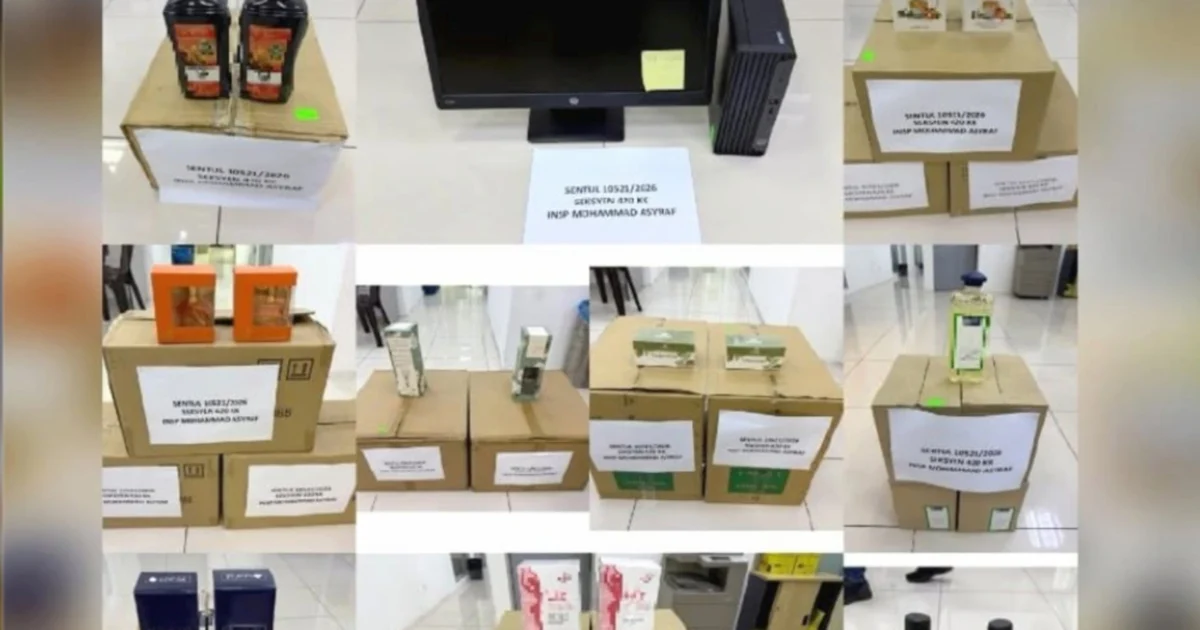
Police have successfully broken up a fraudulent perfume investment syndicate operating from a premises in KL Eco City, with six individuals taken into custody during a Wednesday raid. The operation represents another enforcement success in the ongoing battle against investment fraud schemes that continue to proliferate across the Klang Valley.
The dismantling of this particular network follows a pattern of increasingly sophisticated investment scams targeting Malaysian consumers across urban centres. Perfume investment schemes have emerged as a particularly aggressive variant of financial fraud, leveraging aspirational narratives around luxury goods and guaranteed returns to ensnare victims. These operations typically operate from professional office settings, lending them an appearance of legitimacy that belies their fraudulent nature.
The choice of KL Eco City as an operational base underscores how such syndicates deliberately position themselves within prestigious commercial developments to enhance their credibility. The mixed-use development's reputation and professional environment provide crucial camouflage for criminal operations, allowing perpetrators to conduct their business with sufficient visibility and operational infrastructure whilst maintaining plausible deniability. This tactical placement reflects the increasing sophistication of fraud networks that understand the psychological importance of location and professional presentation in gaining investor confidence.
Investment scams centred on perfume and similar tangible commodities have proliferated across Southeast Asia in recent years, with Malaysia emerging as a particular hotspot for such activity. The schemes typically promise investors unrealistic returns—often in the range of twenty to fifty percent—on the basis that they are financing bulk purchases of premium fragrances or participating in exclusive distribution networks. Victims are frequently assured that their money will be returned with substantial profit within defined timeframes, usually ranging from several months to a year.
The operational mechanics of such syndicates typically involve layered recruitment, where initial investors become conduits for recruiting additional victims from their social circles, family networks, and professional contacts. This multi-level structure creates both a funding base and a veneer of legitimacy, since participants perceive that relatives and acquaintances would not knowingly involve them in fraudulent schemes. The psychological impact on victims extends beyond financial loss to encompassing profound breaches of trust within community networks.
Police investigations into the KL Eco City operation will likely uncover documentation related to fake investment contracts, forged authentication certificates for perfumes, fabricated performance reports, and bank transfer records. Such evidence typically reveals the sophisticated bookkeeping apparatus that maintains the illusion of legitimate operations, complete with professionally designed websites, branded marketing materials, and plausible-sounding financial projections. The contradiction between these professional trappings and the fundamental criminality of the enterprise represents a defining characteristic of contemporary investment fraud.
The arrest of six individuals suggests a relatively substantial operational cell, potentially spanning roles as recruiters, account managers, financial processors, and decision-makers. Police will likely interrogate the suspects regarding the total number of victims, the aggregate amount defrauded, and the distribution of stolen proceeds. Such operations typically funnel substantial portions of incoming investments into operational expenses and the personal enrichment of senior members whilst maintaining just enough genuine return to sustain victim confidence temporarily.
For Malaysian investors, this raid reinforces critical lessons about investment due diligence. Schemes offering perfume investment opportunities typically lack conventional market dynamics—there is minimal secondary market for bulk perfume purchases, no transparent pricing mechanisms, and no standardised valuation methodologies. Legitimate investment products are regulated by the Securities Commission Malaysia and marketed through licensed intermediaries, contrasting sharply with the private, informal channels through which perfume scams are typically promoted.
The operation serves as a reminder of regulatory challenges facing authorities combating financial crime. Investment fraud syndicates often operate across state lines and utilise layered financial structures incorporating multiple bank accounts, cryptocurrency intermediaries, and informal money transfer networks to obscure fund flows. Police coordination with the Financial Intelligence and Enforcement Bureau, the Securities Commission Malaysia, and commercial banks proves essential in disrupting these criminal networks and recovering victim assets.
The case also highlights the importance of public awareness and community engagement in combating organised fraud. Many victims of such schemes remain silent due to embarrassment or shame, allowing perpetrators to continue victimising additional individuals. Education initiatives targeting vulnerable demographics—particularly retirees, women, and those with limited financial literacy—may help reduce susceptibility to fraudulent investment pitches that prey upon desires for financial security and retirement income supplementation.
As the investigation proceeds, the identities and roles of the six arrested individuals will become clearer through police statements and potential court proceedings. The ramifications extend beyond the immediate syndicate to encompassing broader questions about how professional office spaces are allocated, background screening for commercial tenancies, and whether property management companies bear responsibility for due diligence regarding occupant activities. These structural questions will likely inform future policy discussions around fraud prevention and the regulation of commercial office spaces utilised for illicit purposes.

