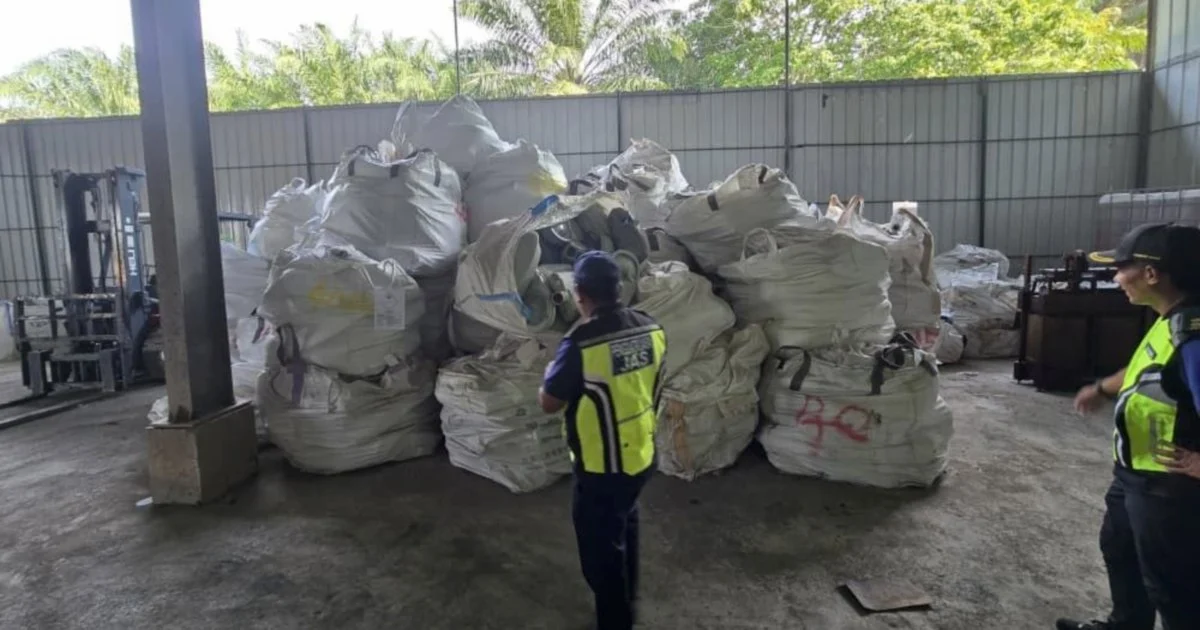
Authorities have cracked down on a major illegal electronic waste operation in the Kuantan area, with the General Operations Force executing a significant raid that resulted in the seizure of contraband materials valued at RM6.4 million. The enforcement action targeted an unlicensed facility located in Gambang, highlighting ongoing concerns about unregulated waste processing and environmental violations across Pahang's industrial zones.
The operation led to the detention of the facility manager as investigators examine the scope of illegal activities at the site. The seizure represents one of the more substantial single hauls of contraband e-waste in recent months, underscoring the scale of illicit waste trafficking operations that continue to operate within Malaysian borders despite regulatory frameworks designed to prevent such activities.
Electronic waste has emerged as a critical environmental and public health issue across Southeast Asia, with Malaysia serving as a significant transshipment point for discarded electronics from developed nations. The hazardous nature of e-waste—containing toxic substances including lead, mercury, and cadmium—poses serious risks to surrounding communities and groundwater supplies when processed in uncontrolled settings. Illegal facilities typically lack proper protective equipment and containment systems, exposing workers and nearby residents to dangerous materials while contributing to broader environmental degradation.
The Gambang facility's operation exemplifies a persistent problem within Malaysia's waste management landscape. Despite government efforts to regulate and license legitimate recycling operations, sophisticated smuggling networks and unscrupulous operators continue to establish clandestine processing centres that circumvent environmental standards and tax obligations. These illegal operations undercut licensed facilities, creating perverse market incentives that reward non-compliance.
Investigations into the Gambang site will likely focus on identifying the supply chains feeding the facility and the networks distributing processed materials. Such tracing operations often reveal connections to international waste trafficking syndicates that exploit gaps in cross-border enforcement and exploit price differentials between regulated and unregulated markets. Understanding these connections is crucial for developing more effective preventive strategies.
The environmental implications of illegal e-waste processing extend far beyond the immediate facility. Improper dismantling and extraction of valuable metals frequently releases toxic fumes and contaminated water into surrounding areas, with effects persisting for years or decades. Communities adjacent to such operations face elevated cancer rates, respiratory illnesses, and reproductive health complications linked to heavy metal exposure—a public health burden that Malaysian health services struggle to address adequately.
From an economic perspective, illegal e-waste facilities represent a form of market distortion that disadvantages legitimate operators complying with environmental regulations and labour standards. Licensed recycling companies must invest substantially in pollution control equipment, worker safety programmes, and proper waste disposal systems—costs that informal operations simply avoid. This competitive disadvantage threatens the viability of the formal sector and reduces incentives for investors to establish compliant facilities.
International agreements, including the Basel Convention, attempt to restrict e-waste flows to developing nations, yet implementation remains inconsistent. Malaysia's position as a regional manufacturing hub and port centre makes it particularly vulnerable to becoming a dumping ground for electronics that wealthy nations have exhausted proper disposal capacity for. Strengthening port inspections, improving customs coordination, and enhancing penalties for violations are essential components of any comprehensive response.
The GOF's enforcement action demonstrates the capability of security forces to disrupt illegal operations when leads materialize. However, sustained progress requires adequate resourcing, inter-agency coordination, and intelligence-gathering capacity. Environmental crime agencies frequently operate with limited budgets compared to narcotics or organised crime units, despite the comparable scale of environmental damage and health risks associated with illegal waste trafficking.
Looking forward, Malaysia must simultaneously pursue enforcement against existing operations while strengthening incentives for legitimate recycling. Extended producer responsibility schemes, which hold manufacturers accountable for their products' end-of-life management, can help reduce waste volumes entering the economy. Educational campaigns targeting consumers and businesses about proper e-waste disposal could diminish the supply flowing to illegal processors.
The detention of the facility manager will proceed through standard investigative and judicial processes, with charges likely encompassing environmental violations, operating unlicensed industrial facilities, and potentially trafficking in hazardous materials. The case will provide prosecutorial experience that may inform enforcement strategies against comparable operations, though the underlying economic incentives driving illegal activity will persist unless addressed through broader systemic reforms.
Regional cooperation remains essential, as e-waste trafficking frequently involves transnational elements. Malaysia's role within ASEAN positions it to advocate for harmonised standards and improved information-sharing among neighbouring countries. The Gambang seizure serves as a reminder that environmental protection requires sustained commitment and investment, not merely occasional enforcement operations against individual facilities.

