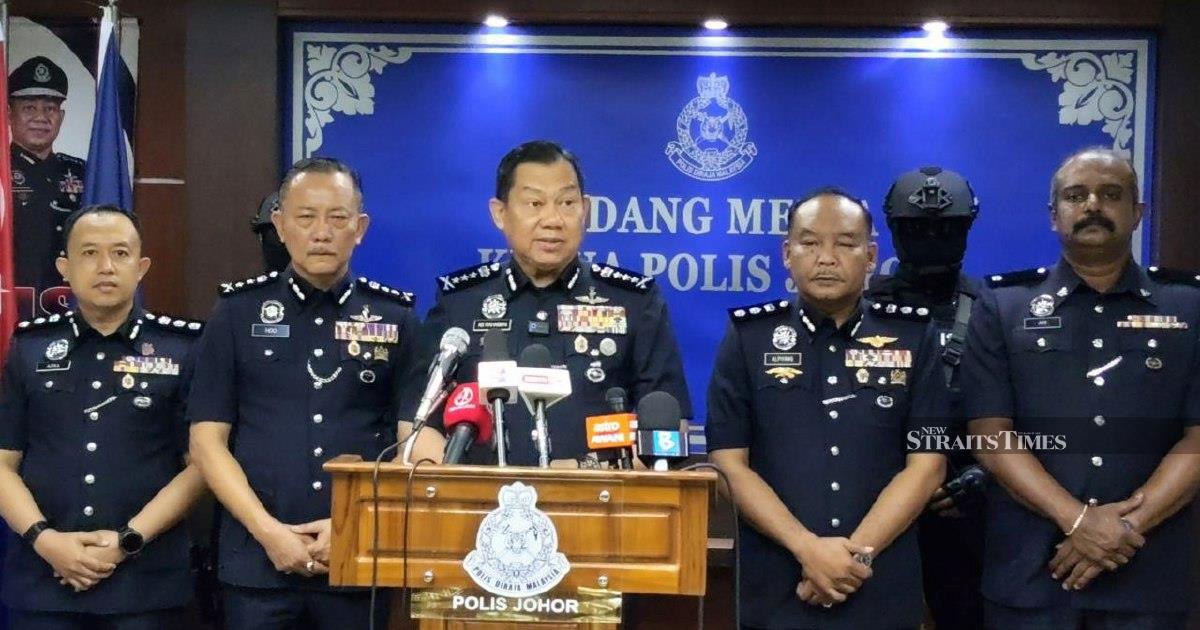
In a major enforcement operation targeting illicit drug distribution networks, Johor Baru police conducted simultaneous raids on Saturday that resulted in the recovery of 60.78 kilograms of methamphetamine valued at RM3.04 million. The coordinated action led to the detention of eight individuals suspected of involvement in the trafficking enterprise, marking a significant disruption to criminal operations in the region.
Among those arrested was a school dropout who had been recruited to serve as a transporter for the criminal syndicate. The involvement of a youth in the supply chain illustrates how trafficking organisations increasingly target vulnerable individuals, particularly those who have disengaged from education systems, to handle logistics and movement of drugs between distribution points. This recruitment pattern has become increasingly common across Malaysian law enforcement investigations into organised drug networks operating in major urban and port centres.
The scale of the seizure underscores the substantial volumes of methamphetamine that continue circulating through supply routes in Peninsular Malaysia. The 60.78 kilogram haul represents concentrated evidence of supply intended for regional distribution rather than individual consumption, indicating the defendants were operating within a structured hierarchy designed to maximise profit margins while maintaining operational security. Street-level valuations for methamphetamine in Malaysia typically range significantly lower than wholesale prices, meaning the RM3.04 million figure likely reflects mid-level or higher-tier commercial pricing.
Johor has consistently featured in national law enforcement data as a critical transshipment point for controlled substances destined for Malaysian markets and beyond. The state's geographic position on major land routes to Peninsular Malaysia, combined with its maritime access points, makes it strategically valuable for trafficking organisations. Additionally, the proximity of Johor Baru to Singapore and established transport networks through the southern corridor create logistical advantages that criminal enterprises exploit to maintain supply continuity.
The targeting of youth and school dropouts as operational personnel reveals a troubling recruitment strategy employed by trafficking syndicates. These individuals often lack stable employment prospects and may be vulnerable to financial incentives or coercion. Once ensnared in drug networks, they become entangled in criminal liability with potentially severe consequences under Malaysia's dangerous drugs laws, which provide substantial custodial sentences for trafficking convictions. The Dangerous Drugs Act provisions create substantial penalties including extended prison terms and mandatory rehabilitation requirements.
Saturday's operation demonstrates the continued commitment of state law enforcement to dismantling active trafficking operations through intelligence-led policing and coordinated enforcement actions. These raids typically follow period surveillance identifying key distribution nodes and movement patterns. The detention of multiple suspects simultaneously aims to prevent evidence destruction and disruption of the supply chain before the network can restructure operations or relocate assets. Such comprehensive approaches represent established best practices in drug enforcement across the region.
The methamphetamine market in Malaysia remains substantial and economically significant for criminal enterprises. Psychoactive drug seizures in the country have trended upward in recent years, reflecting both increased consumption demand and intensified law enforcement activities. The substance commands significant profit margins compared to other controlled drugs, making production and trafficking economically rational for organised criminal groups despite severe legal penalties.
The method of recruitment utilised by these syndicates—specifically engaging school dropouts as couriers—suggests deliberate targeting of educationally marginalised youth. This population often faces employment discrimination and limited legitimate income opportunities, making them susceptible to criminal solicitation. Relevant authorities and community organisations have increasingly emphasised early intervention and educational re-engagement programmes as crime prevention measures for at-risk youth populations.
Legal consequences for those arrested in Saturday's operation will be determined through Malaysia's criminal justice system. Trafficking charges related to quantities of this magnitude typically result in convictions carrying lengthy custodial sentences under Schedule 2 provisions of the Dangerous Drugs Act. The teenage transporter faces particular scrutiny given his youth and the judiciary's established approach to sentencing youthful offenders convicted of drug supply offences, which generally emphasises rehabilitation alongside proportionate punishment.
This enforcement action contributes to broader regional law enforcement coordination aimed at disrupting major trafficking operations. Johor's role as a transnational trafficking hub connects Malaysian drug enforcement activities to regional intelligence networks and cross-border cooperation agreements with Singapore and other regional partners. Continued coordination between local police forces and national narcotics agencies remains essential to sustained pressure on organised trafficking syndicates.

