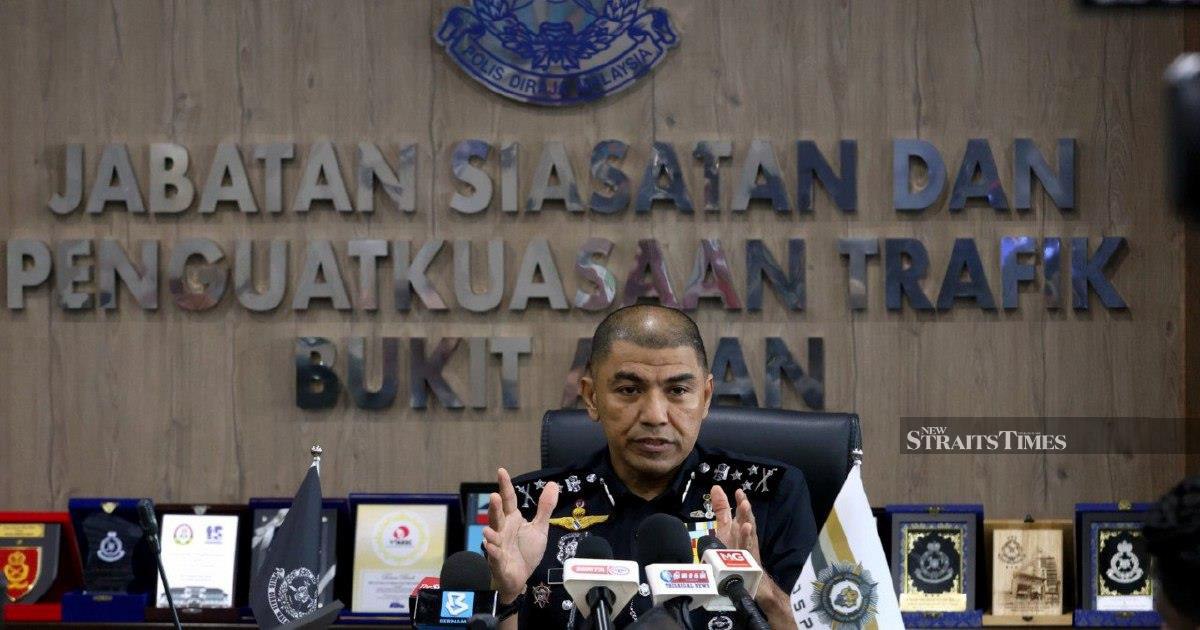
The Royal Malaysia Police has apprehended 121 commercial vehicle drivers over a three-month period in a coordinated national drive targeting operators impaired by drug use. The enforcement campaign, conducted across the country, underscores deepening alarm within law enforcement and road safety circles regarding the prevalence of substance abuse among professional drivers piloting buses, lorries, and other large vehicles on Malaysian highways and urban roads.
The operation reflects a strategic shift in how authorities are addressing traffic safety in Malaysia, where commercial vehicles represent a significant proportion of road traffic, particularly on major routes connecting cities and states. Heavy vehicles involved in accidents at high speeds pose considerable danger not only to their occupants but to other road users sharing the same infrastructure. The arrest figures suggest that drug use among this crucial occupational group may be more widespread than previously acknowledged, presenting a troubling public safety challenge that extends beyond individual drivers to affect entire communities.
Drug-impaired driving among commercial vehicle operators carries ramifications that distinguish it from ordinary driving under the influence cases. Commercial drivers typically operate larger vehicles with greater stopping distances, reduced manoeuvrability, and significantly higher damage potential in collision scenarios. When such operators are under the influence of substances that impair judgment, reaction time, and motor coordination, the consequences can be catastrophic, potentially affecting dozens of people simultaneously. The three-month timeframe of this operation suggests authorities have made this issue a sustained enforcement priority rather than a one-off initiative.
The nature of commercial driving—long hours, tight delivery schedules, and income pressure—creates an environment where some operators may turn to stimulant drugs to maintain alertness during extended shifts. Amphetamines and other substances that artificially boost wakefulness have long been associated with certain segments of the long-distance driving community across Asia. However, while these drugs may initially appear to enhance performance, they ultimately impair judgment and create dangerous behavioural changes, including aggression and erratic decision-making on the road.
The enforcement operation's nationwide scope indicates that this issue is not geographically confined but rather represents a systemic problem affecting commercial transport operations across Malaysia. From the northern highways of Perlis to the southern regions of Johor, and from east coast routes to west coast corridors, authorities have identified and acted against drivers operating vehicles while chemically impaired. This geographical spread suggests the problem warrants comprehensive, ongoing attention rather than episodic enforcement campaigns.
For the transport and logistics industry in Malaysia, these arrests carry significant implications. Companies operating commercial vehicle fleets face reputational risks, potential liability issues, and regulatory scrutiny when their drivers are apprehended for drug-related offences. Beyond individual company concerns, the broader commercial transport sector's credibility and safety record are affected by such incidents. Industry stakeholders may need to implement more rigorous driver screening, regular testing protocols, and awareness programmes to demonstrate commitment to road safety standards.
The arresting authorities have highlighted these cases as evidence of commitment to enforcing traffic laws comprehensively. Drug detection at roadside checkpoints typically involves preliminary tests followed by confirmatory procedures at certified laboratories. The volume of arrests over three months suggests police have deployed considerable resources to this enforcement priority, positioning it alongside other major traffic safety campaigns targeting speeding, vehicle condition, and licensing violations.
Malaysian road safety statistics have long reflected concerning trends, with commercial vehicles featuring prominently in serious and fatal accident data. Road fatalities involving heavy vehicles often result in multiple casualties and severe injuries, making them particularly newsworthy and tragically impactful on families and communities. When substance abuse becomes a contributing factor in such incidents, it represents both a preventable tragedy and evidence of inadequate occupational safeguarding.
The arrests also prompt questions about workplace safety cultures within transport companies and whether sufficient mechanisms exist for identifying and supporting drivers struggling with substance dependency. Some jurisdictions have implemented programmes combining enforcement with rehabilitation options, recognising that sustained behaviour change requires both consequences and support. Malaysian authorities and industry bodies may consider whether similar complementary approaches could enhance outcomes beyond simple apprehension and prosecution.
Moving forward, maintaining momentum on this enforcement front will be essential. Random drug testing at checkpoints, cooperation between police and transport regulatory bodies, and industry-led safety initiatives could collectively address the problem from multiple angles. Commercial vehicle drivers themselves—those operating responsibly and following safety protocols—have stakes in seeing peers who breach standards removed from roads, both for professional reputation and genuine safety concerns.
The broader context of Southeast Asian road safety challenges is relevant here, as several regional nations grapple with similar issues regarding commercial vehicle operations and driver behaviour. Malaysia's experience with this enforcement campaign and its outcomes may offer valuable lessons for neighbouring countries developing their own road safety strategies. As logistics and commercial transport activity continues expanding across Malaysia and the region, ensuring that operators maintain fitness for duty becomes increasingly critical to protecting public safety on progressively busier roads.

