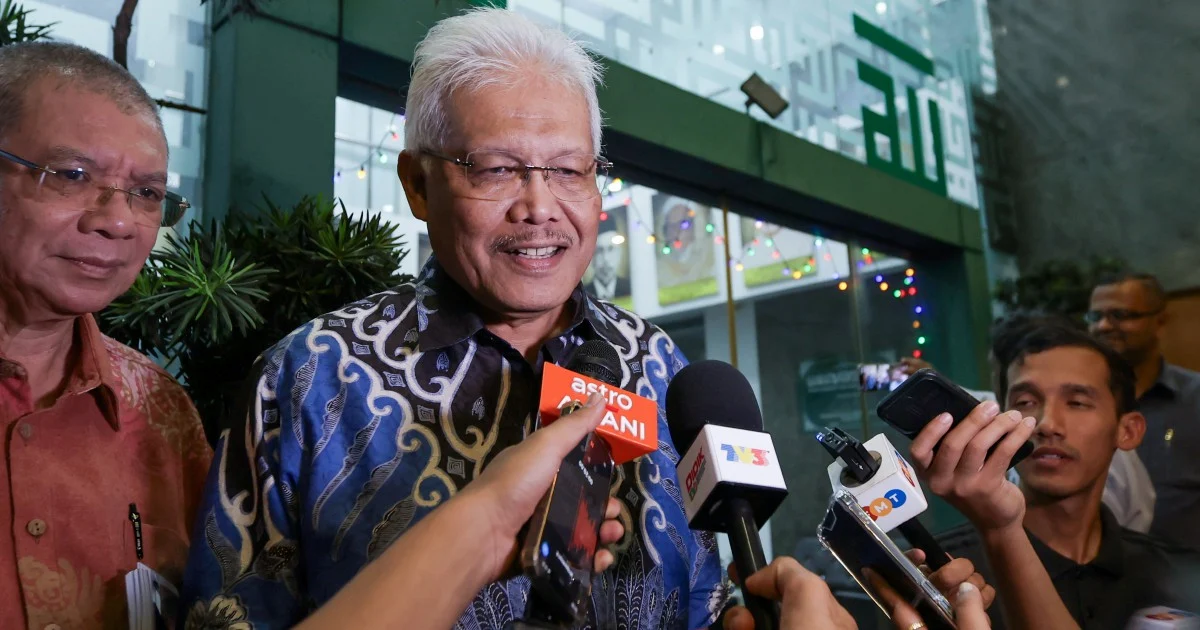
The Perikatan Nasional coalition has taken an administrative step to solidify its parliamentary standing by formally announcing the continuation of Datuk Seri Hamzah Zainudin in his role as opposition leader. Datuk Seri Takiyuddin Hassan, serving as the coalition's chief whip in the Dewan Rakyat, submitted the necessary notification to the office of the Speaker of the House, completing the procedural requirements for Hamzah's reappointment to the influential position.
This formal notification represents a routine but significant moment in Malaysia's legislative calendar, whereby designated opposition parties must officially confirm their leadership appointments to Parliament's administrative machinery. The submission underscores PN's institutional commitment to maintaining its opposition status and ensuring that its designated representative can exercise the constitutionally recognised privileges and responsibilities that accompany the role of opposition leader.
Hamzah's reappointment carries particular weight within the contemporary Malaysian political landscape, given the coalition's transformed position following the 2023 general election. As a figure who has navigated multiple political transitions across the country's fractured opposition movement, his designation as opposition leader signals PN's ambition to serve as the primary counterbalance to the government of the day, wielding the formal authority that this appointment confers in parliamentary proceedings.
The notification process, while procedurally straightforward, requires official documentation and Speaker's acknowledgement. This administrative formality ensures that parliamentary records clearly identify which MP holds the status of opposition leader, thereby determining entitlements such as speaking privileges, budgetary allocations for an opposition research office, and recognition in parliamentary debates and sittings. For PN, securing this formal recognition consolidates the coalition's institutional legitimacy as a parliamentary force.
Takiyuddin's role as chief whip makes him the appropriate conduit for such parliamentary communications, reflecting the internal discipline structures within political coalitions. The chief whip traditionally serves as the liaison between party leadership and parliamentary procedures, managing voting discipline, coordinating legislative strategy, and ensuring compliance with procedural requirements. His submission of the notification therefore reflects PN's careful attention to parliamentary governance standards.
The reappointment occurs within a political environment where Malaysia's opposition landscape has undergone substantial reorganisation. PN, comprising Bersatu, PAS, and other partners, emerged from the 2023 elections as a significant parliamentary bloc but outside government. Hamzah's sustained leadership of this coalition's parliamentary contingent suggests continuity in PN's strategic direction and internal cohesion at a time when opposition coalitions frequently face fragmentation pressures.
For Malaysian governance, clear designation of an opposition leader carries democratic significance. The position traditionally embodies parliamentary oversight functions, enabling the legislative minority to scrutinise government policies, propose alternative approaches, and mobilise parliamentary debate on matters of public concern. By formally confirming Hamzah in this capacity, PN establishes a clear focal point for its parliamentary representation and reinforces institutional expectations regarding opposition conduct and participation.
The reappointment also carries implications for regional political observers monitoring Malaysian developments. Southeast Asian democracies increasingly focus on the health of institutional checks and balances, with opposition leadership serving as a barometer for plural governance. PN's formal commitment to maintaining structured opposition leadership demonstrates Malaysia's continued adherence to constitutional frameworks that require clear designation of alternative power centres.
Within Hamzah's own political trajectory, the reappointment confirms his position as PN's principal parliamentary strategist during a period of relative political instability. His experience in senior government roles and previous parliamentary positions has provided him with institutional knowledge valuable for mounting effective opposition. The formal reconfirmation suggests that PN's coalition partners have maintained confidence in his stewardship of their collective parliamentary interests.
Looking forward, the notification creates a stable foundation for PN's parliamentary work across the remaining legislative term. Opposition leaders typically set the tone for parliamentary engagement, determining which government policies receive most intense scrutiny and how alternative perspectives gain airtime. With Hamzah formally reconfirmed through proper administrative channels, PN can proceed with legislative planning and opposition coordination without uncertainty regarding leadership representation.
The procedural completion also illustrates how Malaysian parliamentary governance relies upon routine administrative compliance that often escapes public attention. These apparently technical notifications represent the institutional scaffolding upon which democratic accountability functions, ensuring that the structural relationships between government and opposition remain clearly defined and universally understood throughout Parliament.
For observers of Malaysian politics, Takiyuddin's submission symbolises the coalition's intention to remain an organised, institutionally engaged opposition presence rather than fragmenting into disorderly parliamentary behaviour. This commitment to procedural regularity, while unglamorous, contributes to Malaysia's reputation for having maintained relatively stable legislative traditions despite frequent executive turmoil and coalition shifts.

